In India’s agricultural landscape, increasing farmer’s income has long depended not only on access to inputs but also on access to knowledge. The success story of Govind Jaiswal from Mungeli district highlights how the Extension Reform (ATMA) scheme is quietly transforming this equation by bringing scientific practices directly to the agriculture.
Traditionally, many small farmers have struggled with low productivity due to limited awareness of improved seeds, pest control, and modern cultivation techniques. Schemes often focused on subsidies or financial aid, but without proper guidance, their impact remained uneven. The ATMA model attempts to correct this gap by combining input support with hands on training and continuous advisory services.

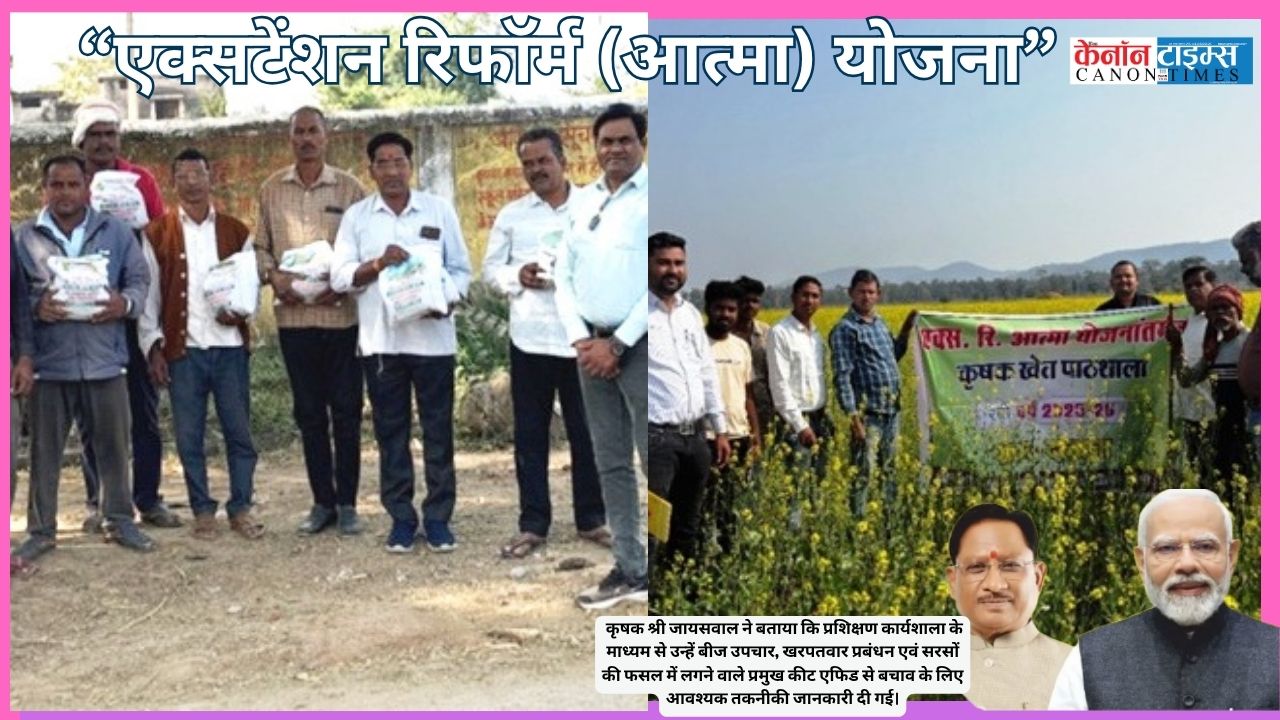
Govind Jaiswal’s experience reflects this integrated approach. Under the scheme, he received improved mustard seed of the PM 32 variety for one acre, along with participation in a farmer field school. More importantly, he gained practical knowledge about seed treatment, weed management, and protection against pests like aphids, which are a major threat to mustard crops. Access to free fungicides and pesticides further reduced his input costs.
The outcome was tangible. A yield of around six quintals per acre, coupled with lower cultivation costs, resulted in a net profit of approximately Rupees 25,000. While the figure may appear modest in isolation, for a smallholder farmer, such gains can significantly improve household stability and reinvestment capacity for future crops.
This example underlines a critical lesson for agricultural policy. Productivity growth is rarely the result of a single intervention. It requires a combination of quality inputs, timely technical advice, and sustained engagement with farmers. Field level initiatives like farmer schools play a crucial role because they translate theoretical knowledge into practical action.
However, the broader challenge lies in scaling such successes. Agricultural extension systems in many regions still face issues of limited reach, staffing constraints, and inconsistent follow up. Ensuring that every farmer, not just a few beneficiaries, can access similar guidance will determine the long term effectiveness of the scheme.
There is also a need to strengthen market linkages. Higher production must be matched with fair pricing and efficient supply chains, otherwise increased yields may not always translate into better incomes. Integrating extension services with market intelligence and digital platforms could be the next step forward.
Govind Jaiswal’s progress is a reminder that empowering farmers is as much about information as it is about investment. When knowledge reaches the farmer in a timely and practical manner, it can turn even small plots into sources of meaningful prosperity.
If implemented with consistency and scale, initiatives like ATMA can become a cornerstone in India’s journey toward a more resilient and profitable agricultural sector.

Author: This news is edited by: Abhishek Verma, (Editor, CANON TIMES)
Authentic news.