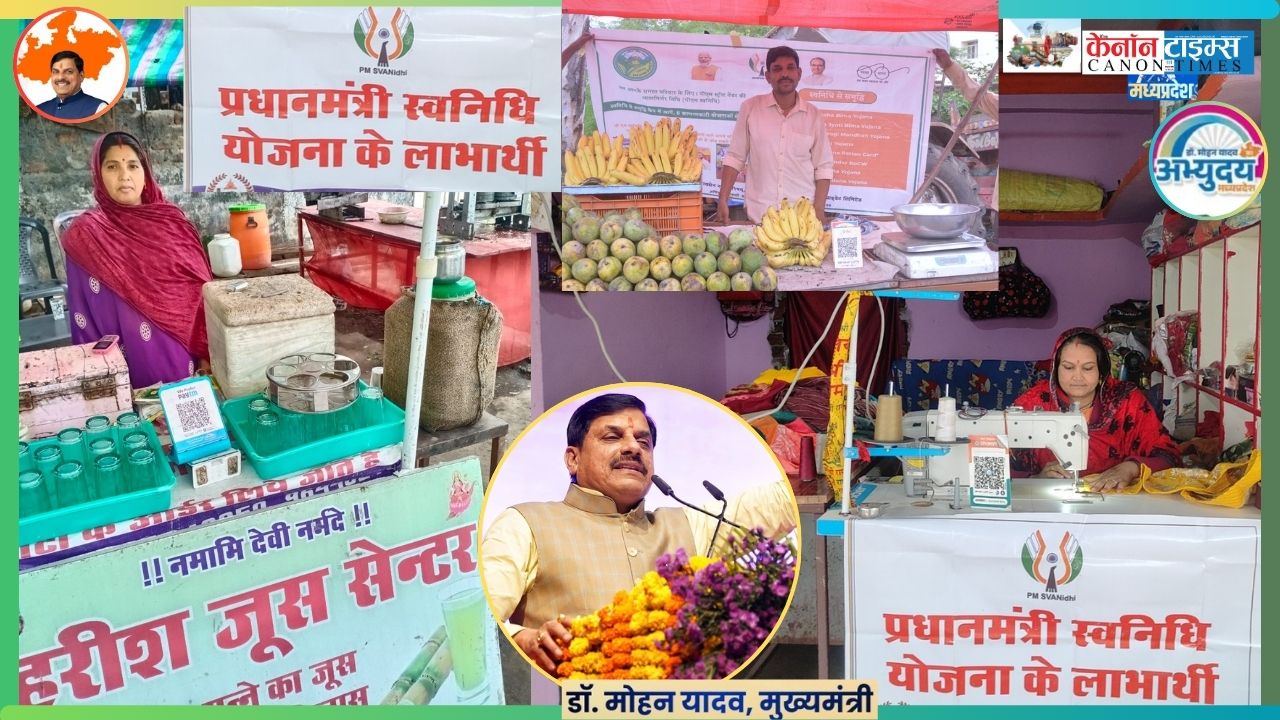
Madhya Pradesh’s strong performance under the PM SVANidhi scheme is being projected as a milestone in grassroots economic empowerment. Chief Minister Dr. Mohan Yadav has linked this progress to the broader vision of self reliance championed by Prime Minister Narendra Modi. The claim is not without substance. With lakhs of street vendors brought into the formal financial system, the scheme reflects a significant shift in how informal livelihoods are supported in India.
The numbers are certainly impressive. Nearly 9.92 lakh beneficiaries and over 15.69 lakh loan disbursements amounting to around Rupees 2632 crore indicate both scale and reach. Cities like Indore, Bhopal, and Jabalpur securing top national rankings further reinforce the state’s administrative efficiency in implementing the scheme. Indore’s leading position, in particular, continues its pattern of excelling in urban governance metrics.

Yet, beyond the statistics lies a more meaningful transformation. For street vendors, access to small ticket loans often determines whether they remain trapped in cycles of informal debt or move toward financial stability. The structured progression of loans, from Rupees 15,000 to Rupees 50,000, along with the introduction of UPI linked credit cards, signals an effort to integrate these workers into a more formal and digital economy. The adoption of digital transactions by over 7 lakh vendors, coupled with cashback incentives, suggests that behavioral change is indeed taking root.
However, it is important to approach this success with measured optimism. Access to credit, while crucial, is only one piece of the puzzle. The sustainability of these gains depends on whether vendors can generate consistent income, manage repayment cycles, and withstand market fluctuations. There is also the question of regional disparity. While leading cities have demonstrated strong outcomes, ensuring that smaller towns and less developed urban bodies maintain similar standards of implementation remains a challenge.
The mention of smaller municipalities like Sarni achieving national recognition is encouraging. It indicates that success is not limited to large urban centers. However, such examples need to become the norm rather than exceptions. Strengthening local governance capacity, providing continuous financial literacy, and ensuring market linkages will be essential to deepen the scheme’s long term impact.
Politically, the narrative of self reliance resonates strongly. Economically, however, its true test lies in durability. Will these vendors continue to grow beyond micro credit dependence? Can they transition into stable small businesses with upward mobility? These are the questions that will define the next phase of the scheme.
Madhya Pradesh’s achievements under PM SVANidhi deserve recognition, but they also offer a roadmap and a responsibility. The state now stands at a point where it must consolidate these gains and ensure that inclusion translates into sustained prosperity.
If this momentum is maintained with equal focus on quality and equity, the scheme could indeed become a cornerstone of urban livelihood transformation, not just in one state, but across the country.

Author: This news is edited by: Abhishek Verma, (Editor, CANON TIMES)
Authentic news.