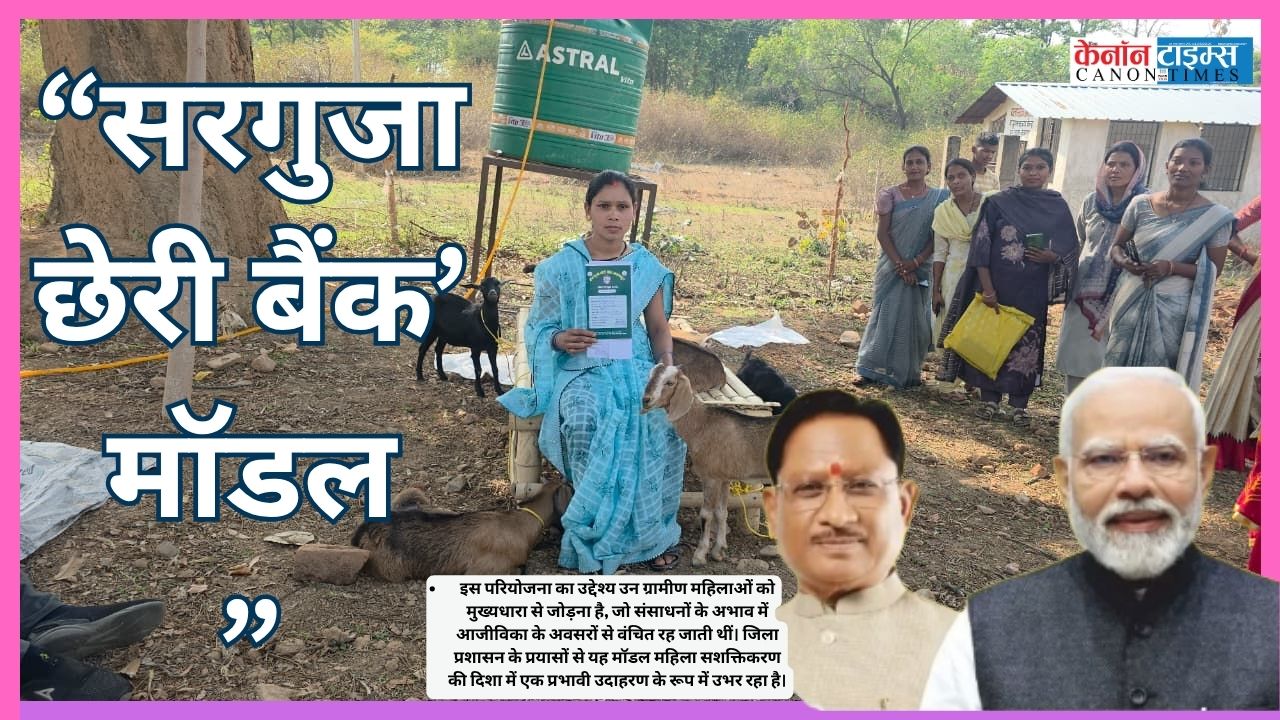
In the evolving landscape of rural livelihoods, innovation often emerges from necessity. The “Sarguja Chheri Bank” model in Chhattisgarh is one such example, offering a fresh perspective on financial inclusion and women’s empowerment. By replacing cash based loans with livestock assets, this initiative challenges conventional ideas of rural credit and opens up new pathways to self reliance.
At its core, the model is simple yet transformative. Instead of borrowing money and repaying it with interest, women receive goats as productive assets and return the loan in the form of offspring. This approach significantly reduces financial pressure, particularly for women who are often hesitant to take on cash debt due to repayment risks and uncertain income streams.

For beneficiaries like Sohar Mani from Sarguja district, the scheme has created a viable and sustainable livelihood option. With a modest initial contribution of Rupees 3,000, she received four goats and began building an income stream through goat rearing. Unlike traditional loans, where repayment begins almost immediately, this model allows time for the asset to grow and generate returns.
What strengthens the initiative further is its comprehensive design. Beneficiaries are not left to manage on their own. Veterinary care, vaccination, deworming, and breeding support are provided over an extended period, ensuring higher survival rates and productivity. This integrated support system addresses one of the key challenges in livestock based livelihoods, namely the lack of technical guidance.
The repayment structure is equally noteworthy. Over four years, beneficiaries are expected to return 16 goat kids. Given the estimated reproductive potential of the livestock, this target appears achievable while still leaving women with a growing herd. In effect, the model creates a cycle of asset creation rather than debt accumulation.
Beyond individual gains, the broader implications are significant. Livestock based credit systems like this can strengthen rural economies by diversifying income sources and reducing dependence on seasonal agriculture. They also align well with the realities of rural life, where cash flow is often irregular but asset based growth is more sustainable.
However, the long term success of the model will depend on careful implementation. Monitoring animal health, preventing distress sales, and ensuring fair distribution of benefits will be critical. There is also a need to build market linkages so that increased livestock production translates into stable and profitable income.
The “Chheri Bank” model stands out because it blends financial innovation with social sensitivity. It recognizes that empowerment is not just about access to money, but about access to opportunity without fear of failure.
If scaled thoughtfully, this approach could redefine how rural credit is delivered, especially for women at the margins. It offers a compelling reminder that sometimes, the most effective solutions are those that adapt to people’s realities rather than forcing them into rigid financial systems.

Author: This news is edited by: Abhishek Verma, (Editor, CANON TIMES)
Authentic news.