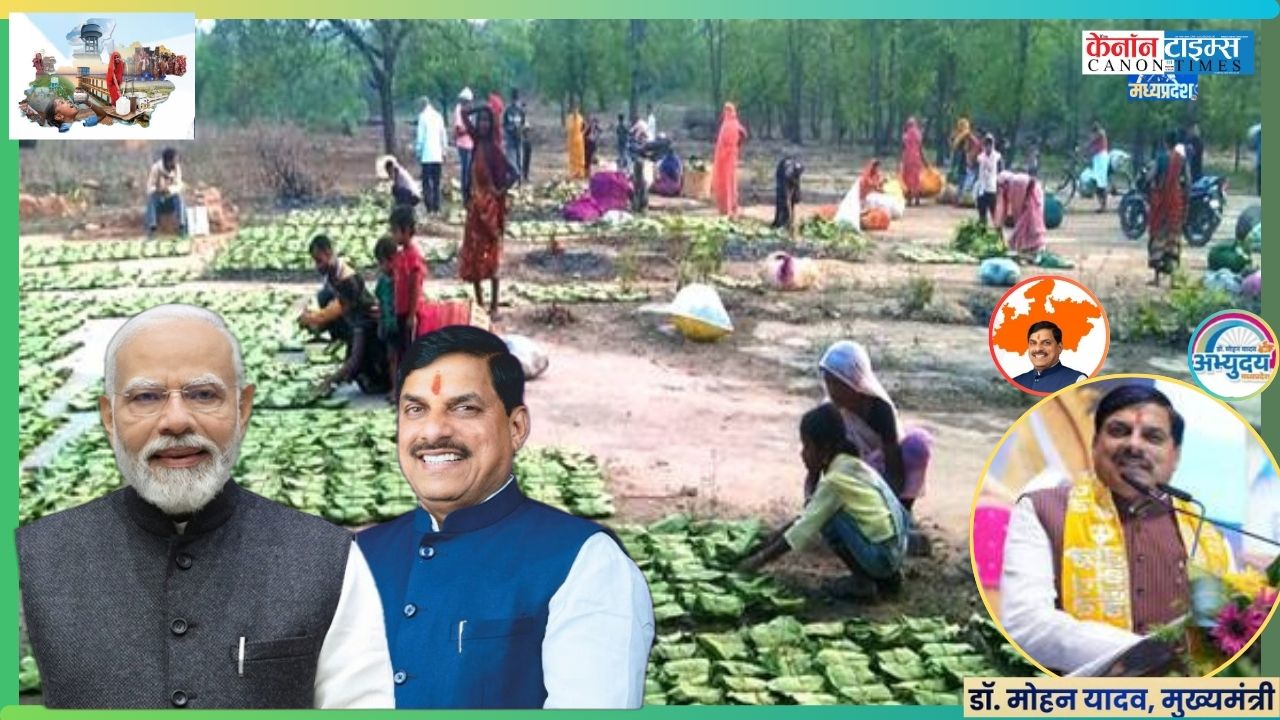
Madhya Pradesh’s recent focus on tendu leaf collectors, particularly women, brings long overdue attention to one of the most under acknowledged segments of the rural economy. Under the leadership of Chief Minister Dr. Mohan Yadav, the state has taken steps to enhance wages and expand welfare measures for these workers. While the policy direction deserves recognition, it also invites a deeper examination of how forest based livelihoods are valued and sustained.
The increase in tendu leaf collection rates from Rupees 3,000 to Rupees 4,000 per standard bag is a significant intervention. For nearly 19.8 lakh women collectors, who form close to half of the workforce, this translates into tangible income gains. The reported disbursement of around Rupees 344.5 crore directly to women signals both scale and intent. In regions where cash income opportunities are limited, such measures can have a meaningful impact on household stability.

Yet, the importance of this initiative goes beyond financial figures. Tendu leaf collection is often seasonal, labor intensive, and deeply embedded in forest dependent communities, particularly among tribal populations. Women play a central role in this activity, balancing it alongside household responsibilities. Recognising their contribution through better remuneration and bonuses is not just an economic step, but also a social acknowledgment.
However, the larger question is whether incremental increases in wages are enough. Forest based livelihoods remain vulnerable to market fluctuations, climate variability, and policy shifts. Ensuring long term security for collectors will require a more comprehensive approach. This includes improving working conditions, providing access to healthcare, and ensuring timely payments without bureaucratic delays.
The introduction of additional benefits such as social security schemes and community development funds is a step in the right direction. Allocations for village development and forest conservation suggest an effort to link livelihoods with sustainability. However, effective implementation and transparency will be key to ensuring that these benefits reach the intended recipients.
Another critical dimension is value addition. Tendu leaves are primarily used in the bidi industry, where the higher value chain remains largely outside the control of collectors. Exploring opportunities for local processing, diversification of forest produce, or alternative income streams could help reduce dependence on a single commodity.
The narrative of “Nari Shakti” gains real meaning when policies translate into sustained empowerment. With women forming nearly half of the tendu leaf workforce, their economic upliftment can have ripple effects across entire communities. But empowerment must extend beyond seasonal income to year round security and decision making power.
Madhya Pradesh’s initiatives mark a positive shift in recognising forest workers, especially women, as key contributors to the rural economy. The challenge now lies in building on this foundation to create a more resilient, equitable, and future ready framework for forest based livelihoods.
In doing so, the state has an opportunity not just to improve incomes, but to redefine how dignity of labour is understood in some of the country’s most marginalised regions.

Author: This news is edited by: Abhishek Verma, (Editor, CANON TIMES)
Authentic news.