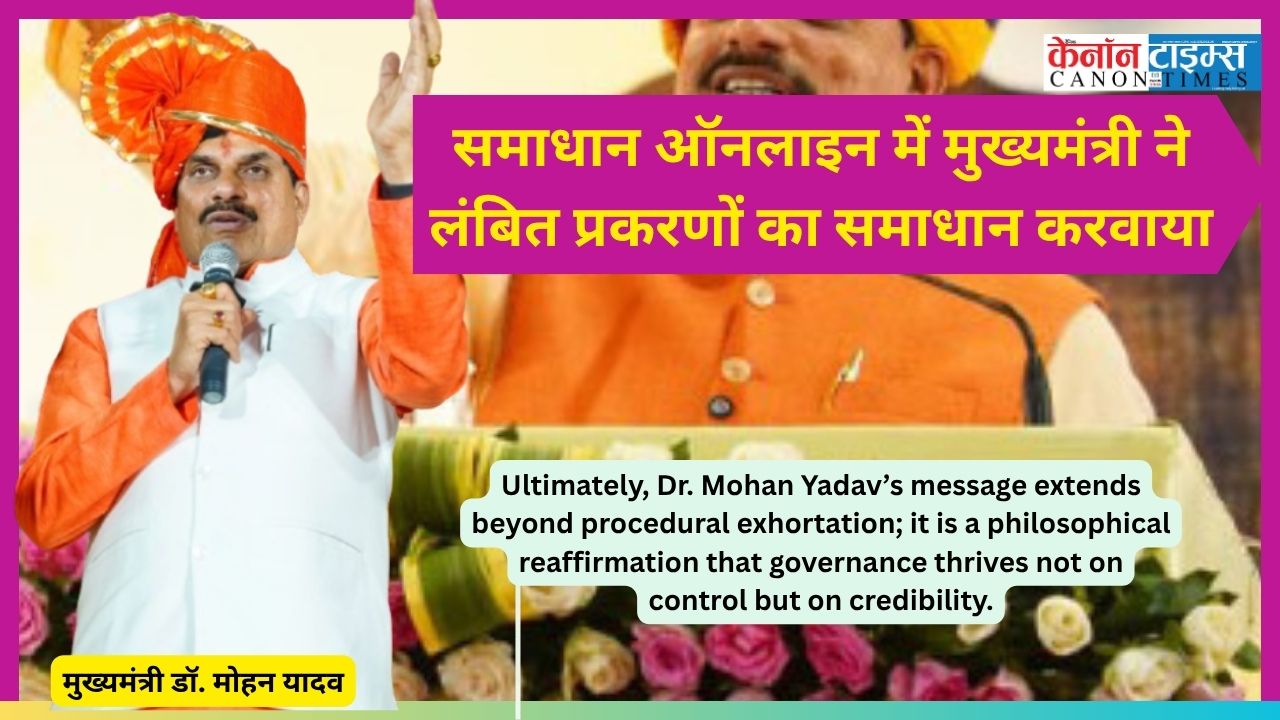
In a time when public trust in bureaucracy teeters on the precipice of disillusionment, Chief Minister Dr. Mohan Yadav’s exhortation to refine administrative working methods through innovation carries both urgency and moral weight. His recent Samadhan Online review meeting was not merely an exercise in grievance redressal but a revealing tableau of governance, where efficiency is lauded, indifference punished, and the pulse of public service tested for vitality.
By insisting that officials transform inertia into initiative, Dr. Yadav articulates an ethos that the machinery of the state must not only function but respond. His government’s stance, rewarding districts like Raisen and Datia for exemplary resolution of citizen grievances while censuring errant officials across departments, reclaims a sense of accountability often lost in bureaucratic opacity. In suspending officers, halting increments, and issuing show cause notices where dereliction persisted, the Chief Minister has drawn a clear line between service and negligence, a distinction indispensable to a governance model rooted in integrity.

Yet the most compelling layer of this administrative renewal lies in his insistence on innovation as discipline. The emphasis on improving work methodology and adopting novel approaches to expedite citizen services underscores a progressive understanding that governance, like technology, must evolve. Reducing complaint backlogs on grievance portals, streamlining departmental workflows, and using data driven reviews to track performance mark a decisive turn from reactive governance toward anticipatory oversight.
The Samadhan Online forum also spotlighted the wide remit of state responsibility, from ensuring hostel amenities and educational grants to expediting welfare payments, compensation dues, and subsidy disbursals. Each case, whether a delayed scholarship in Dindori or neglected ration allocation in Satna, reflects not just administrative lethargy but a moral failing to deliver justice in time. Correcting these wrongs through swift punitive and restorative action transforms governance from rhetoric into experience, a transformation citizens can feel at the grassroots.
But reform, as the Chief Minister’s address tacitly implied, is not only structural; it is also ethical. The directive that collectors regularly inspect student hostels and public facilities, that citizens face no procedural delay, and that even bank officials be held accountable for lapses, reshapes the contours of civic responsibility in public administration. Governance cannot rely solely on punitive deterrence; it must cultivate a culture of diligence, empathy, and anticipatory care.
The recent commendations extended to officers achieving 100 percent grievance resolution under the CM Helpline serve as a reminder that good governance is not a statistical feat but a patient covenant between state and citizen. In recognizing sincerity and sanctioning shirking, the administration signals a revival of bureaucratic conscience, an idea India’s governance landscape sorely needs.
Ultimately, Dr. Yadav’s message extends beyond procedural exhortation; it is a philosophical reaffirmation that governance thrives not on control but on credibility. The state that listens, responds, and rectifies swiftly transcends administrative mechanics to become an instrument of trust. Innovation, in this sense, is not merely about technology or process, it is the renewal of faith in the idea that government exists, first and foremost, to serve.

Author: This news is edited by: Abhishek Verma, (Editor, CANON TIMES)
Authentic news.