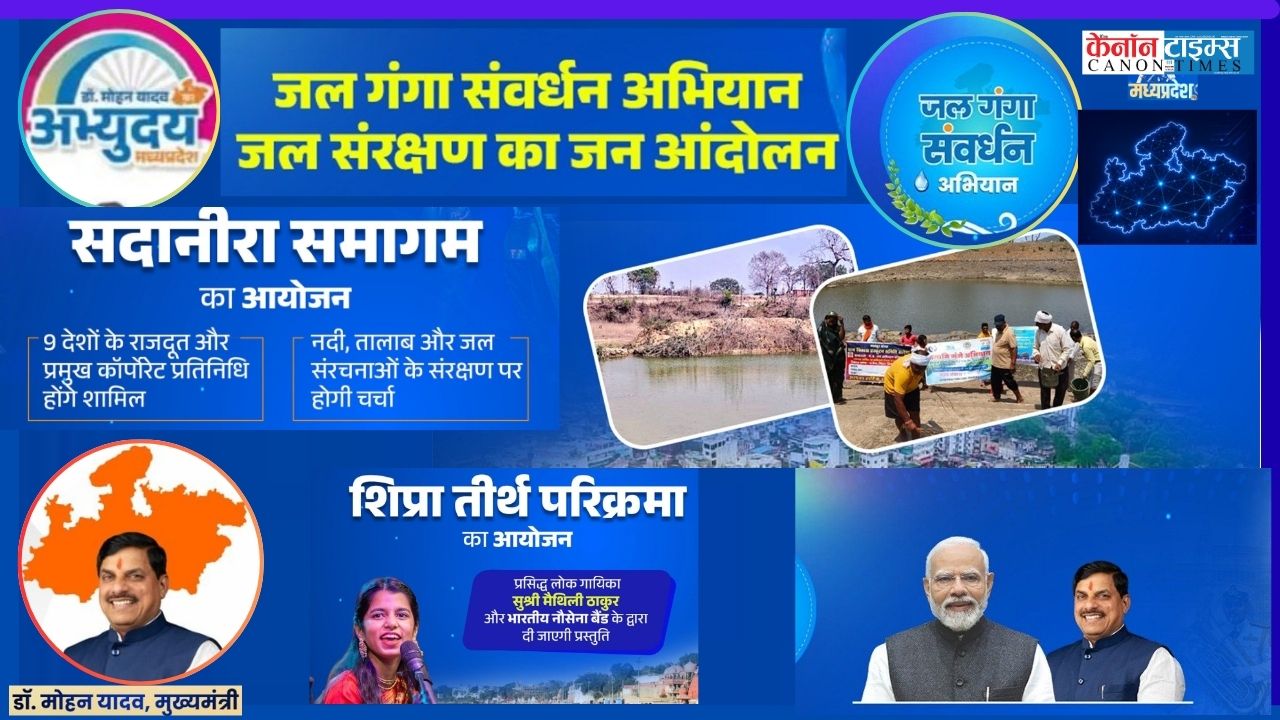
Madhya Pradesh is transforming water conservation from a government initiative into a people’s movement. Under the “Jal Ganga Sanvardhan Abhiyan,” the state government is preparing to celebrate Ganga Dussehra not only as a religious festival, but also as a powerful social campaign dedicated to the protection and revival of rivers, ponds, and traditional water bodies.
Chief Minister Dr. Mohan Yadav will participate in major events on May 25 and 26 at the banks of the Shipra River in Ujjain, including river parikrama, ceremonial offerings, worship rituals, and cultural programs. These events aim to connect spirituality with environmental responsibility, reinforcing the message that water conservation is essential for both ecological balance and cultural continuity.

What makes this campaign noteworthy is its attempt to blend public participation with traditional values. Across the state, activities such as morning awareness rallies, riverbank parikramas, cycling campaigns, cultural performances, and community worship ceremonies will be organized near rivers, reservoirs, and water sources. By involving citizens directly, the government is seeking to create a deeper emotional connection between communities and natural resources.
The upcoming “Sadanira” program at Bharat Bhavan in Bhopal, scheduled from May 27 to June 2, further reflects this broader vision. Through seminars, lectures, artistic presentations, and public discussions, the event will focus on water, nature, and culture while encouraging youth participation in environmental preservation. Such initiatives recognize that sustainable conservation requires not only infrastructure but also awareness and long-term behavioral change.
India is increasingly facing the consequences of climate change, irregular rainfall, groundwater depletion, and growing pressure on water resources. In this context, campaigns like Jal Ganga Sanvardhan Abhiyan acquire greater significance. Water conservation can no longer remain a seasonal concern addressed only during droughts. It must become a sustained public priority supported by communities, institutions, and policymakers alike.
The state government’s directive to district collectors to ensure public participation from social organizations, youth groups, and local representatives highlights the importance of decentralized involvement. Environmental movements become successful only when citizens see themselves as stakeholders rather than spectators.
However, symbolic events alone cannot solve the water crisis. Long-term success will depend on scientific river rejuvenation, protection of wetlands, revival of traditional water harvesting systems, groundwater recharge, and strict regulation against pollution and encroachment. Public campaigns must therefore be accompanied by measurable action on the ground.
Still, the initiative deserves recognition for attempting to restore cultural respect for water in an age of increasing ecological neglect. By linking festivals with environmental awareness, Madhya Pradesh is promoting a model where tradition becomes a tool for sustainability.
The message behind the campaign is simple yet powerful: protecting water is not just an administrative responsibility, but a collective duty toward future generations.

Author: This news is edited by: Abhishek Verma, (Editor, CANON TIMES)
Authentic news.