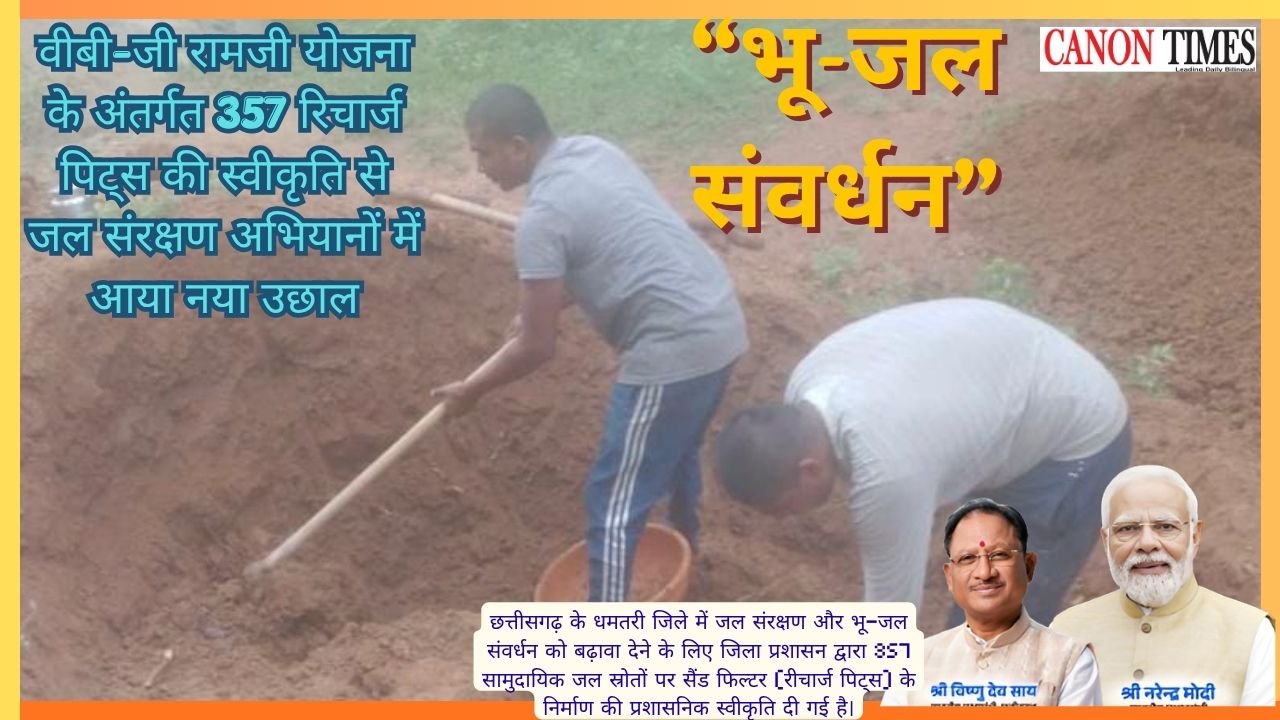
Dhamtari district has approved the construction of 357 recharge pits across community water sources under the VB G Ramji Yojana. The aim is straightforward. Capture rainwater that would otherwise run off, filter it naturally through sand, and push it into the ground to replenish aquifers. The expected outcome is equally clear. Better water levels in wells, hand pumps and tubewells, especially in rural and tribal dominated areas. Work has already begun, with regular monitoring to ensure quality, technical standards and timely completion before the next monsoon.
This is more than a set of small structures. It is a strategy for water security. In an agrarian economy like Dhamtari’s, groundwater is the backbone of drinking water, irrigation and livestock. Yet rainfall is seasonal and often intense. Without storage and recharge, much of it flows away, taking topsoil with it. Recharge pits change that calculus. They slow the flow, allow percolation and raise the water table over time. For a farmer, that can mean the difference between a dry well in May and a functioning one. For a village, it can mean fewer failed hand pumps and less dependence on distant tankers.

Why does this matter now. Climate change is making rainfall more erratic. Long dry spells are followed by heavy downpours. Traditional sources are less reliable. The response must be local, distributed and low cost. Recharge pits fit that need. They are simple to build, easy to maintain and can be scaled across hundreds of sites. When done right, they reduce waterlogging and erosion during monsoon and improve availability in summer. They also protect investments in borewells and piped water by ensuring there is water to draw from.
The design choices are sensible. Approving 357 pits across multiple communities spreads the benefit. Regular monitoring by the collector’s office and district panchayat creates accountability. Clear instructions to field staff and technical teams on quality and timelines reduce the risk of shoddy work. The focus on completing construction before the next rainy season ensures that the structures can start working immediately. If the state also supports community ownership, with villagers trained to maintain and protect the pits, the impact will last longer.
The real test will be consistency. Will all 357 pits be built to standard, or will some become silt traps that clog quickly. Will maintenance be budgeted and assigned, or will the structures degrade after a few seasons. And will data be collected on water level changes so that the program can be refined and scaled. If these pieces fall into place, Dhamtari’s effort can become a model for other districts.
Chhattisgarh is betting that small, distributed infrastructure can make a big difference in water security. For rural households, a recharge pit is not just a hole in the ground. It is a promise that rain will not go to waste. That is the true measure of this push: not just the number of pits built, but the resilience they create for farms, homes and villages.

Author: This news is edited by: Abhishek Verma, (Editor, CANON TIMES)
Authentic news.