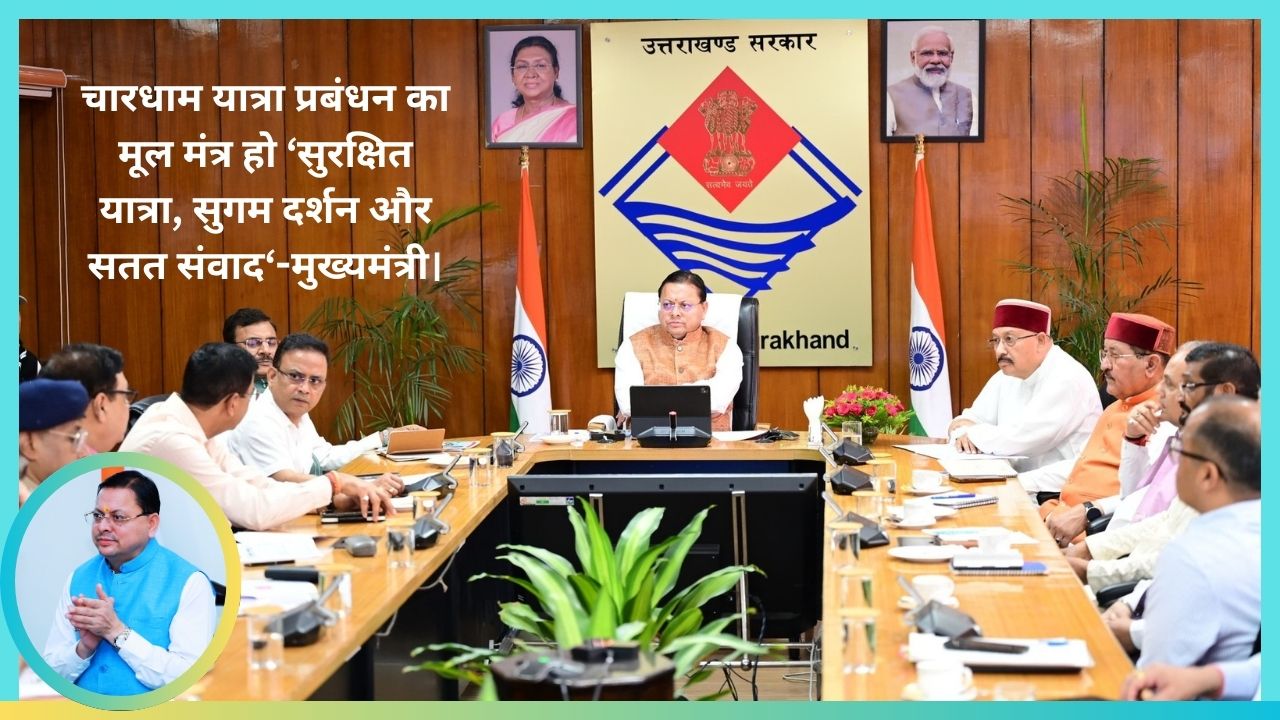
Dehradun, June 2, 2026: Uttarakhand Chief Minister Pushkar Singh Dhami today set out a threefold guiding principle for management of the Char Dham pilgrimage ‘safe travel, smooth darshan and continuous communication’ and directed officials to enforce strict measures to protect devotees as the yatra enters its more challenging monsoon phase.
Speaking at a high level review meeting at the secretariat, Dhami emphasized advance planning, scientific crowd control and robust public information systems to prevent disruption and ensure orderly pilgrimage operations. “The safety of devotees is the state government’s highest priority,” he said, urging coordinated action by administration, police and disaster management teams.
Key directives and measures
-
Draft SOP’s: Detailed standard operating procedures must be prepared to match darshan arrangements with temple capacities and to manage phased entry during peak times.
-
Night traffic ban: Strict enforcement of a night time ban on vehicles between 10:00 pm and 4:00 am on Char Dham routes, with heavy and service vehicles allowed movement only at night.
-
Holding area facilities: Authorities must provide food, drinking water, toilets, parking and other basic amenities at holding and checkpoint locations where pilgrims are held.
-
Scientific crowd control: Implement staged movement of devotees from lower holding areas to prevent congestion at shrines and ensure orderly darshan.
-
Real time communication: Regular updates through public address systems, LED displays, social media, WhatsApp channels and FM radio to inform pilgrims about route blockages, weather changes, traffic jams and expected delays.
-
Emergency preparedness: Pre positioned JCBs, excavators, satellite phones, ambulances and rescue equipment at sensitive locations for rapid response to obstructions or disasters. A nodal officer will coordinate heliborne evacuation when needed.
-
Field inspections and feedback: District magistrates and superintendents of police in Char Dham districts will conduct periodic reviews and act on daily feedback, complaints and suggestions from pilgrims.
-
Consumer protection: Hotels, restaurants and dhaba’s on pilgrimage routes must display rate lists; food sampling will be carried out regularly to ensure quality.
-
Sanitation and shade: Priority to cleanliness across shrines and trekking routes, adequate, regularly cleaned toilets on foot trails, and installation of shelters on the Kedarnath pedestrian path to protect devotees from sun and rain.
Monsoon challenge as pilgrim numbers swell
Officials reported a surge in footfall this season: more than 3 lakh additional pilgrims have arrived in the first 44 days compared with the same period last year. Last year’s tally for the opening 44 days stood at approximately 26.34 lakh devotees; this year the number has crossed 29.85 lakh. All four shrines have recorded higher numbers than in the previous year.
“Char Dham’s first phase concluded successfully thanks to coordinated efforts; the second phase coincides with the monsoon and demands greater vigilance and scientific management,” the chief minister said, calling for daily remedial action on recurring issues flagged by pilgrims.
Operational responsibilities for field commanders
The chief minister asked Garhwal Commissioner and IG Garhwal to personally review arrangements and ensure timely redressal of pilgrim and local grievances. He also directed district level officials to remain on duty in the field, supervise infrastructure and guarantee quick assistance to those in need.
Officials present and next steps
The meeting included cabinet ministers Satpal Maharaj and Bharat Chaudhary; MLA Anil Nautiyal; members of the state disaster management advisory committee; and senior secretariat officials, along with district magistrates and police chiefs joining virtually. Authorities will finalize SOPs for darshan management, reinforce holding area services and broaden public information efforts ahead of the monsoon’s peak.
The chief minister reiterated that pilgrims should never face information blackout during waits or diversions. “Communicate causes of delay, expected waiting time and next steps. Do not let confusion or dissatisfaction take root,” he said.
Contact points and monitoring
District administrations have been tasked with establishing daily review loops and dedicated helplines for real time grievance reporting. The state will also monitor food hygiene, pricing transparency and sanitation at pilgrimage hubs to maintain trust and safety as the yatra continues.

Author: This news is edited by: Abhishek Verma, (Editor, CANON TIMES)
Authentic news.