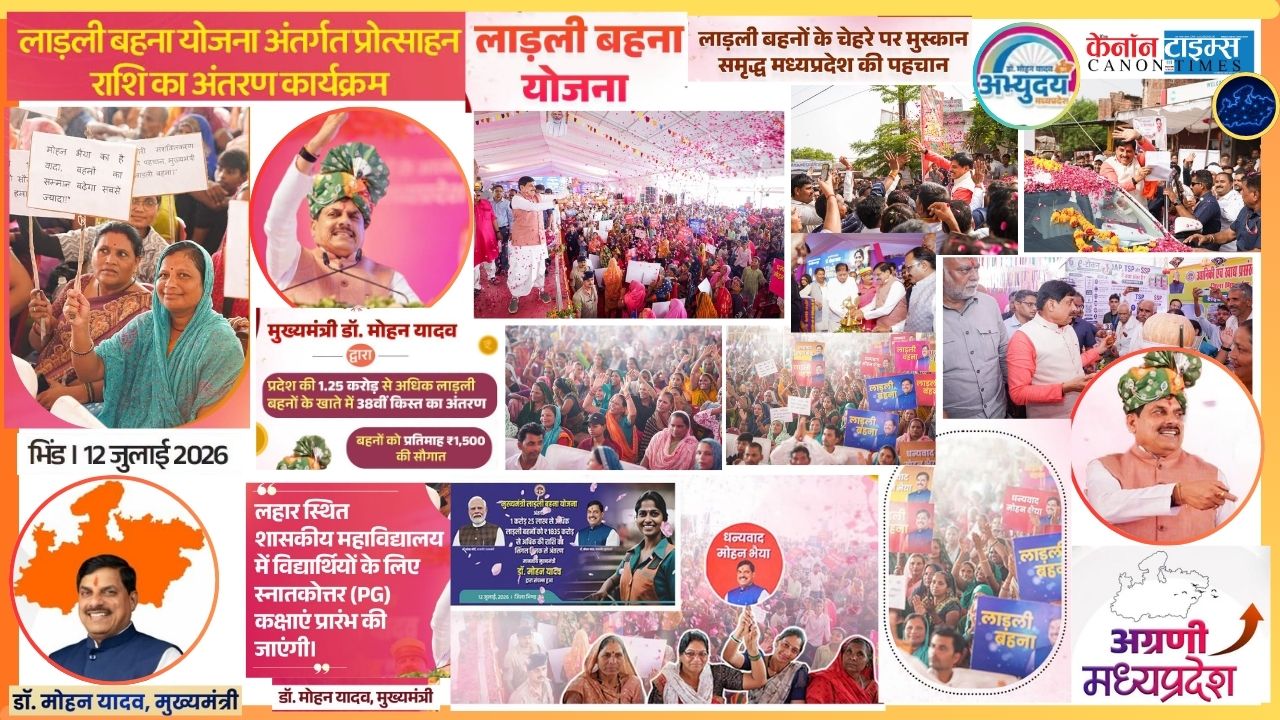
Madhya Pradesh’s Ladli Behna Yojana continues to stand out as a powerful welfare measure because it reaches women directly and regularly. The transfer of more than 1,835 crore rupees to over 1.25 crore sisters is not just a financial event; it is a signal that the state sees women’s economic security as central to development. When a scheme delivers predictable support month after month, it can strengthen household stability and give women a stronger voice in family life.
What makes this initiative notable is its broader social effect. Small but steady financial assistance often matters more than one-time announcements because it helps with daily needs, education, health expenses and personal independence. The chief minister’s description of the scheme as revolutionary may be political language, but the social logic behind it is easy to understand. Direct assistance gives women a measure of control that can gradually change how they participate in decisions at home and in society.
The Bhind programme also shows how welfare and development can be linked. Alongside the cash transfer, the government announced 332 crore rupees worth of development works, including new Sandipani schools and additional educational facilities. That combination matters because women’s empowerment is not only about cash in hand. It is also about the larger environment of education, mobility, safety and opportunity in which women and their families live.
The promise of the soon-to-begin Mukhyamantri Sugam Parivahan Seva is another useful step in that direction. Reliable public transport can make a real difference for women, students and workers who depend on safe and affordable mobility. In many parts of the state, transportation is not a convenience but a barrier to access. If the service is implemented well, it could complement the welfare scheme by making daily movement easier and more secure.
The focus on women also fits into a larger political and social shift. The chief minister’s remarks about women’s role from panchayats to Parliament reflect a growing recognition that representation matters. Policies that support women financially, educate girls and improve public services are strongest when they work together. A welfare payment can help now, but education, safety and participation determine long-term empowerment.
Bhind’s event therefore carries a message beyond one district. It suggests that development is being framed not only in terms of roads and industry, but also in terms of dignity and economic agency for women. If the state continues to pair direct support with better services and stronger opportunities, schemes like Ladli Behna can become more than assistance. They can become a foundation for lasting social change.

Author: This news is edited by: Abhishek Verma, (Editor, CANON TIMES)
Authentic news.