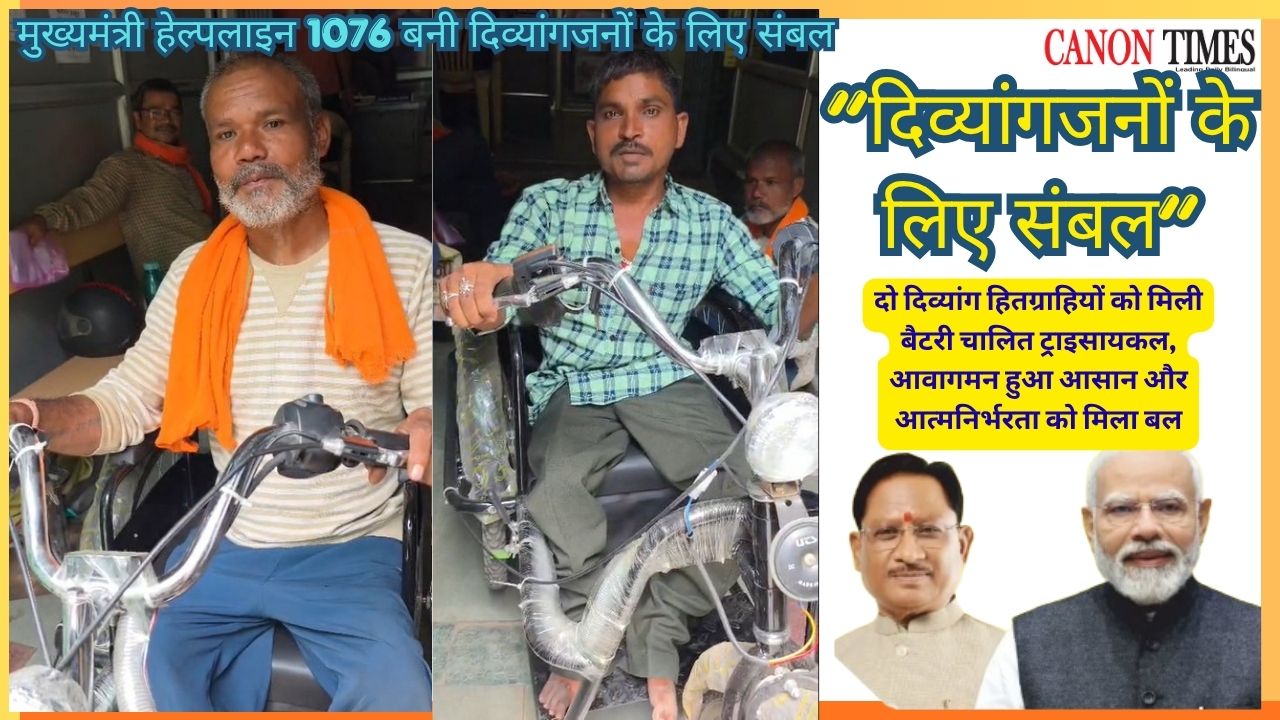
The response to two disabled citizens in Raipur shows why a grievance system matters when it actually delivers results. By using the state helpline to secure battery-operated tricycles for Nand Kishor Tandon and Khileendra Kumar Sahu, the administration did more than provide equipment. It reduced daily hardship and made independent movement a little easier, which is exactly what responsive governance should do.
What stands out in this case is the speed and practicality of the intervention. For persons with severe disability, mobility is not a minor convenience; it affects access to offices, social participation and ordinary life itself. A mobility aid can change how a person works, travels and interacts with society. When a public complaint leads to direct support, the government becomes less distant and more usable in real life.

This also highlights the importance of treating welfare not as a one time gesture but as part of an accountable system. A helpline is valuable only if complaints are examined promptly and the right department acts without delay. Here, the social welfare department appears to have done that, which strengthens confidence in public service delivery. That confidence matters because people are more likely to seek help when they believe the system will respond.
There is a deeper social message as well. Disability policy is not only about relief; it is about dignity, access and participation. A battery-operated tricycle is not just a vehicle. It is a tool for independence, allowing easier movement to offices, for necessary work and for social engagement. Small interventions like this often have a bigger impact than they seem to on paper because they restore control over everyday life.
The larger promise of such a helpline is that it can make the state more humane. Citizens should not have to fight long battles for basic support if they are eligible for it. When a government grievance channel helps bridge that gap, it sends a clear signal that public institutions can be responsive, especially to those who face the greatest barriers.
If this approach continues, it can become a model of practical welfare. The real measure of good administration is not only how it announces schemes, but how it reaches people who need help most. In this case, the help was timely, useful and dignity enhancing, which is the kind of governance citizens remember.

Author: This news is edited by: Abhishek Verma, (Editor, CANON TIMES)
Authentic news.