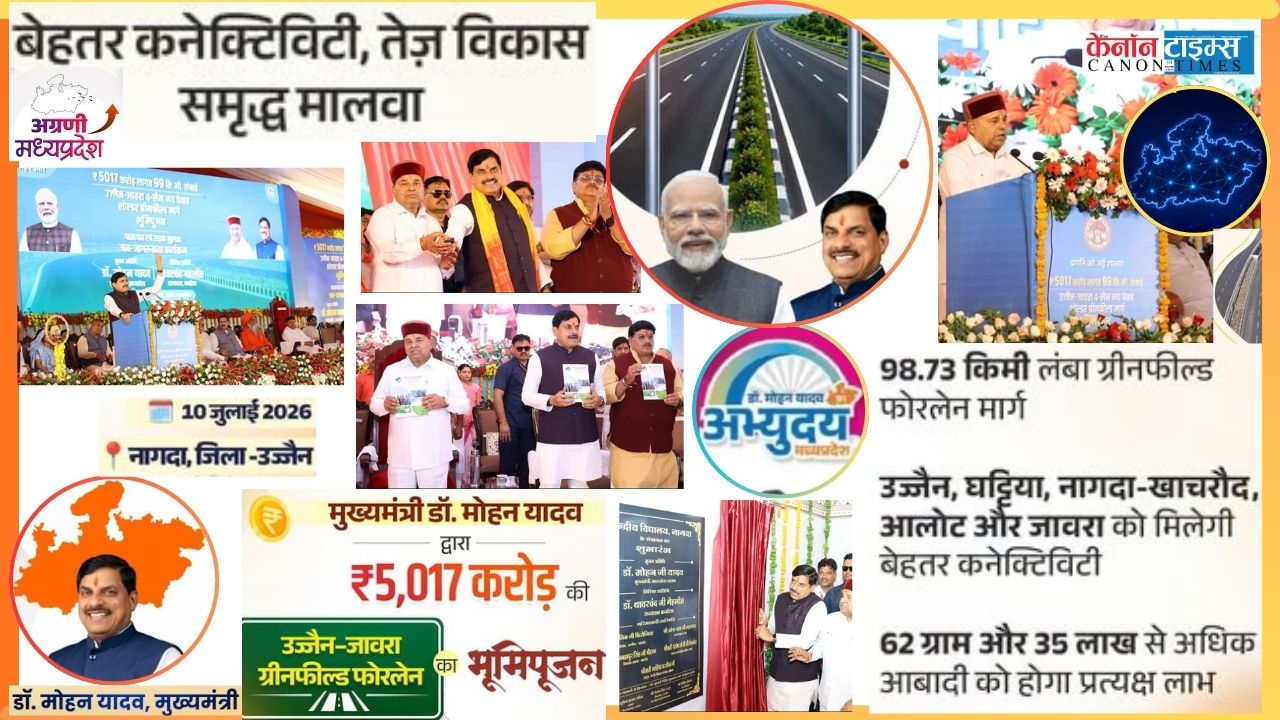
The Ujjain-Javra greenfield four-lane corridor is more than a road project; it is an investment in the economic future of Malwa. With a length of 98.73 km and an estimated cost of 5,017 crore, the corridor is being positioned as a key link between Ujjain, Ratlam and the Delhi-Mumbai Expressway, while also strengthening regional mobility before Simhastha 2028. Its real value lies in the way it can connect infrastructure, pilgrimage, industry and agriculture into one development chain.
What makes this project especially significant is its wider economic impact. Faster and safer travel will reduce logistics costs, improve access for traders and farmers, and support tourism around Ujjain and nearby areas. When transport becomes easier, investment tends to follow, and that can create new jobs and business opportunities. In a region known for enterprise, better road access can work as a force multiplier rather than just a convenience.
The timing also matters. Simhastha 2028 will bring a massive influx of pilgrims, and a modern corridor can help manage that demand more efficiently. Better roads, bridges, underpasses and bypasses are not glamorous features, but they are the hidden backbone of a large religious gathering. If the project is completed by December 2027 as planned, it could significantly ease movement during one of the state’s most important events.
The accompanying announcements in Nagda and Khachrod give the corridor a more grounded development purpose. A new ITI, a proposed pea market, a food-processing unit and a dam on the Chambal are the kinds of local interventions that can turn a highway into a development corridor. They show that infrastructure planning works best when it is tied to education, irrigation, agro-processing and employment. Roads alone do not transform a region; roads plus local opportunity do.
There is also a strong governance message in the project’s framing. The state is presenting roads, rail links, school facilities and public safety initiatives as parts of a larger growth strategy. That approach is sensible because development is rarely built by one department or one project. It comes from the coordination of transport, education, health, industry and public services, all moving in the same direction.
For Malwa, this corridor could become a new economic spine if the promises are followed through with quality and discipline. Its success will be measured not just by construction milestones, but by whether farmers, students, pilgrims and businesses actually feel the benefits. If that happens, the project will not merely connect places on a map. It will connect ambition to opportunity.

Author: This news is edited by: Abhishek Verma, (Editor, CANON TIMES)
Authentic news.