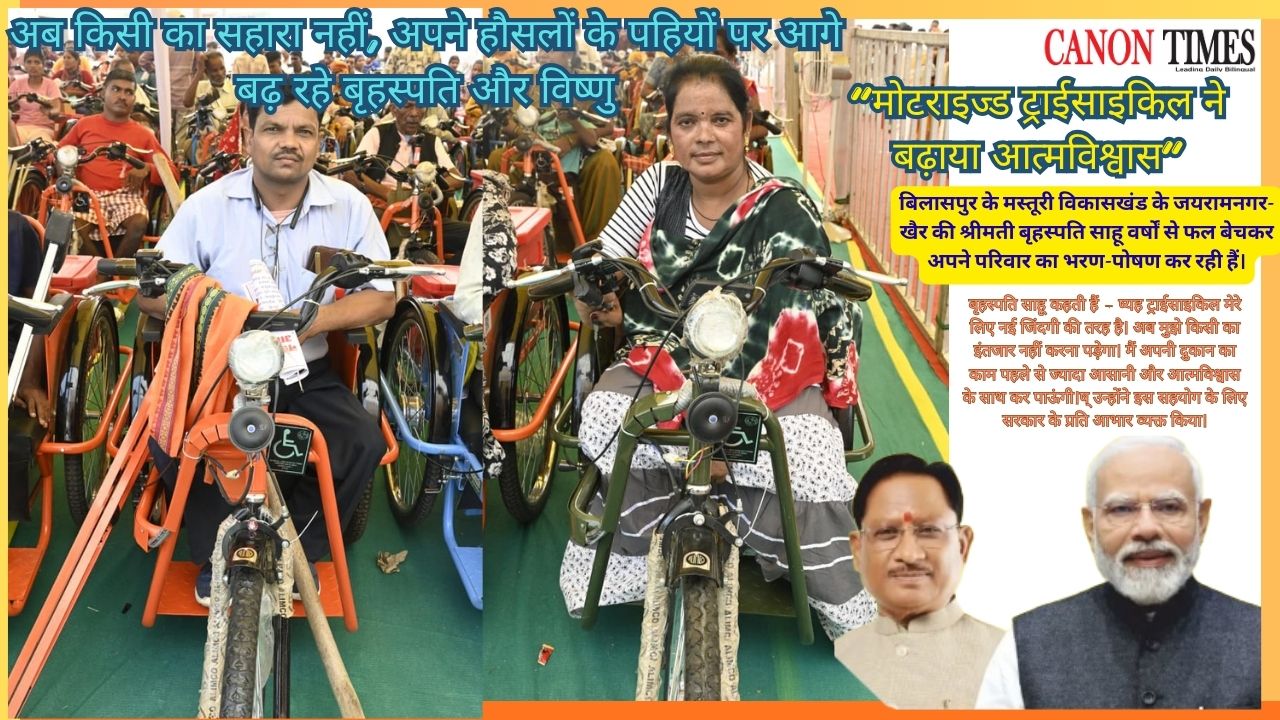
The story of Bhraspati and Vishnu is a reminder that dignity often begins with something as basic as mobility. A motorized tricycle may look like a small intervention, but for people who depend on others for everyday movement, it can transform work, confidence and quality of life.
What stands out in their experience is the shift from dependence to self-reliance. Bhraspati Sahu can now carry fruit to her shop and manage purchases on her own. Vishnu Singh Rajput can buy stock for his general store without waiting for help. For both of them, the tricycle is not merely a vehicle; it is a tool that restores control over daily life and business. That kind of support can have a ripple effect on income, self-esteem and social participation.
The wider importance of such assistance lies in how it changes the meaning of welfare. True welfare does not just provide relief. It removes barriers that keep people from using their skills and earning a living with dignity. When a person can travel independently, even short distances become easier, and with that comes a greater sense of freedom. For many disabled citizens, that freedom is as valuable as financial aid.
This case also shows why local, practical support matters. Large promises can be inspiring, but ordinary life changes when someone can go to the market, move goods or reach a workplace without assistance. The most effective social welfare efforts are often the ones that solve everyday problems quietly and directly. They may not attract much attention, but they can change lives in a lasting way.
There is also an important message here about inclusion. Disabled citizens should not have to build their lives around the limits imposed by inaccessible systems. Public support that improves mobility is an investment in participation, productivity and respect. It helps ensure that people are seen not as dependents, but as active contributors to family and society.
Bhraspati and Vishnu’s experience shows that confidence grows when opportunity becomes reachable. A tricycle cannot solve every challenge, but it can open the road to a more independent life. That is why such assistance deserves to be seen not as charity, but as a step toward real empowerment.

Author: This news is edited by: Abhishek Verma, (Editor, CANON TIMES)
Authentic news.