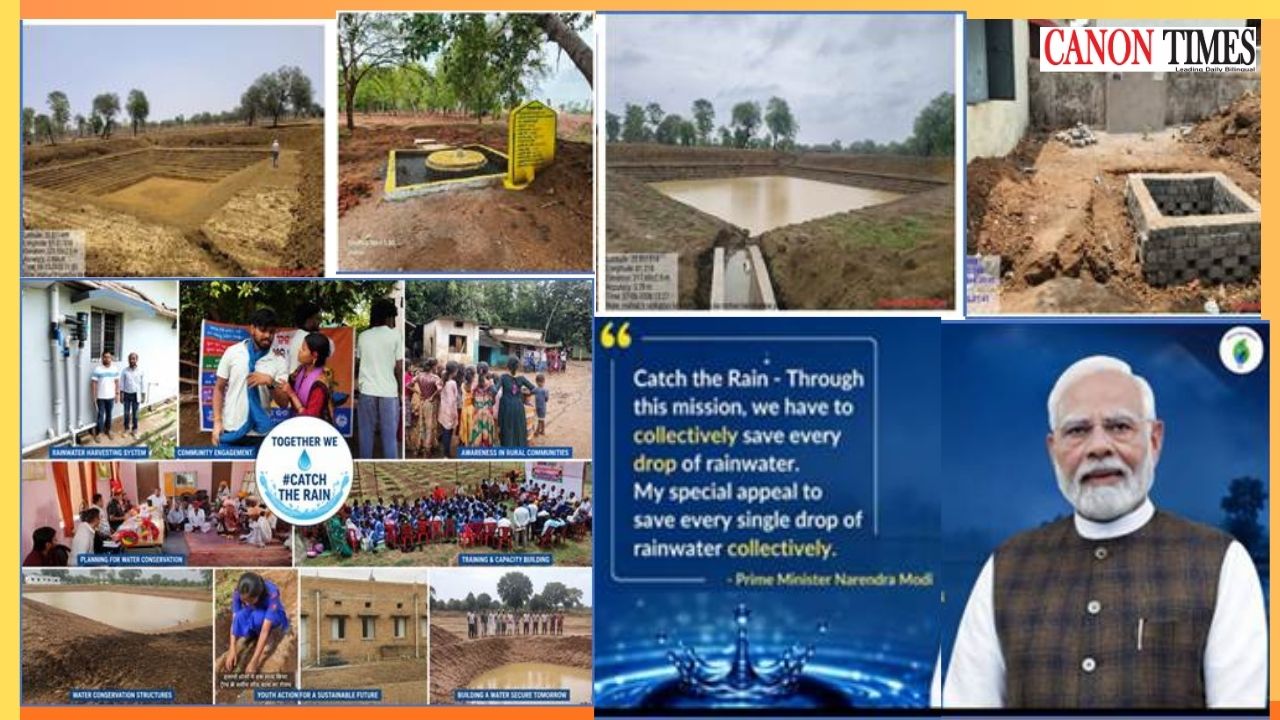
India’s renewed call to “Catch the Rain” is a timely reminder that water conservation can no longer be treated as a seasonal slogan. By pushing rainwater harvesting, groundwater recharge, revival of traditional water bodies and community participation as a nationwide mission, the government is turning water security into a practical public priority.
What makes this effort important is its shift from announcement to action. The earlier phases of Jal Sanchay Jan Bhagidari created millions of recharge structures, showing that small, low-cost interventions can make a big difference when communities, local bodies and government departments work together. That is the right model for a country where water stress is often local, uneven and linked to both climate and consumption.

The emphasis on every home, society and workplace adopting rainwater systems is especially sensible. Water security will not improve if the burden is left only to government projects. It must become part of daily civic behaviour, just like sanitation or waste segregation. Recharge pits, repair of unused borewells, desilting of ponds and restoration of wells are not glamorous measures, but they are exactly the kind of practical steps that strengthen resilience at the ground level.
The campaign also shows a mature understanding of how water policy should work. By linking central schemes, state programmes, CSR support and local participation, it brings together resources that are often scattered. That matters because water conservation succeeds best when it is scientific, decentralized and locally owned. A pond cleaned in one village or a borewell revived in one ward may seem small, but across a country as large as India, those actions add up quickly.
There is also a broader developmental logic here. Water security supports agriculture, protects livelihoods and helps rural families cope with climate uncertainty. It is impossible to speak seriously about sustainable growth while ignoring the basic need to store and reuse rainwater. In that sense, the campaign is not only about conservation. It is about protecting the future of farming, rural employment and community life.
The real strength of this national appeal is that it asks citizens to see water as a shared responsibility. If every rainfall is treated as an opportunity rather than a convenience, India can build a far more resilient water future. That is a goal worth pursuing with urgency, discipline and collective commitment.

Author: This news is edited by: Abhishek Verma, (Editor, CANON TIMES)
Authentic news.