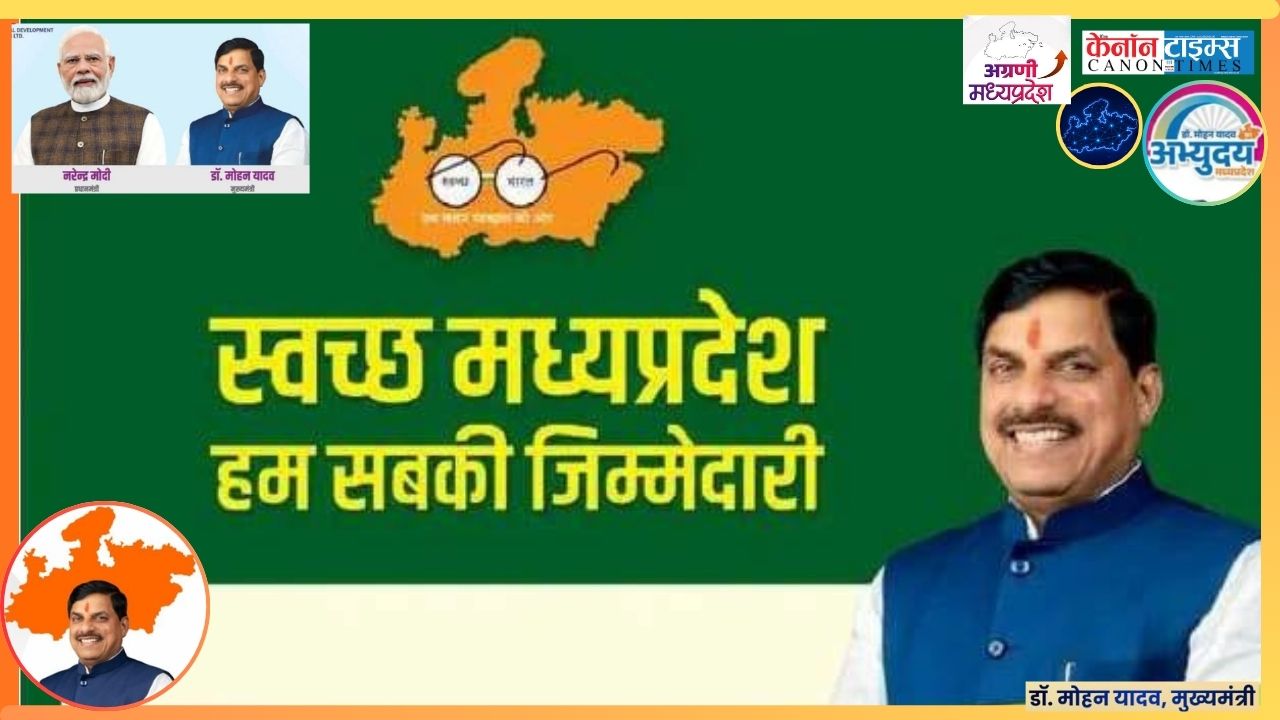
Madhya Pradesh’s renewed push for waste discipline is a timely reminder that cleanliness is not just a municipal task. It is a civic habit, an environmental duty and a public health necessity. Chief Minister Dr. Mohan Yadav’s appeal to citizens to treat waste as a personal responsibility reflects a larger truth: no state can become truly clean unless its people change how they throw, sort and dispose of waste every day.
The introduction of the Solid Waste Management Rules, 2026, across government departments and urban as well as rural areas is an important policy step. It shows that waste management is being treated as a state-wide system rather than a narrow city-level service. That matters because garbage does not stop at municipal boundaries. If villages, towns, offices and commercial spaces all follow the same framework, the chances of scientific waste handling improve significantly.
The emphasis on segregation at source is especially important. Separating wet, dry, sanitary and special care waste before handing it over is the most practical way to make recycling and processing effective. When waste streams are mixed, recovery becomes difficult and disposal becomes more polluting. But when households sort waste properly, the entire chain becomes cleaner and more efficient. In this sense, the citizen’s role is not secondary. It is the foundation of the system.
The call for home composting and RRR centres is equally sensible. A large share of household waste can be reduced, reused or recycled if people are given simple, practical alternatives. Turning kitchen waste into compost lowers the burden on collection and landfill systems. Sending old clothes, books and usable items to reuse centres keeps them in circulation longer. And carrying cloth bags and personal water bottles may seem like small habits, but across millions of people they can sharply cut single-use plastic waste. These are the kinds of behavioural changes that make policy real.
The larger issue is consistency. Waste management succeeds only when collection is regular, separation is enforced and local bodies do not become lax after initial enthusiasm. The chief minister’s instruction to urban bodies to maintain timely and uninterrupted collection from homes, shops and slums is therefore crucial. Cleanliness initiatives often fail not because people reject them, but because systems become uneven after the announcement phase. Reliable service is what builds public cooperation.
There is also a generational dimension to this message. If children grow up seeing waste segregation, composting and reuse as normal behaviour, cleanliness will stop being a campaign and become a culture. That is how durable environmental change happens. It is not achieved through slogans alone, but through repeated habits that become part of daily life.
Madhya Pradesh now has an opportunity to link policy, public participation and environmental discipline in a meaningful way. If the state can make “My Waste, My Responsibility” more than a slogan, it can reduce pollution, improve public health and set an example for others. The real test will be whether households, institutions and local governments act together consistently. If they do, the state can move closer to becoming not only cleaner, but also more sustainable and more responsible.

Author: This news is edited by: Abhishek Verma, (Editor, CANON TIMES)
Authentic news.