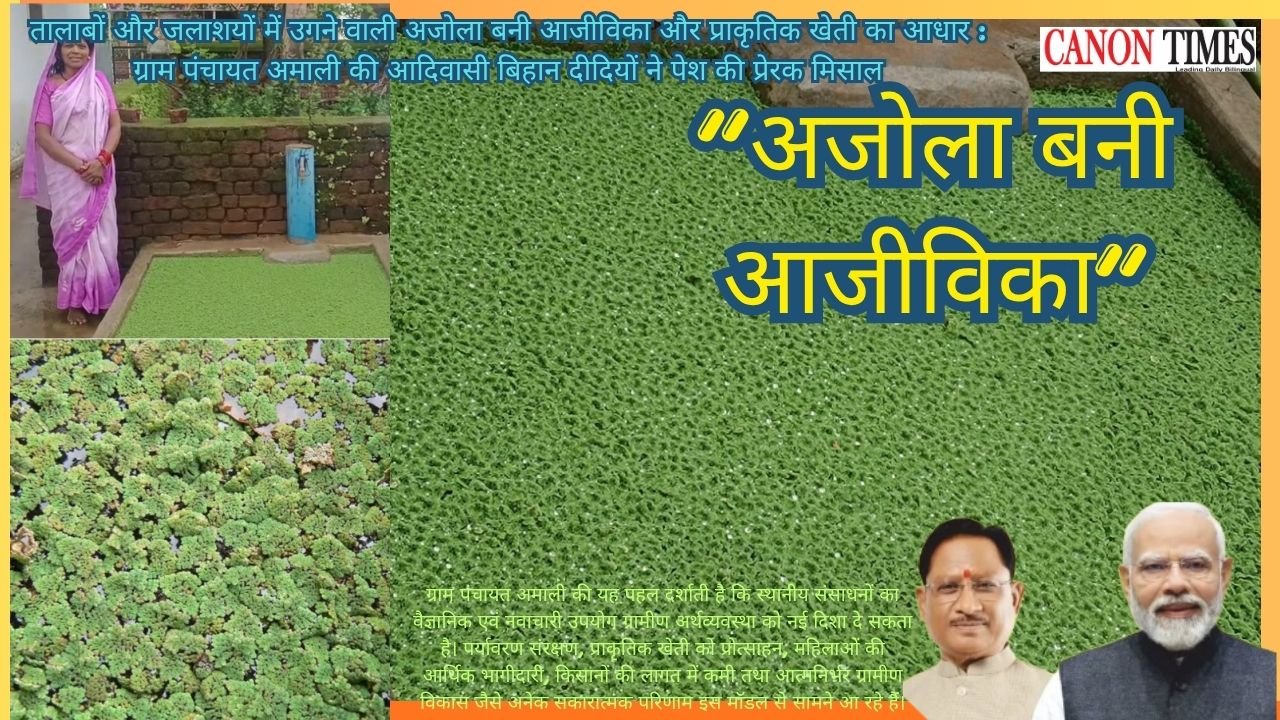
The women of Gram Panchayat Amali have shown how a simple local resource can become a powerful tool for income, natural farming and self-reliance. Their work with azolla is not just a farming experiment, but a practical model of women-led rural development.
What makes this effort noteworthy is the way it combines training, scientific method and collective action. After learning the technique, Anita Bai Markam began producing azolla in small tanks at home, and the group now uses it as a bio-support for paddy cultivation and as nutritious feed for livestock and poultry.

This matters because azolla reduces dependence on chemical inputs and lowers farming costs. It helps improve soil fertility, retains moisture and supports healthier crop growth, while also serving as a low-cost feed supplement for cattle, fish and chickens. In other words, it connects ecological farming with household income.
The story of Amali’s women also carries a larger social message. When rural women gain access to knowledge and small technologies, they do more than supplement family income; they become active decision-makers in the local economy. That shift strengthens both livelihood security and social confidence.
Their next step toward vermicompost and other value-added organic products makes the initiative even more promising. Amali’s experience proves that sustainable development does not always require large projects. Sometimes, it begins with recognizing the value of something overlooked and turning it into opportunity.

Author: This news is edited by: Abhishek Verma, (Editor, CANON TIMES)
Authentic news.