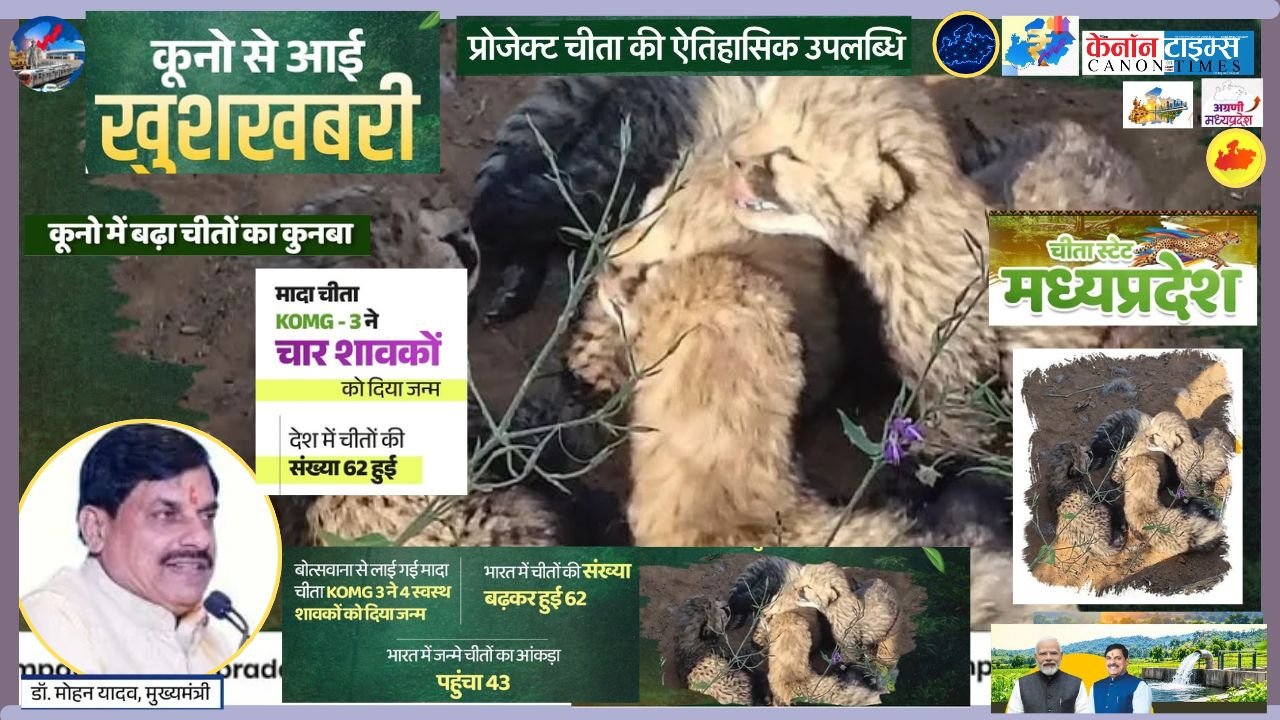
The birth of four healthy cubs at Kuno National Park is an encouraging milestone for Project Cheetah, but long-term success will depend on sustained scientific monitoring and habitat protection.
The birth of four healthy cheetah cubs at Madhya Pradesh’s Kuno National Park marks another significant moment in India’s ambitious effort to re-establish the cheetah population. The cubs were born to female cheetah KOMG 3, brought from Botswana. With this addition, India’s cheetah population has risen to 62, including 43 born on Indian soil. The development offers fresh encouragement to a conservation programme launched four years ago.

For Madhya Pradesh, the achievement is a matter of particular pride. Kuno has emerged as the centre of Project Cheetah, placing the state in the national spotlight for wildlife conservation. The latest birth also reflects the contribution of wildlife experts, veterinarians and forest personnel, whose work in monitoring animal health, managing habitats and responding to challenges is central to the programme. Their efforts deserve recognition.
However, the significance of this development goes beyond an increase in numbers. Reintroducing a species into an environment where it had disappeared requires sustained scientific planning, careful management and long-term commitment. The birth of cubs is an encouraging sign, but their survival and eventual ability to thrive in the wild will be the more meaningful measures of progress.
Project Cheetah must therefore be assessed not only through population figures but also through indicators such as cub survival, animal health, adaptation to the habitat and the availability of adequate prey. Regular monitoring, veterinary preparedness and protection from disease and other threats will remain essential. Equally important is the management of the surrounding landscape and the involvement of local communities, whose cooperation can help reduce conflict and build public support for conservation.
The programme also presents an opportunity to strengthen environmental awareness and responsible wildlife tourism. But tourism and publicity must remain secondary to ecological priorities. The welfare of the animals and the integrity of their habitat should guide every decision.
The arrival of four new cubs is a welcome milestone and a reason for optimism. Yet conservation is a long journey, not a series of celebratory announcements. If scientific management, habitat protection and community participation remain at the centre of the effort, Kuno can become a lasting example of how determined conservation policy can help restore threatened wildlife.

Author: This news is edited by: Abhishek Verma, (Editor, CANON TIMES)
Authentic news.