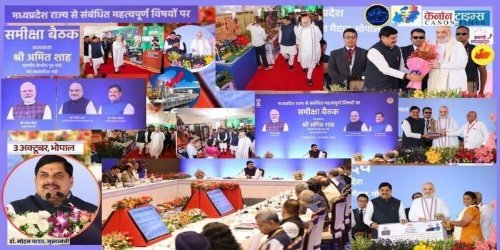
Chief Minister Dr Mohan Yadav has set an uncompromising goal. Dismantle the entire drug syndicate and make Madhya Pradesh drug free by 2029. At a high level review with senior Union Home Ministry officials, he said the campaign would also target cybercrime, illegal arms trafficking and organised crime. The message is important. Drug abuse cannot be addressed merely by seizing small quantities of narcotics or arresting individual users. It requires action against the networks that finance, transport, distribute and profit from the trade. The state has reported the detection of 17 clandestine drug manufacturing laboratories and has intensified action against repeat drug offenders under the PITNDPS Act. The review also highlighted the need for stronger interstate intelligence sharing with Uttar Pradesh, Rajasthan, Maharashtra, Gujarat and Chhattisgarh. Drugs, arms and organised criminal networks do not stop at state boundaries. Enforcement cannot stop there either.
This is more than a policing story. It is a bet on prevention as much as punishment. A drug free state cannot be built through raids alone. Strong enforcement is essential, but treatment, rehabilitation and community awareness must carry equal weight. The Union Home Ministry has called for an Anti Narcotics Task Force, speedy NDPS courts, better use of NATGRID and a Drug Free Campus framework in higher educational institutions. These are practical steps because they combine intelligence, prosecution and public health. The state says its Nasha Se Doori Hai Zaroori 2.0 campaign has recorded 58 crore social media views and direct participation from 2.47 crore citizens. Such numbers show reach, but the real question is whether awareness changes behaviour. A campaign succeeds when a student refuses a first dose, when a family seeks help without shame and when a dealer finds no safe market in a neighbourhood.
Why does this matter. Substance abuse erodes human capital. It damages health, breaks families and fuels crime. It pulls young people out of education and work. It creates a shadow economy that corrupts institutions. When a state takes on the syndicate, it is not just chasing criminals. It is protecting the future. Schools and colleges need counselling systems, confidential reporting channels and trained staff who can identify early signs of addiction. Parents need information, not panic. Communities need rehabilitation support, not only social exclusion. A young person caught in dependence should face accountability where required, but also receive a credible path back to health, education and work.
The real test will be coordination and follow through. Will intelligence translate into arrests that lead to convictions, not just headlines. Will seized assets be traced and forfeited so that crime does not pay. Will financial trails be investigated so that funders are exposed, not just foot soldiers. Will border districts get the personnel and technology they need to interdict shipments before they enter the state. Will courts clear NDPS cases fast so that accused persons do not walk free on bail while evidence rots. Will treatment centres be available in every district so that addicts can recover without travelling far. And will police personnel get the training, protection and mental health support they need when they take on powerful criminal interests. The state has cited progress on police modernisation. It has notified a State Cyber Crime Coordination Centre, expanded e evidence coverage from 17 percent to 33 percent in a year and deployed 57 mobile forensic vans. It says it has achieved a 69 percent rate of filing chargesheets within 90 days, above the national average of 59 percent, while leading in direct delivery of e summons. These measures matter because delayed investigation and weak evidence often allow organised criminals to escape accountability.
For citizens, the gain is direct. Safer streets. Healthier youth. Less crime. That is the true measure of this push: not just the labs busted, but the networks broken, the lives saved and the trust earned.

Author: This news is edited by: Abhishek Verma, (Editor, CANON TIMES)
Authentic news.