Rural Livelihood Missions Can Transform Women from Wage Earners into Agricultural Entrepreneurs
India’s rural economy is undergoing a gradual transformation, with women increasingly emerging as key contributors to agricultural development and household prosperity. However, economic independence for rural women remains closely linked to access to credit, productive resources, skill development and sustainable livelihood opportunities. Strengthening these areas is essential to achieving inclusive growth and building a self-reliant rural India.

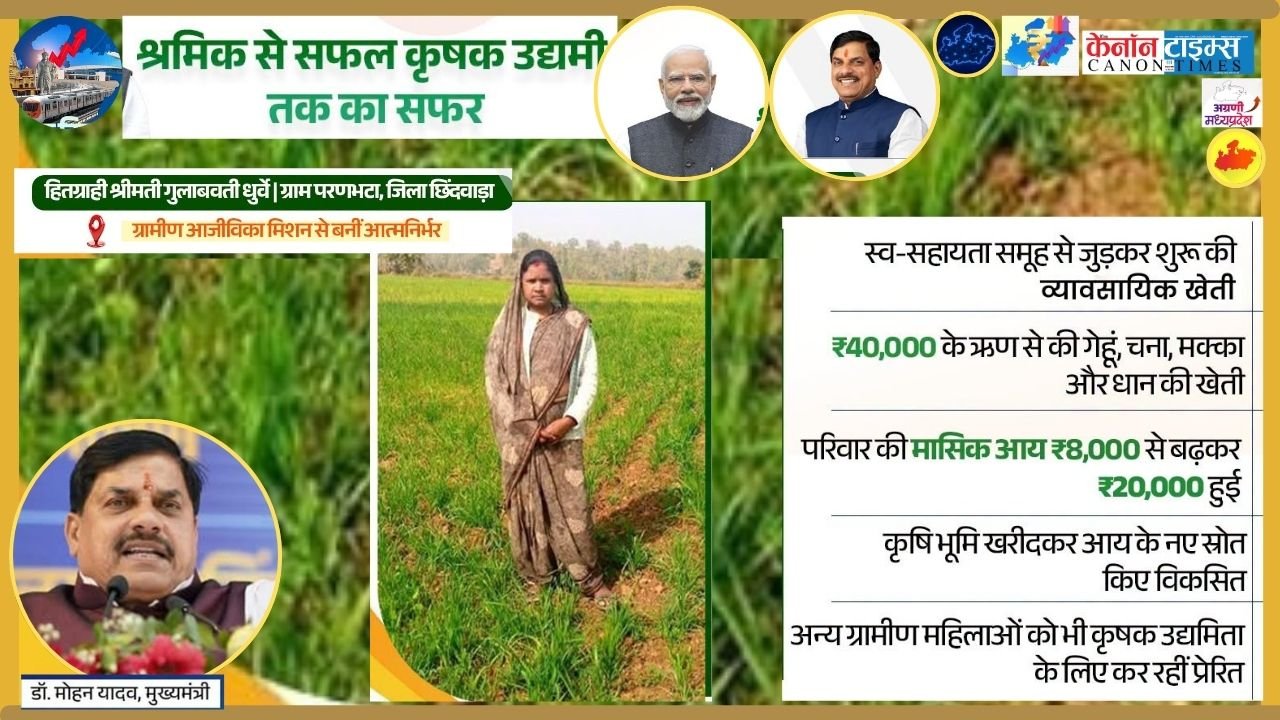
The journey of Gulabwati Dhurve, a woman farmer from Parambhatta village in Chhindwara district of Madhya Pradesh, illustrates the potential of rural livelihood initiatives to bring meaningful change. Associated with a self-help group under the Rural Livelihood Mission, she expanded her agricultural activities with a loan of Rupees 40,000. According to the available information, her family’s monthly income increased from Rupees 8,000 to Rupees 20,000. Her experience highlights how financial access and individual determination can create new economic opportunities for rural households.
The significance of such initiatives extends far beyond an individual success story. For many rural women, limited access to institutional finance, land ownership, agricultural technology and markets can restrict their economic potential. Self-help groups offer a practical way to address some of these barriers by promoting collective savings, financial inclusion, mutual support and entrepreneurship.
Agriculture remains a major source of rural employment, but its future depends on making farming more productive, profitable and sustainable. Women farmers must be recognised not merely as contributors to family labour but as entrepreneurs and decision-makers in their own right. Access to affordable loans, quality seeds, irrigation, modern farming techniques, crop insurance and reliable markets can help them increase productivity and reduce financial vulnerability.
Equally important is the need to ensure that rural livelihood programmes deliver lasting results. Credit alone cannot guarantee success unless it is supported by appropriate training, market access, technical guidance and timely institutional assistance. Government agencies, financial institutions and community organisations must work together to help women convert small beginnings into viable and sustainable enterprises.
The growing participation of women in agriculture also has wider social implications. Greater financial independence can strengthen household decision-making, improve investment in children’s education and nutrition, and enhance women’s confidence and social standing. When rural women prosper, the benefits can extend to entire families and communities.
Madhya Pradesh has significant potential to expand women-led agricultural enterprises through stronger self-help groups and effective implementation of rural livelihood programmes. The priority should be to replicate successful practices, improve access to resources and ensure that women in remote villages are not left behind.
The ultimate measure of rural development is not simply the number of schemes launched or loans distributed, but the extent to which people gain lasting economic security and dignity. The experience of women such as Gulabwati Dhurve underlines an important lesson: empowering rural women is not merely a welfare objective; it is an investment in agricultural progress, inclusive development and national prosperity.
A self-reliant India can only be built on the foundation of self-reliant villages. And that transformation must place rural women at its centre.

Author: This news is edited by: Abhishek Verma, (Editor, CANON TIMES)
Authentic news.