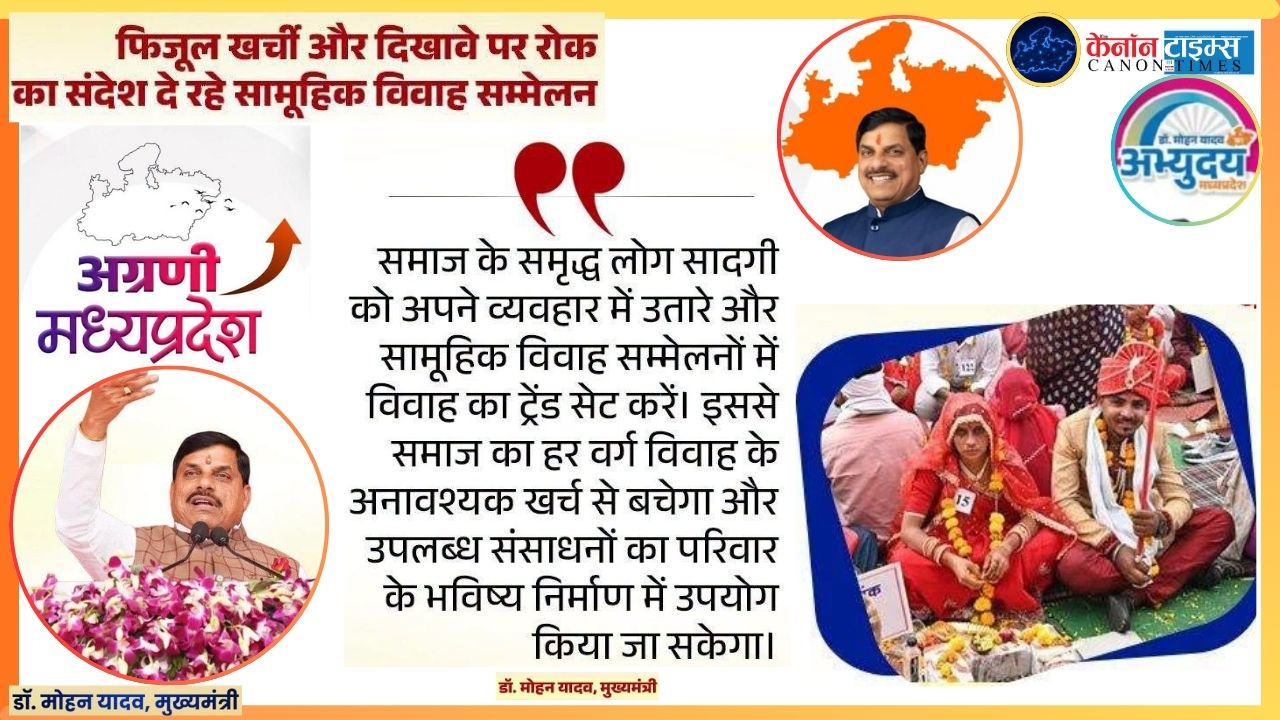
In many parts of India, weddings are celebrated not only as sacred unions but also as public displays of wealth and social status. Over time, this culture of extravagant spending has placed immense financial pressure on families, often forcing them into debt merely to meet societal expectations. Against this backdrop, the idea of collective or community weddings deserves serious attention as a practical and socially responsible alternative.
Collective weddings offer more than economic relief. By sharing venues, arrangements, and ceremonial expenses, they significantly reduce the financial burden on families while preserving the dignity and sanctity of marriage. This model enables families from diverse economic backgrounds to celebrate an important life event without compromising their future financial security.

The broader social impact is equally important. Money saved from lavish wedding celebrations can instead be invested in education, healthcare, housing, entrepreneurship, or the long-term well-being of the newly married couple. Such a shift reflects a change in priorities, where meaningful investments replace short-lived displays of extravagance.
However, the success of this movement depends on social leadership. Influential members of society, public representatives, and community organizations must lead by example. When respected families choose simplicity over ostentation, they help redefine social norms and reduce the pressure on others to spend beyond their means.
Collective weddings also foster inclusivity and social harmony. They bring together families from different backgrounds, emphasizing the shared values of commitment, mutual respect, and community spirit rather than material wealth. In doing so, they reinforce the principle that the true essence of marriage lies in the bond between two individuals and their families, not in the scale of the celebration.
Critics may argue that every family has the right to celebrate according to its means and traditions. That is undoubtedly true. The objective is not to discourage personal choice but to challenge the unhealthy competition that has transformed weddings into financial contests. Simplicity should be respected as much as grandeur.
As India continues its journey toward inclusive and sustainable development, rethinking social customs becomes essential. Collective weddings present an opportunity to reduce unnecessary expenditure, promote financial responsibility, and strengthen community values. A marriage should mark the beginning of a prosperous future, not the burden of avoidable debt. By embracing simplicity and responsible celebration, society can ensure that weddings remain occasions of joy rather than financial strain.

Author: This news is edited by: Abhishek Verma, (Editor, CANON TIMES)
Authentic news.