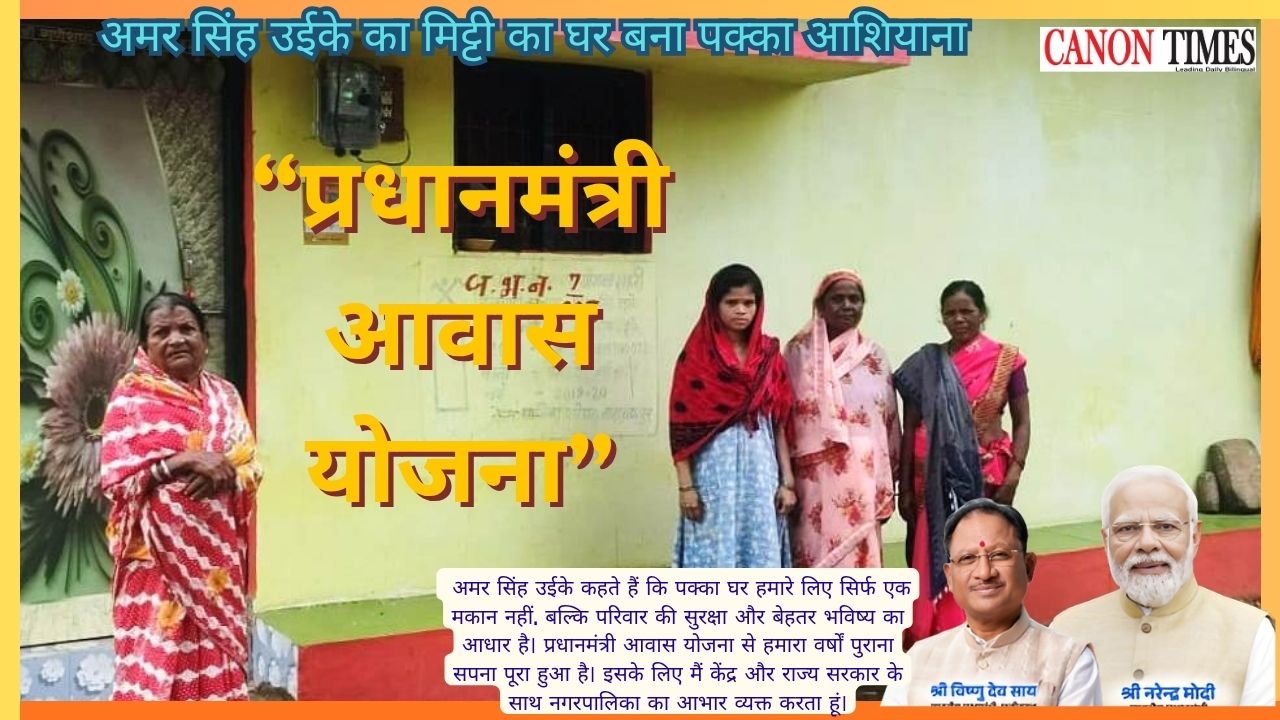
For Amar Singh Uike of Ward 7 in Narayanpur Nagar Palika, the Pradhan Mantri Awas Yojana has turned a long held dream into a solid reality. His family lived for years in a kuccha house with mud walls and tiled roofing. During monsoon, life became a struggle. With limited income, building a pucca home seemed impossible. Then came information from a ward camp. He applied at the Nagar Palika office. His application was approved. A 29 square metre house was built at a sanctioned cost of 3.05 lakh rupees, with 1.50 lakh from the Centre, 0.76 lakh from the state and 0.79 lakh as beneficiary contribution. Today, his family lives in a secure, weather proof home. The worry of rain leaking through the roof is gone. The peace of mind is priceless.
This is what housing policy should feel like on the ground. It is not just about bricks and mortar. It is about health, safety and dignity. A pucca house reduces illness from damp and cold. It protects belongings from monsoon damage. It gives children a stable space to study. It lets a family plan beyond the next storm. For households living on the edge, a home is the first asset that changes everything else.
Why does this model work. The three way cost sharing makes it affordable. The Centre and state cover most of the cost, while the beneficiary contributes a manageable share. This creates ownership without crushing debt. The ward camp approach brings information to people who may not navigate offices easily. The Nagar Palika’s role in processing applications and overseeing construction ensures local accountability. When a municipality treats housing as a core service, not a side scheme, delivery improves.
The human impact is the most powerful part of this story. Amar Singh says the house is not just a structure. It is security and a better future for his family. That sentiment is common among PMAY beneficiaries. A pucca home changes how a household sees itself. It reduces vulnerability. It increases confidence. It allows small investments in education, health and livelihoods that were too risky when shelter was uncertain.
The real test will be scale and quality. Can this speed and clarity be replicated across all wards and all towns. Will construction meet technical standards so that homes last. Will grievance redressal be swift if a case gets stuck. And will the poorest households, who may struggle even with the beneficiary share, get extra support so that they are not left behind. If these pieces fall into place, PMAY can become a lasting pillar of urban and rural development.
India is betting that every family deserves a safe home. For millions like Amar Singh, a pucca house is not just a roof. It is a foundation for dignity, health and opportunity. That is the true measure of this scheme: not just the number of houses built, but the lives stabilized and the futures unlocked.

Author: This news is edited by: Abhishek Verma, (Editor, CANON TIMES)
Authentic news.