Madhya Pradesh’s 1,920 MW pumped hydro storage project could strengthen power supply during peak demand while creating opportunities for tourism, education and employment.
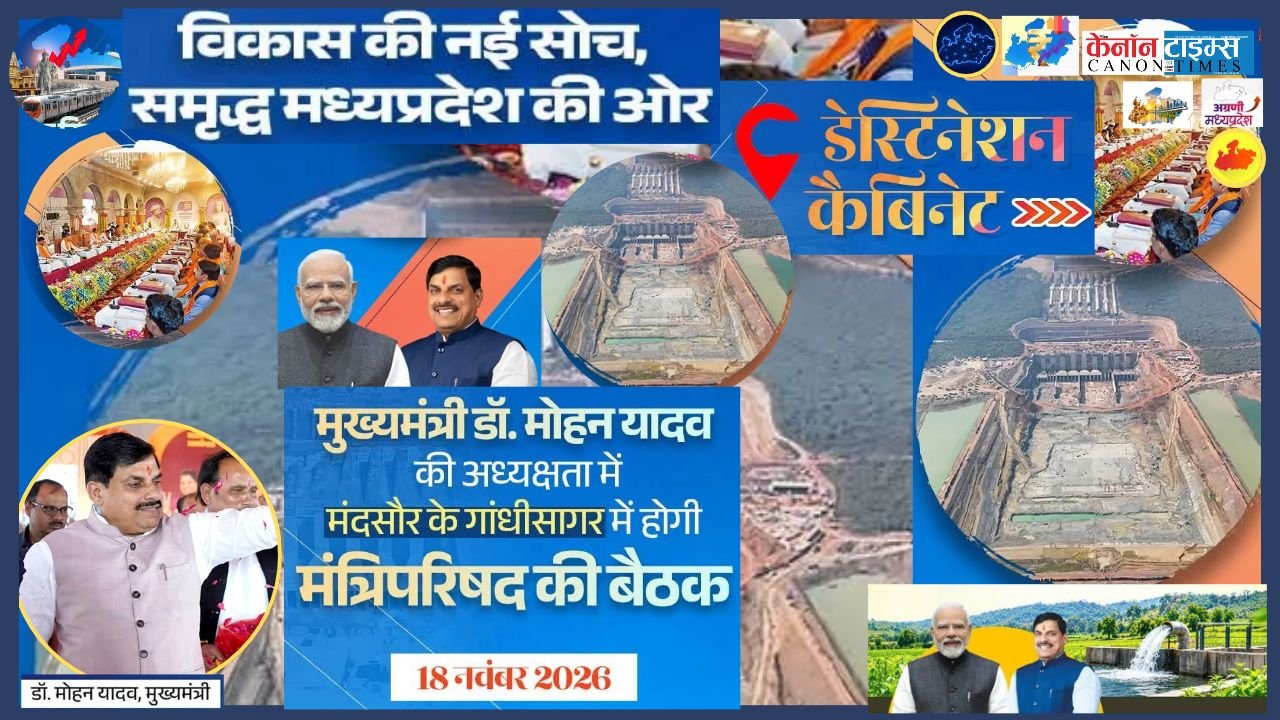
Madhya Pradesh’s decision to hold a cabinet meeting at Gandhi Sagar Dam in Mandsaur district reflects an effort to bring regional development priorities and local potential into sharper focus. But the bigger significance of the occasion lies in the pumped hydro storage project taking shape in the region, which could play an important role in the state’s future energy security.
With an investment of around Rs 11,474 crore, the Gandhi Sagar project is designed to provide up to 1,920 MW of electricity for six continuous hours. The Chief Minister has highlighted its potential to supply 2,000 MW during peak demand, although the project’s stated installed capacity is 1,920 MW. Its first set of turbines is expected to begin operations in December 2026, with full commercial operations scheduled from June 2027.
The technology works by using surplus electricity, particularly from solar and wind sources, to pump water from a lower reservoir to an upper one. When demand rises, the stored water is released to generate electricity. This makes pumped storage an important way to balance fluctuations in renewable power generation and provide electricity when it is needed most.
The project will reuse water from the Gandhi Sagar reservoir in a closed cycle rather than consume it in the conventional sense. Its estimated round-trip efficiency is around 80 per cent. These features make it a significant infrastructure investment, although its actual contribution will depend on timely completion, efficient operation and sound environmental management.
The project is also expected to generate wider economic benefits. Around 4,000 people have reportedly received employment during construction, while about 200 permanent jobs are expected during operations and maintenance. Its proximity to Gandhi Sagar Wildlife Sanctuary, ancient rock art, archaeological remains and tribal cultural heritage also offers scope to develop educational and tourism activities.
Holding cabinet meetings outside Bhopal can help draw attention to the distinct strengths and needs of different regions. However, such initiatives must lead to measurable improvements in local infrastructure, livelihoods and public services.
Gandhi Sagar has the potential to become more than an energy project. If developed responsibly, it can strengthen renewable energy integration, support local employment and promote scientific learning. The real test will be to ensure that its economic and environmental benefits reach the surrounding communities while contributing to Madhya Pradesh’s long-term energy needs.

Author: This news is edited by: Abhishek Verma, (Editor, CANON TIMES)
Authentic news.