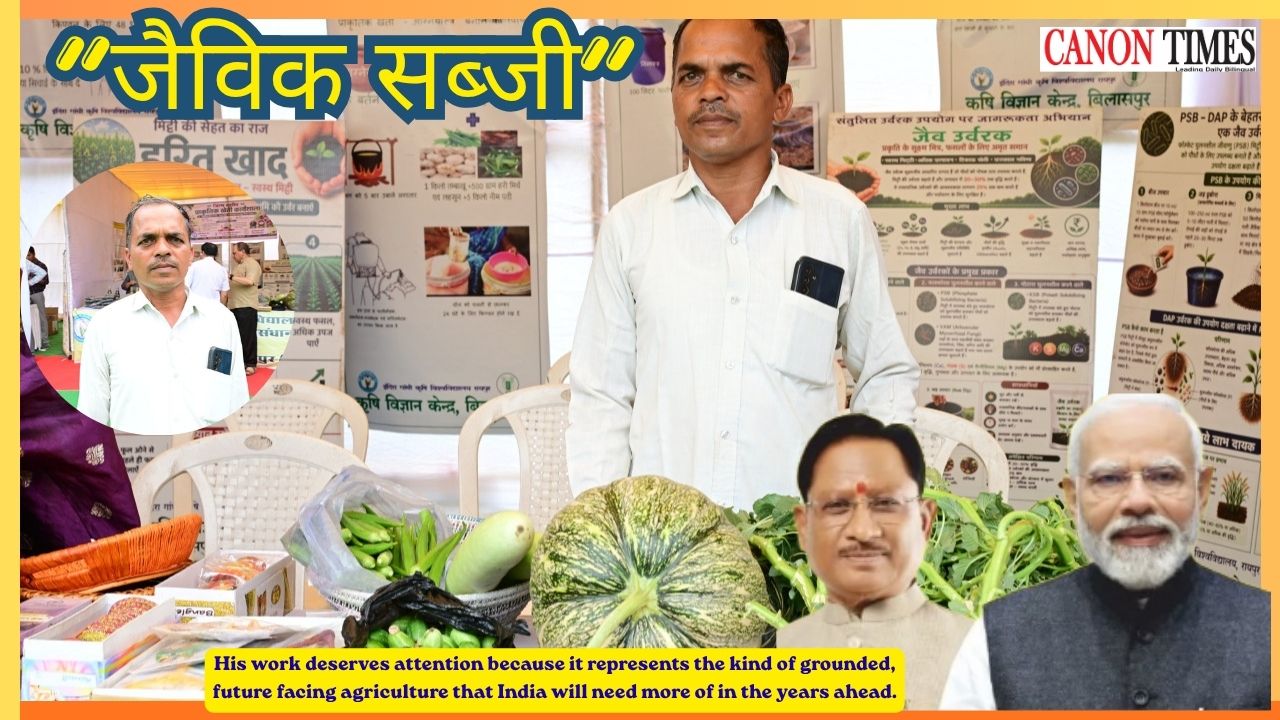
The story of Jadunandan Verma from Malhar is a reminder that farming can be both profitable and sustainable when it is guided by innovation, discipline and respect for the land.
By cultivating organic vegetables on one acre and organic apples on half an acre, he has shown that small holdings need not mean small ambitions. His success, with an annual income of around two lakh rupees from organic vegetables alone, offers a practical model for other farmers who are searching for better returns without sacrificing soil health.

What makes his example especially valuable is not just the income he earns but the method he follows. For nearly a decade, he has relied on cow dung manure, vermicompost, jeevamrit and other organic inputs instead of heavy chemical use. That choice has reduced costs, improved crop quality and helped restore soil fertility.
In an era when farmers are often pushed into expensive input cycles, such a shift matters. It shows that lower dependence on external chemicals can mean greater resilience and healthier production in the long run.
His organic apple cultivation is equally noteworthy. Apples are not usually associated with this region, which is why his half acre orchard has attracted attention. The fact that customers now travel directly to his farm to buy the fruit is significant. It indicates growing consumer trust in organic produce and points to the market potential of specialty farming when quality is consistent and visible. When consumers are willing to pay directly at the farm gate, the farmer retains more value and becomes less dependent on middlemen.
Jadunandan Verma’s success also underlines the importance of knowledge and institutional support. Training from the Krishi Vigyan Kendra helped him understand organic manure preparation, pest management and improved agricultural techniques. That guidance, combined with regular support from the PM Kisan Samman Nidhi scheme, has helped him manage costs and strengthen his enterprise. The lesson is clear: farmers do better when public policy does not stop at subsidies but also provides training, extension and technical confidence.
There is a larger policy message here as well. Organic farming should not be romanticized as an easy alternative, because it still requires skill, patience and market access. But it should be recognized as a serious pathway for income improvement, soil conservation and healthier food systems. If more farmers are encouraged through training, demonstration plots, processing support and market linkage, cases like Malhar can move from exception to example.
Jadunandan Verma has done more than build a personal success story. He has shown that a farmer can protect the environment while also improving income, and that scientific farming does not always mean chemical farming. His work deserves attention because it represents the kind of grounded, future facing agriculture that India will need more of in the years ahead.

Author: This news is edited by: Abhishek Verma, (Editor, CANON TIMES)
Authentic news.