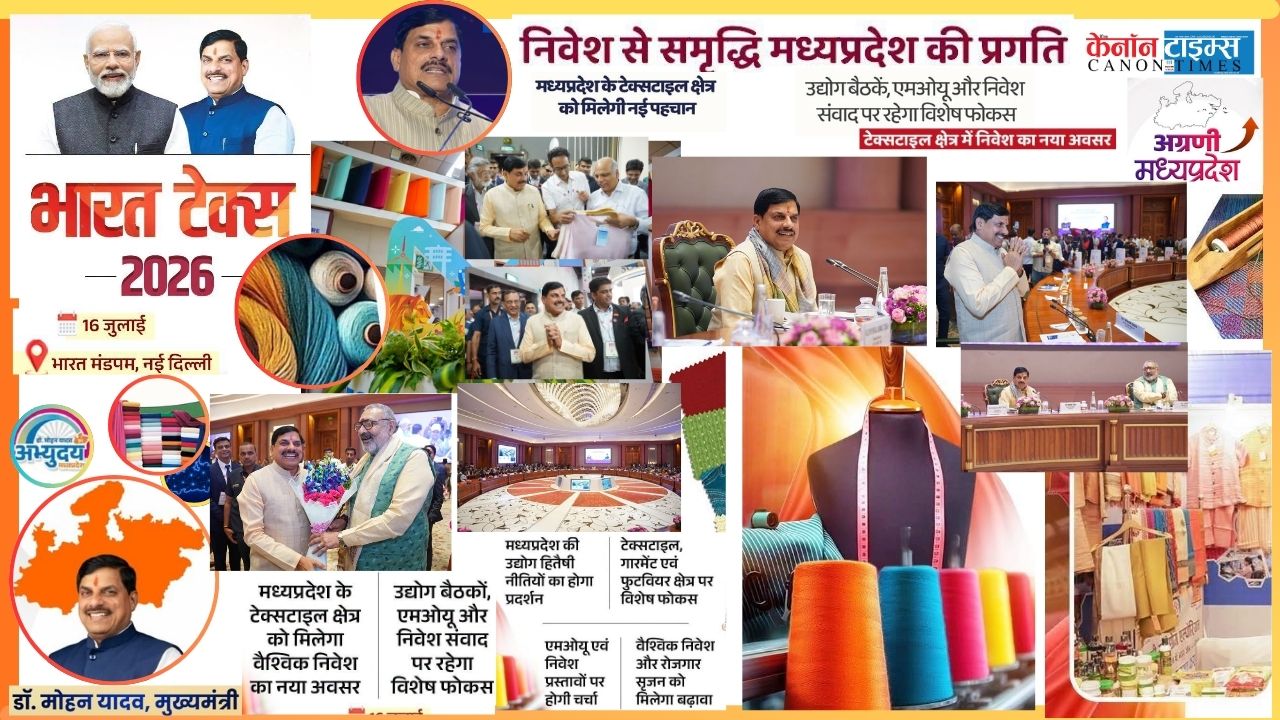
Madhya Pradesh’s presence at Bharat Tex 2026 shows a state trying to move from promise to production in textiles and apparel. By presenting its PM MITRA Park, textile policy and investment-ready industrial zones to domestic and global investors, the state is positioning itself as a serious contender in the next phase of manufacturing growth.
What makes this effort notable is the focus on the full value chain. Investors are being shown not just land or incentives, but an integrated ecosystem that can support fiber, fabric, garments, recycling and value-added products. That matters because textile competitiveness today depends on more than low costs. It depends on speed, infrastructure, policy clarity and the ability to scale sustainably.

The emphasis on sustainable manufacturing is especially important. Wastewater recycling, zero liquid discharge systems and resource-efficient production are no longer optional extras in global textile markets. They are increasingly part of what buyers, brands and regulators expect. By highlighting ESG-aligned practices, Madhya Pradesh is signaling that it wants to compete in markets where sustainability is becoming a core business requirement, not a public-relations layer.
The state’s approach also fits the larger shift in international trade. As free trade agreements open new opportunities, exporters need industrial systems that can meet quality, compliance and delivery demands. A textile hub that combines modern infrastructure with policy support can help companies respond to those demands more effectively. In that sense, PM MITRA Park is not just an industrial project. It is a platform for export competitiveness.
There is also a broader development angle here. Textile manufacturing can create large-scale employment, especially for women and semi-skilled workers, while supporting ancillary businesses in logistics, machinery and packaging. If the ecosystem is built well, it can have a strong multiplier effect across districts and supply chains. That is why investor interest in the sector matters beyond the immediate capital figure.
The real test will be execution. Exhibitions can generate enthusiasm, but factories, jobs and exports are what ultimately change a state’s industrial profile. If Madhya Pradesh can convert this attention into projects on the ground, it could become a more important player in India’s textile future.

Author: This news is edited by: Abhishek Verma, (Editor, CANON TIMES)
Authentic news.