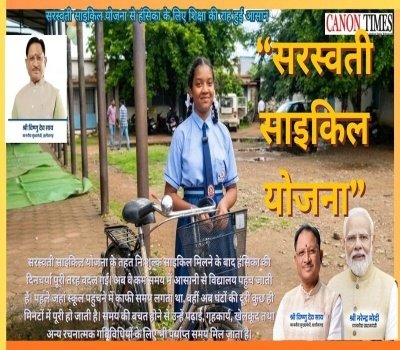
The experience of Hansika Netam from Chakarbhatta shows how a simple bicycle can remove a major barrier to girls’ education. For many students, especially those living far from school, distance, travel time and daily fatigue can affect attendance, studies and participation in school activities.
Under the Saraswati Cycle Scheme, Hansika received a bicycle that has made her journey to school faster and easier. The time she once spent travelling can now be used for studies, homework, sports and creative activities. Regular attendance has also increased her confidence and strengthened her interest in education.
The importance of this scheme goes beyond transportation. A bicycle gives a girl greater independence and reduces the burden on her family. It also sends a strong message that girls deserve safe, convenient and equal access to education.
Providing free bicycles to eligible Class 9 students from Scheduled Caste, Scheduled Tribe, Other Backward Class and Below Poverty Line families is a meaningful investment in social progress. Such support can help reduce absenteeism and prevent girls from discontinuing their education because of distance.
Hansika’s story shows that educational empowerment often begins with practical support. When a girl can reach school with ease, she is more likely to attend regularly, learn confidently and dream without limits. The Saraswati Cycle Scheme is therefore not merely a welfare measure; it is a step towards building a more educated, independent and empowered generation of girls.

Author: This news is edited by: Abhishek Verma, (Editor, CANON TIMES)
Authentic news.