The proposed second container terminal is a strategic investment in maritime infrastructure, but its success will depend on timely execution, efficient logistics and sustainable operations.
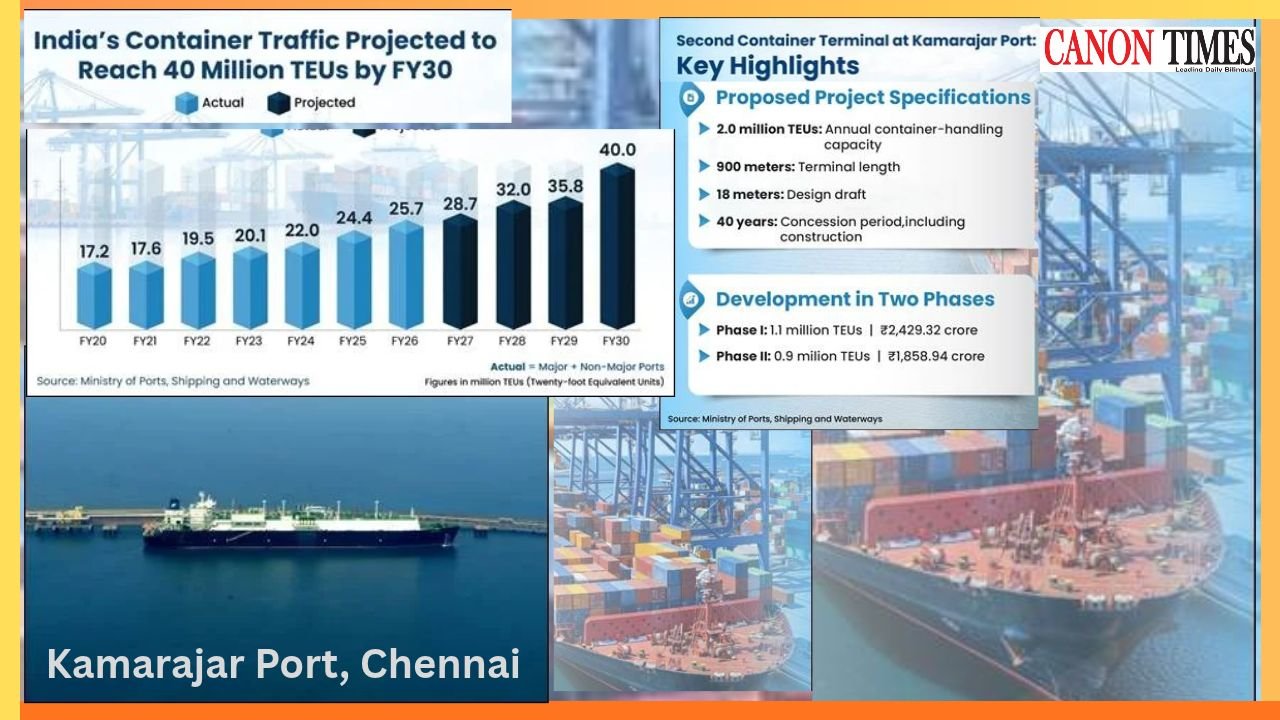
India’s growing trade ambitions require a maritime network capable of handling larger cargo volumes, bigger vessels and increasingly demanding supply chains. With container traffic at Indian ports reaching 25.7 million TEUs in FY 2025-26 and projected to rise to around 40 million TEUs by FY 2030, expanding port capacity is no longer optional. The approval of a second container terminal at Tamil Nadu’s Kamarajar Port is therefore a significant step towards strengthening the country’s trade infrastructure.

The proposed terminal will add two million TEUs of annual handling capacity. Located near Chennai, Kamarajar Port serves important industrial centres across Tamil Nadu and neighbouring states, including Bengaluru, Hosur, Sriperumbudur and Sri City. Better container-handling facilities can improve access to international markets for manufacturers and exporters, reduce logistical bottlenecks and strengthen the region’s industrial competitiveness.
The project’s scale reflects this ambition. With an estimated private-sector project cost of Rs 4,288.26 crore and an additional Rs 450 crore earmarked for dredging, the terminal will be developed through a public-private partnership. Its 900-metre terminal length and design capability to accommodate vessels carrying up to 24,346 TEUs will position the port to handle some of the largest container ships in global trade.
Kamarajar Port already has a strong operational foundation. Its first container terminal, which began commercial operations in 2018, handled around 0.7 million TEUs in FY 2025-26, operating at approximately 88 per cent of its capacity. The port has also achieved an operational draft of 18 metres, improving its ability to accommodate large vessels. These developments make the expansion a response to demonstrated demand rather than merely an exercise in creating additional infrastructure.
However, port capacity alone does not guarantee efficient trade. The new terminal must be supported by reliable road and rail connectivity, modern cargo-handling systems, digital clearance processes and effective coordination among shipping lines, customs authorities and logistics operators. Delays outside the port can undermine the benefits of investment within it.
The proposed employment generation of around 750 direct and indirect jobs during construction and 800 during operations is welcome. Yet the project’s broader contribution should also be measured through local skill development, opportunities for smaller logistics businesses and improved access for regional industries.
The 48-month construction schedule and phased commissioning provide a clear implementation framework. Meeting these milestones will require close monitoring of costs, environmental safeguards and construction quality. Dredging and increased maritime activity must also be managed responsibly to protect the coastal ecosystem.
Kamarajar Port’s expansion can strengthen India’s position in global supply chains. Its real value, however, will be determined not simply by the additional two million TEUs of capacity, but by whether that capacity translates into faster, more reliable and more competitive trade.

Author: This news is edited by: Abhishek Verma, (Editor, CANON TIMES)
Authentic news.