Timely payments, reliable infrastructure and fair access must turn procurement promises into tangible benefits.
Madhya Pradesh’s preparations for the 2026-27 kharif procurement season underline the importance of an efficient and transparent system in protecting farmers’ interests. With paddy procurement scheduled from December 1 to January 20 and jowar and bajra procurement running from November 23 to December 23, the state faces a substantial logistical task. The challenge is not merely to purchase the announced quantities, but to ensure that every eligible farmer can sell produce without unnecessary delays, uncertainty or procedural obstacles.

The scale is considerable. Paddy cultivation covered 41.54 lakh hectares this season, with estimated production of 1.477 crore metric tonnes. More than 8.91 lakh farmers have registered for paddy procurement. The state has established 1,433 paddy procurement centres and 56 centres for coarse grains. Paddy’s minimum support price has been fixed at Rs 2,441 per quintal. These figures point to the need for careful coordination among procurement agencies, district administrations, transporters and warehouses.
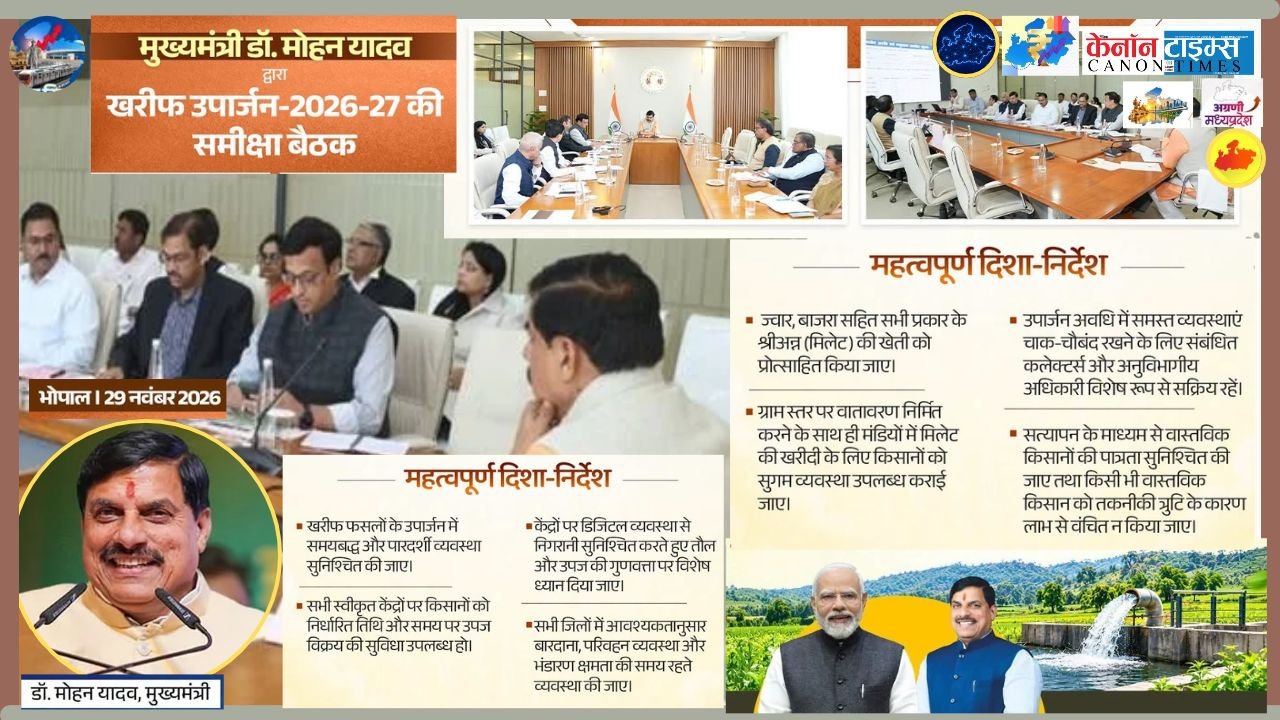
The Chief Minister’s emphasis on digital monitoring, accurate weighing, quality checks and timely arrangements for gunny bags, transportation and storage is therefore welcome. Procurement centres must be operational when farmers are scheduled to arrive, with adequate staff and clear procedures. District collectors and sub-divisional officers have an important responsibility to resolve bottlenecks before they disrupt operations.
The introduction of farmer registration based on AgriStack data and software-based verification of paddy transport trucks may improve traceability and reduce irregularities. However, technology must remain a tool for better service, not an additional barrier. Genuine farmers should not lose access to procurement because of mismatched records, connectivity problems or technical errors. Accessible correction mechanisms and prompt grievance redressal are essential.
The proposed encouragement of millets, particularly jowar and bajra, also deserves attention. Expanding their cultivation can diversify agriculture and create opportunities beyond the dominant paddy economy. But appeals to farmers to grow millets will have limited impact unless procurement is convenient, prices are remunerative, and reliable markets exist. Local awareness, processing facilities and storage infrastructure must accompany procurement support.
Ultimately, the credibility of agricultural procurement rests on what farmers experience at the centre: timely service, fair weighing, transparent quality assessment and prompt payment. A well-organised season can strengthen rural confidence, but its success must be judged by these outcomes rather than announcements and registration figures alone.

Author: This news is edited by: Abhishek Verma, (Editor, CANON TIMES)
Authentic news.