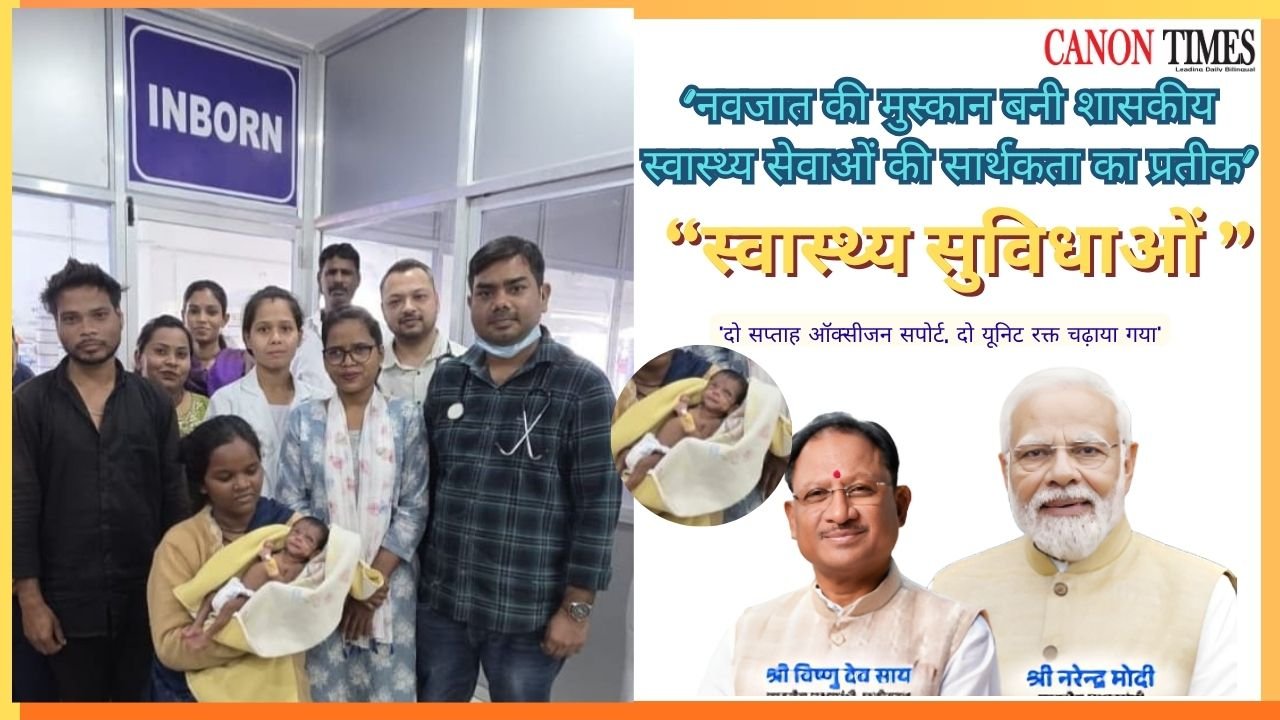
A newborn weighing just 900 grams, born prematurely and struggling to breathe, faced severe health challenges from the very beginning. Yet, after nearly two months of treatment and specialised care at the Gariaband district hospital in Chhattisgarh’s Gariaband-Pendra-Marwahi region, the baby recovered, gained weight and returned home. This case shows why strong newborn care facilities close to remote communities matter.
The infant, born to Gomati of Chuktipani village, was admitted to the Special Newborn Care Unit at the district hospital. The baby received oxygen support for about two weeks, two units of blood transfusion for severe anaemia, and continuous monitoring along with nutritional care. Kangaroo Mother Care, regular feeding and other medical support helped the child’s condition improve. The baby’s weight rose from 900 grams to 1.35 kilograms before discharge on 8 October 2026.
This recovery is a reminder that timely access to expert care can make the difference between life and loss. For families in remote and forested areas, travelling long distances for treatment is often difficult. When district hospitals have functioning newborn care units, trained nurses and paediatric specialists, critically ill newborns can receive care without being forced to travel far from home.
The credit for this outcome belongs to the doctors and nursing staff who provided continuous monitoring and treatment. Their work also highlights a wider need: newborn care cannot depend on individual effort alone. Hospitals require adequate staff, essential equipment, reliable oxygen and blood supply, and protocols that ensure every premature or low-birth-weight baby receives prompt attention.
The case also underlines the importance of maternal and child health services before and after birth. Antenatal care, safe delivery, skilled birth attendance and follow-up support all help reduce the risks that lead to such emergencies. A strong newborn care unit is vital, but prevention and early care remain equally important.
For one family in a remote village, the baby’s return home is a moment of immense relief. For the health system, it is a measure of what accessible, well-supported district-level care can achieve. Strengthening such services across rural and tribal areas is essential if every newborn is to have a fair chance at a healthy start.

Author: This news is edited by: Abhishek Verma, (Editor, CANON TIMES)
Authentic news.