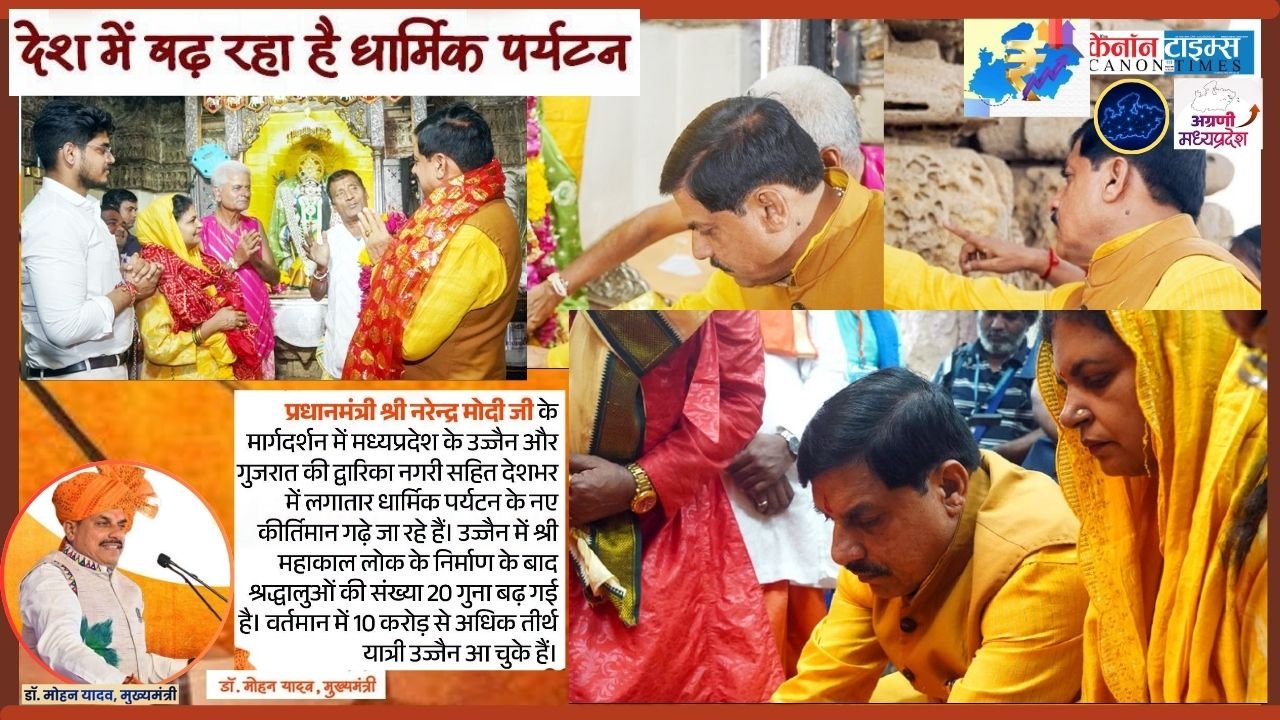
Chief Minister Dr Mohan Yadav visited the Dwarkadhish temple in Devbhumi Dwarka, Gujarat, with his wife and family. He offered prayers, sought blessings for the people of Madhya Pradesh and extended Janmashtami greetings to citizens across the country. Speaking to media afterward, he highlighted a broader trend. Religious and spiritual tourism is growing rapidly in India. He pointed to Ujjain’s Mahakal Lok, saying devotee footfall has risen twenty times after the corridor’s inauguration, with over 10 crore pilgrims now visiting annually. He noted the Kashi Vishwanath corridor in Varanasi as another example. His message was clear. Faith is a powerful force. When paired with infrastructure and management, it becomes an engine of development.
This is not just about temples and corridors. It is about how India is reimagining its cultural assets. For decades, pilgrimage sites were often associated with congestion, poor facilities and ad hoc management. The new approach treats them as destinations that need planning, investment and professionalism. Better approach roads, parking, signage, lighting, sanitation, security and crowd management. Clean accommodation options. Clear information for visitors. And a focus on experience, not just access. The result is more visitors, longer stays and higher spending in the local economy.
Why does this matter. Spiritual tourism is one of the fastest growing segments of India’s travel market. It is less sensitive to global shocks than leisure tourism. It draws domestic visitors year round, not just in peak seasons. It creates jobs for guides, drivers, hotel staff, shopkeepers and artisans. It also strengthens local pride. When a temple town becomes a model of cleanliness and order, it changes how residents see their own heritage. It encourages them to maintain standards and to invest in their own properties.
Madhya Pradesh is positioning itself at the centre of this shift. Ujjain is the flagship. But the state is also upgrading facilities at other major religious sites, improving connectivity and ensuring safety for pilgrims. The Chief Minister said the government is committed to restoring the glorious past of Indian culture. In practical terms, that means treating temples as living institutions that need modern management, not just ritual care. It means recognising that a pilgrim’s experience begins the moment they enter the town, not just when they step into the sanctum.
The real test will be balance. Development must not come at the cost of sanctity. Crowds must be managed without turning worship into a queue. Local communities must benefit, not just large contractors. And environmental safeguards must be in place so that rivers, hills and heritage structures are protected. If these pieces fall into place, spiritual tourism can become a sustainable pillar of the economy.
India is betting that its civilizational depth can be a source of modern prosperity. For millions of pilgrims, a better managed temple is not just a nicer visit. It is a sign that their faith is respected and that their time is valued. That is the true measure of this push: not just the number of visitors, but the dignity and safety they experience along the way.

Author: This news is edited by: Abhishek Verma, (Editor, CANON TIMES)
Authentic news.