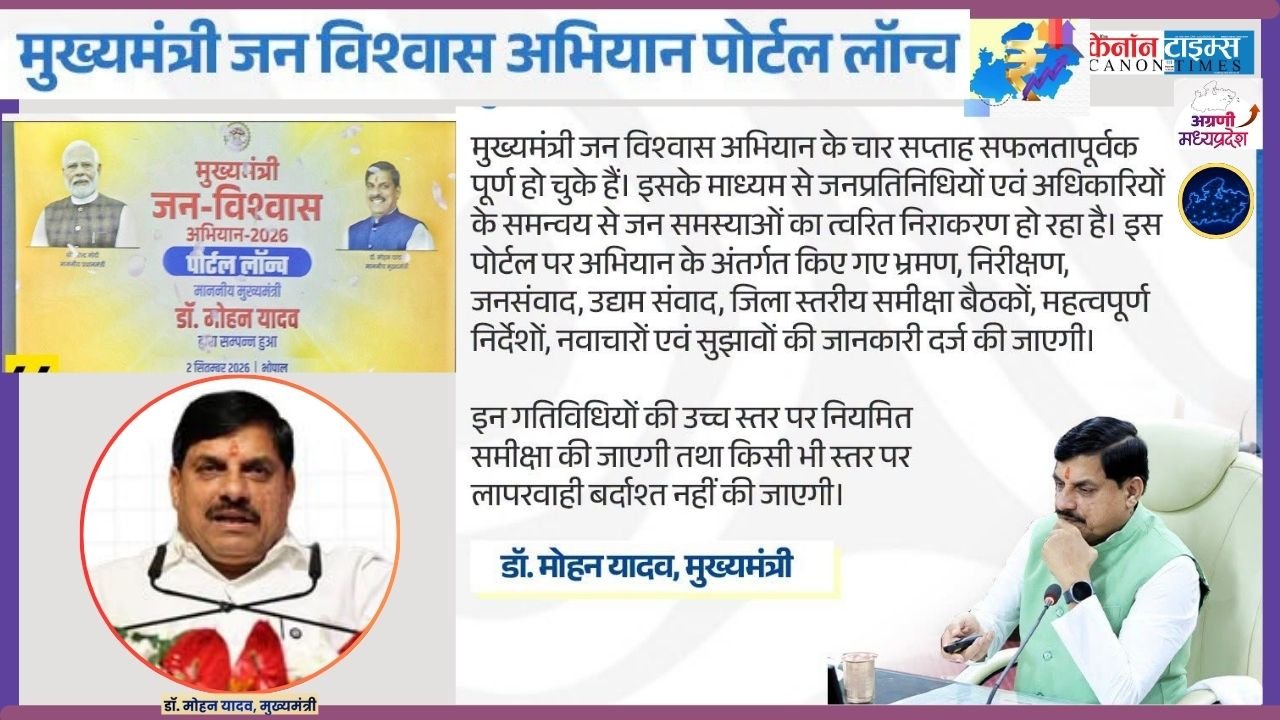
Chief Minister Dr. Mohan Yadav has launched the Mukhyamantri Jan Vishwas Abhiyan portal from the state secretariat. The aim is simple. Record every field visit, inspection, public dialogue, enterprise interaction, district review meeting, policy note, key instruction, local innovation and suggestion sent by districts. Review this information weekly at the highest level. Coordinate to resolve state level issues. And ensure that officers at every level upload data regularly, as per the user manual. The claim is equally clear. The portal will be effective and beneficial in achieving the campaign’s objectives.
This comes after four weeks of the Jan Vishwas Abhiyan, which began on 7 August. The Chief Minister said the campaign has had a strongly positive impact in a short time. Public representatives and officials are spending one day a week in the field, resolving citizen problems on the spot. The portal is meant to turn this momentum into a system. It is not just a dashboard. It is a discipline mechanism. If every visit, complaint and resolution is logged, it becomes harder to pretend that work is happening when it is not. It also becomes easier to spot bottlenecks that need state level intervention.
Why does this matter. Trust in government often breaks down not because policies are bad, but because delivery is invisible. A citizen files a grievance and never hears back. A leader visits a village and nothing changes. A scheme exists on paper but not on the ground. A portal that forces regular updates and weekly reviews changes that dynamic. It creates a record. It enables accountability. It allows the Chief Minister’s office to see which districts are moving, which departments are lagging and which issues keep recurring. Over time, this data can drive better decisions, from staffing to policy tweaks.
The design choices are sensible. Capturing field visits and jan samvad ensures that leaders and officials are actually meeting people, not just sending circulars. Recording udyam samvad signals that business feedback is part of governance. Logging district innovations and suggestions creates a repository of what works, so that good ideas can spread. Weekly high level review ensures that the data is not just stored but used. The user manual requirement pushes officers to follow a standard format, making comparisons possible.
The real test will be follow through. Will uploads be timely and accurate, or will they become a box ticking exercise. Will the weekly review lead to real course correction, or will it be a ritual. Will citizens see the difference in faster resolutions, or will the portal remain an internal tool. And will the data be made public in a simple, searchable form so that journalists, researchers and citizens can hold the system accountable. If these pieces fall into place, the portal will do more than track activity. It will build trust.
Madhya Pradesh is betting that transparency and discipline can change how governance feels on the ground. For citizens, a portal is not just a website. It is a signal that their problems are being counted and that officials are being watched. That is the true measure of this initiative: not just the number of uploads, but the speed and fairness of the solutions that follow.

Author: This news is edited by: Abhishek Verma, (Editor, CANON TIMES)
Authentic news.