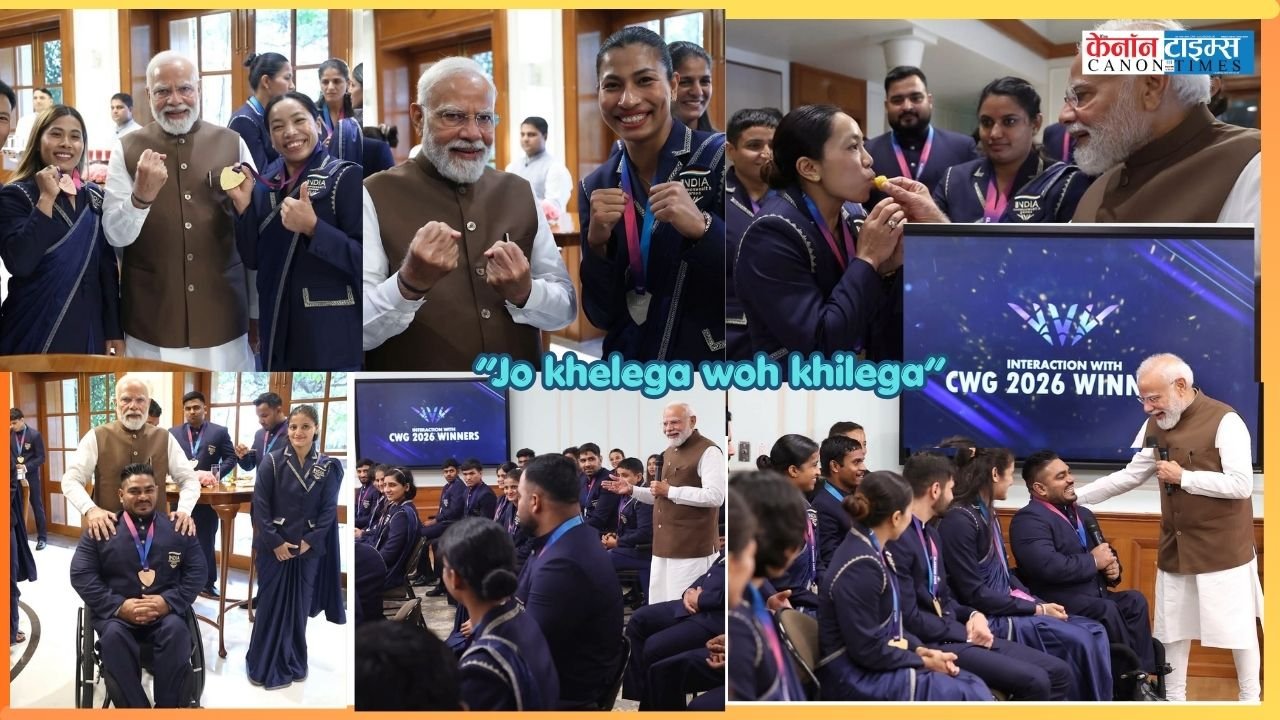
The interaction between Prime Minister Narendra Modi and India’s Commonwealth Games champions was more than a ceremonial meeting. It was a revealing conversation about the changing culture of Indian sport, the emotional cost of excellence, and the growing confidence of athletes who now see themselves not merely as competitors but as representatives of a rising sporting nation.
For years, India’s sports discourse was dominated by infrastructure deficits, lack of institutional support and sporadic success on the global stage. The athletes who met the Prime Minister spoke a different language. They spoke of training centres, Sports Authority of India facilities, the Khelo India scheme, regular competition exposure and a support system that has begun to produce a deeper talent pool. Their comments suggested that Indian sport is moving from dependence on exceptional individuals to the creation of a broader sporting ecosystem.
Perhaps the most striking aspect of the interaction was its emotional honesty. One athlete recalled standing on the podium after years of injuries, family difficulties and the heartbreak of narrowly missing an Olympic medal. As the national flag rose and the anthem played, tears came unbidden. Such moments remind us that medals are not cold statistics. They are the visible end of a long journey marked by sacrifice, uncertainty and resilience.
The Prime Minister repeatedly emphasised that an athlete’s achievement is never purely personal. A medal, he argued, inspires countless children more effectively than any classroom lecture on the importance of sports. This observation deserves attention. Sporting success has a multiplier effect: it alters aspirations. When young Indians see athletes from ordinary backgrounds winning international honours, sport becomes a credible path rather than a distant dream.
The conversation also highlighted the growing self-belief of Indian athletes. Boxers spoke of opponents entering bouts wary of facing Indians. Such confidence is new in many disciplines. It reflects consistent international performances and a generation that no longer approaches major events with a sense of inferiority.
Equally significant was the repeated reference to Khelo India. Athletes acknowledged that early identification, scholarships and structured support had helped shape their careers. Public policy alone cannot create champions, but targeted investment can widen access to opportunity. If India is serious about becoming a leading sporting nation, continuity in these programmes will matter more than headline-grabbing announcements.
There were moments of humour and informality, yet beneath them lay an important truth: athletes increasingly occupy a central place in India’s public life. The Prime Minister noted that among the many visitors he has received over the years, athletes have been among the most frequent. That symbolic recognition matters. Nations build sporting cultures not only through stadiums but also through public respect for athletes.
At the end of the interaction came a simple line: “Jo khelega woh khilega” – those who play will flourish. It is an appealing slogan, but its real test lies beyond ceremonial meetings. Flourishing requires sustained investment in coaching, sports science, nutrition, grassroots facilities, school competitions and athlete welfare. It requires ensuring that talent from villages, small towns and modest families can progress without being defeated by financial constraints.
India’s Commonwealth champions have already done their part by winning medals and inspiring a generation. The larger responsibility now rests with society and the state. If the energy evident in this conversation is matched by long-term commitment, India’s sporting future may indeed be measured not only in medals won, but in millions of young lives transformed through sport.

Author: This news is edited by: Abhishek Verma, (Editor, CANON TIMES)
Authentic news.