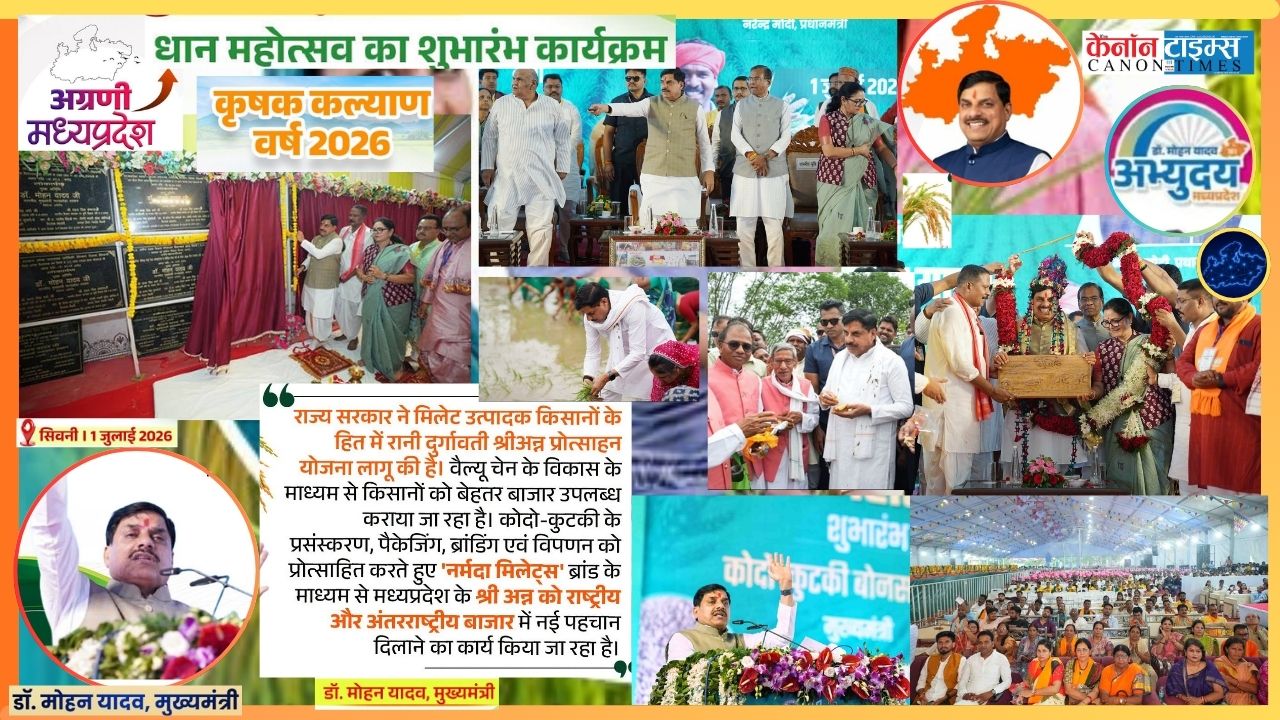
Chief Minister Dr. Mohan Yadav’s address at the state level paddy festival in Seoni reflects a clear political message: the farmer is central to Madhya Pradesh’s development story. His announcement that the state will extend the benefit of the Bhavantar scheme to paddy, along with bonus support for millets and a wide range of welfare and infrastructure commitments, shows a government trying to combine agricultural assurance with rural development. The approach is ambitious, and in many respects it is the right one.
The decision to support paddy growers through price difference payments is especially significant. For farmers, the gap between support price and market price often determines whether a season becomes profitable or stressful. By promising to cover that difference, the state is acknowledging the real uncertainties of cultivation and giving growers a stronger sense of security. When such support is delivered on time, it can reduce distress sales, stabilize incomes and build trust in public policy.

The emphasis on millets also deserves praise. For too long, crops like kodo, kutki, jowar and bajra were treated as poor man’s food. That perception is finally changing, and with it comes a chance to build a more climate resilient agricultural model. Millets need less water, suit fragile ecologies and can offer farmers a better match for changing weather conditions. The state’s effort to support procurement, branding and marketing under the Rani Durgavati millet promotion scheme points in the right direction. If Madhya Pradesh can turn local grains into premium products through processing and branding, it can create both income and identity for growers.
The larger development package announced for Seoni also matters. Roads, colleges, stadiums, irrigation support, welfare payments and housing surveys together reflect a government trying to address both the productive and social sides of rural life. That is important because farmers cannot thrive in isolation. They need good roads to move produce, schools for their children, health support in case of hardship and wage security when disaster strikes. The integration of Sambal assistance, housing and welfare schemes with agricultural announcements makes the policy picture more complete.
There is also value in the symbolic dimension of the event. The chief minister physically transplanting paddy, eating traditional rural food and speaking directly to farmers creates a sense of connection that matters in public life. Such gestures can be more than theatre if they build confidence that the administration understands village realities. They become meaningful when followed by real service delivery, proper procurement, and measurable improvements in rural livelihoods.
At the same time, the scale of the promises means that execution will be decisive. Price support schemes can fail if procurement is delayed, if payments are slow or if administrative bottlenecks prevent farmers from receiving what they are owed. Infrastructure announcements can lose force if projects stall. Bonus payments and welfare transfers matter only if they are timely and transparent. The state will therefore be judged not by the number of schemes announced, but by how reliably those schemes reach the last farmer, the last worker and the last village.
The broader message from Seoni is that Madhya Pradesh wants to build prosperity by standing with its farmers. That is a sensible political and economic choice. But the real measure of success will be simple: higher farm incomes, lower distress, better infrastructure and greater confidence in the future. If the state can turn its announcements into dependable outcomes, the paddy festival will be remembered not just as a ceremonial event, but as a marker of a more secure rural economy.

Author: This news is edited by: Abhishek Verma, (Editor, CANON TIMES)
Authentic news.