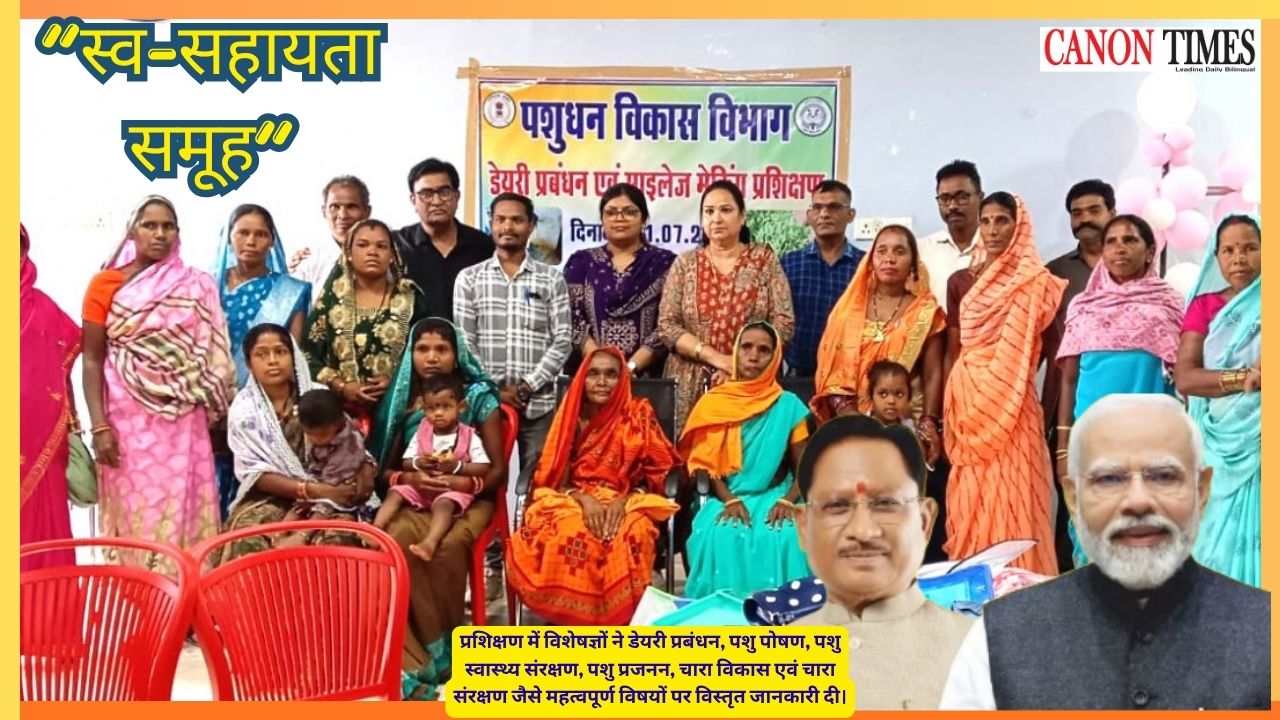
The training given to 19 women beneficiaries in Joratrai is a reminder that rural development becomes meaningful when it gives people practical skills, not just promises. By linking self help group members with dairy management, animal husbandry knowledge and market based support, the administration has taken a useful step toward creating self reliance at the village level.
What makes this initiative important is its focus on everyday economics. Dairy work is not only about keeping animals. It involves nutrition, hygiene, breeding, fodder management, disease prevention and milk marketing. When women are trained in all of these areas, they are far better placed to run a unit successfully and avoid the common losses that come from poor livestock care. In that sense, the programme is not only instructional but enterprise oriented.

The demonstration of silage making, hay preparation, azolla production and urea treatment of straw is especially valuable. These techniques may appear technical, but they address one of the biggest rural constraints, fodder shortage. A dairy unit can only remain sustainable if animals are fed properly throughout the year. By introducing low cost feed solutions and scientific methods, the training gives women tools to reduce costs and improve milk yield at the same time.
Equally encouraging is the existence of a regular milk collection system through the Devbhog dairy cooperative. Development efforts often fail when training is not matched by a market. Here, the collection of around 100 litres of milk every day shows that production already has a route to sale. That link between village level production and cooperative marketing is exactly what turns household activity into a viable livelihood.
The social impact may be even greater than the economic one. When women manage dairy enterprises, they gain more control over income, decision making and daily household planning. They also become visible as productive workers rather than only as caregivers. That change in status matters in tribal and rural regions where women’s work is often essential but undervalued.
The wider policy lesson is clear. If women’s self help groups are given access to training, animals, veterinary support, credit and marketing, they can become strong local business units. Dairy can be especially suitable because it provides regular income and can be started at a manageable scale. But it must be supported with continuous handholding, because livestock based enterprises are vulnerable to disease, fodder stress and price fluctuations.
Joratrai’s example shows that rural self reliance does not begin with large factories or big announcements. It begins with knowledge, cooperation and reliable local systems. If these 19 women are supported well after training, they can become a model for how village level dairy work can strengthen family incomes, improve nutrition and build lasting economic confidence.

Author: This news is edited by: Abhishek Verma, (Editor, CANON TIMES)
Authentic news.