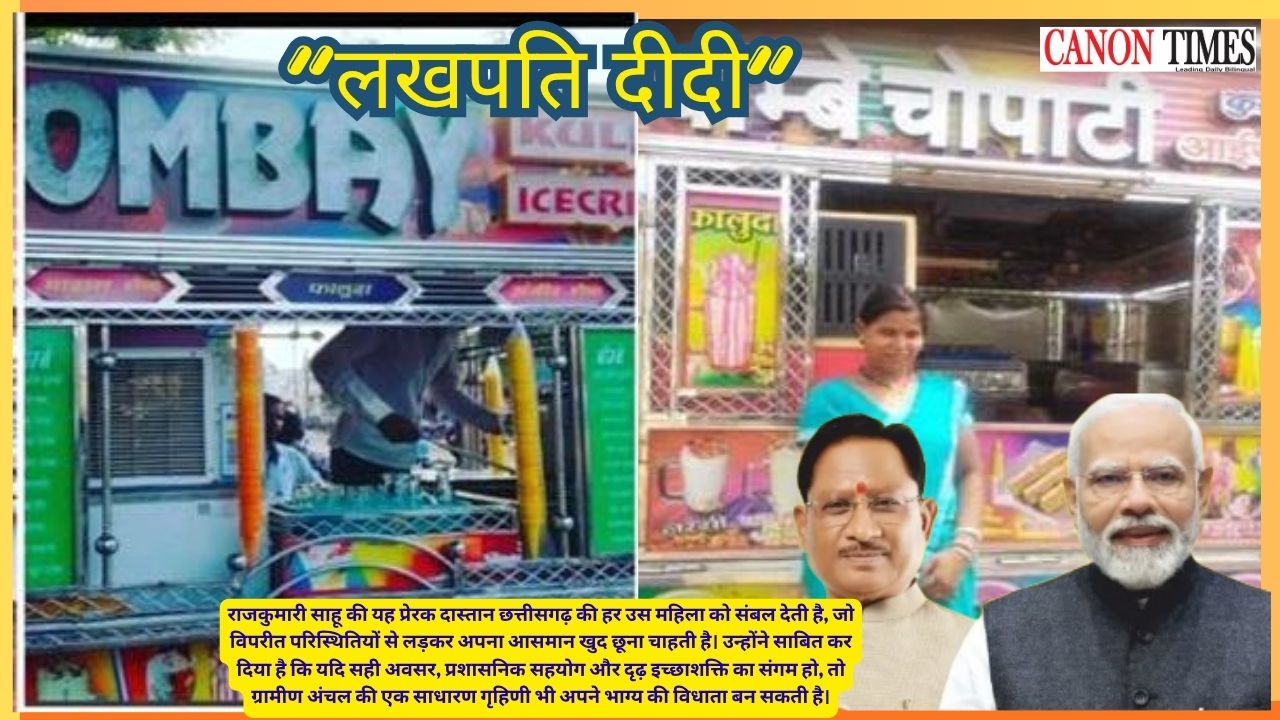
Bilaigarh’s Rajkumari Sahu has turned a life shaped by hardship into a story of confidence, income and dignity. Her journey from seasonal migration and uncertainty to becoming a successful “Lakhpati Didi” is not just a personal achievement. It is a reminder that when rural women receive the right support, they can transform not only their own families but also the economic life of their villages.
What makes her story powerful is the way struggle was converted into strength. For years, she and her family were forced to leave their village in search of work, enduring the insecurity that comes with migration and irregular wages. That experience gave her a clear understanding of what rural women need most: stable livelihoods close to home. Instead of accepting that distress as permanent, she used it as motivation to build something better.

The role of the Bihar? No, of the Bihan rural livelihood mission in this transformation is central. Self help groups are often discussed in policy terms, but Rajkumari’s example shows what they mean in practice. Through collective savings, access to bank credit and community investment support, she was able to turn a local skill into a viable enterprise. Her group’s work began with small monthly savings, and from that foundation grew a business built on courage, trust and cooperation.
Her decision to use knowledge gained during migration to make ice cream and kulfi is especially important. Too often, migration is seen only as a symptom of rural distress. Rajkumari’s story shows that it can also become a source of ideas, if people are given the chance to bring those ideas home. By adapting a learned technique to local tastes and markets, she created a business that is simple, affordable and scalable. That is the kind of innovation rural India needs more of.
The income figure matters too. Annual earnings of more than three lakh rupees place her far beyond subsistence and into the realm of real enterprise. But the deeper impact is social. She is no longer just a housewife dependent on others. She is a trainer, a businesswoman and a role model for other women in her group. That change in identity is as valuable as the money itself, because it expands what women in rural areas can imagine for their own lives.
Her story also highlights the importance of collective enterprise. One of the strongest features of self help group based development is that success is shared and repeated. A woman who learns to run a business can pass that knowledge to others, creating a ripple effect of confidence and capability. In this way, Rajkumari’s success can multiply across the village if more women are encouraged to follow the same path.
There is an important policy lesson here. Rural development works best when it combines credit, training, trust and local entrepreneurship. Assistance alone is not enough. Women need opportunities that respect their abilities and allow them to build businesses from skills they already have or can learn quickly. That is what turns welfare into empowerment.
Rajkumari Sahu’s life proves that migration need not be the final chapter in a rural woman’s story. With the right support, she has shown that a woman who once searched for work outside her village can become the creator of work within it. That is a genuine model of self reliance, and it deserves to be celebrated as more than an inspiring exception. It should be seen as a path worth replicating.

Author: This news is edited by: Abhishek Verma, (Editor, CANON TIMES)
Authentic news.