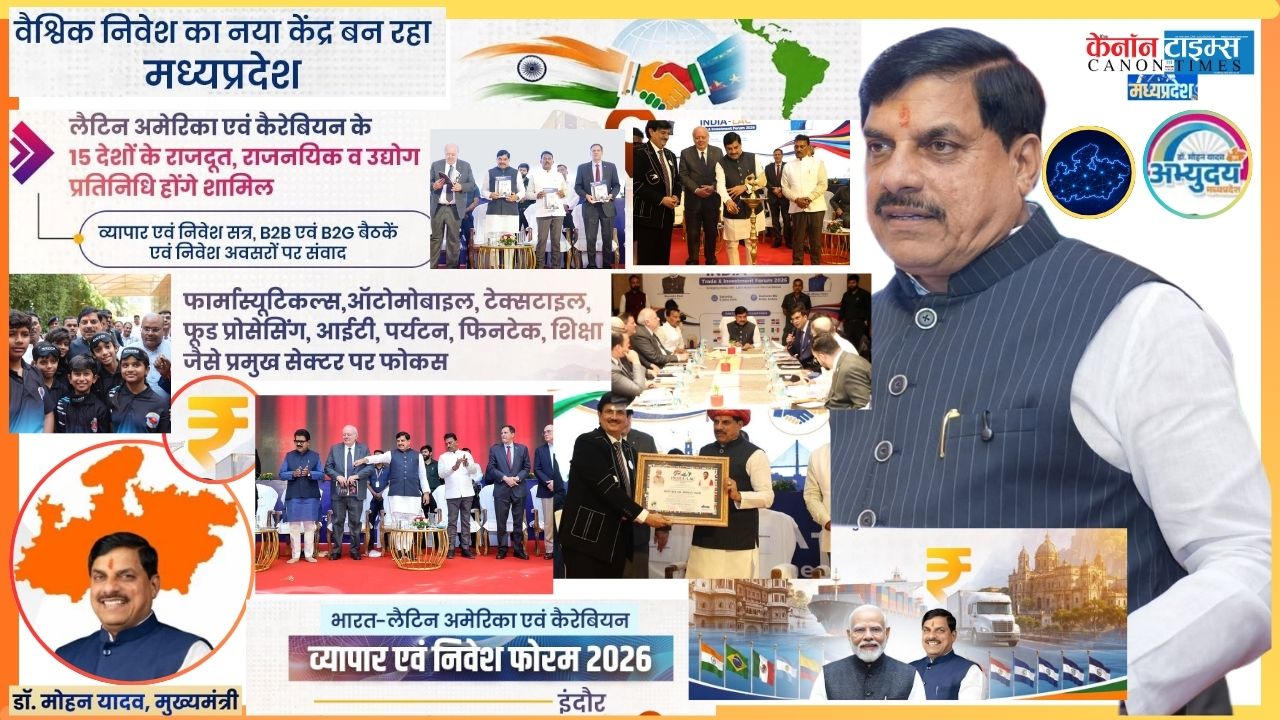
Madhya Pradesh is staging an impressive economic rebrand. Once famed for its forests, culture and mineral wealth, the state is now projecting itself as a competitive, investment friendly manufacturing and export destination. The rhetoric at the India Latin America and Caribbean Trade and Investment Forum 2026 was backed by hard figures and policy signals—exports to Latin America rose to Rs 3,835 crore in 2025 26, a nearly 19 percent jump, with pharmaceuticals playing a lead role. That momentum deserves attention and a measured appraisal.
What makes Madhya Pradesh attractive is a pragmatic combination of assets. Its central location, extensive road, rail and air connectivity, a ready land bank of over 1.25 lakh acres and a rapidly expanding logistics network create real comparative advantage for industry. The state points to sectoral depth in pharmaceuticals, engineering, food processing, textiles, defence supplies, renewable energy and IT alongside 6,000 plus startups and a notable share of women entrepreneurs. Policy reforms such as single window clearances, aggressive industrial corridors and removal of outdated rules under the Jan Vishwas Act underscore a governance push to reduce transaction costs for investors.

Export growth to Latin American markets signals the success of a dual strategy: make globally competitive products locally and actively court overseas partners. Indore and Pithampur’s emergence as pharmaceutical hubs that supply Brazil, Peru and Chile illustrates the point. Similarly, Madhya Pradesh’s capacity in engineering goods, jumbo bags and agri products can dovetail with Latin America’s demand for specialised manufacturing and supply chain partners. The state’s proposition to move from buyer seller ties to joint ventures, technology transfer and skills partnerships is the right strategic posture for deeper, durable linkages.
Yet policy promise requires operational follow through. To convert inbound interest into sustained investment and robust exports, authorities must address three practical priorities. First ensure land and power readiness with transparent timelines and investor guarantees so projects do not stall in the clearance pipeline. Second strengthen local supplier ecosystems and vocational training so manufacturing scales without prolonged dependency on external vendors and migrant labour. Third build export enabling infrastructure such as cold chains, testing labs, trade facilitation units and targeted market intelligence to help local firms meet exacting global standards and certifications.
Equally important is inclusive growth. Investment must generate widely distributed local employment, upgrade small and medium enterprises and link tribal and rural value chains to modern markets. This will help avoid an enclave model of development where benefits accrue only to investors and a narrow set of urban stakeholders.
Madhya Pradesh’s invocation of cultural affinity with Latin America echoed in references to shared reverence for nature and artisanal traditions was strategically astute. Economic ties rooted in cultural understanding and sustained by concrete commercial arrangements are likelier to endure. The state’s pledge to develop six industrial corridors in five years could be transformative if implemented with fiscal discipline and community engagement.
The forum’s diplomatic endorsements and the launch of a dedicated digital platform and magazine reflect a polished outreach strategy. But reputation must be matched by consistent delivery. If Madhya Pradesh sustains its reforms, scales infrastructure, upskills the workforce and deepens market linkages, it can legitimately claim a place among India’s leading export and investment hubs.
In short, the state has laid the foundations. The task ahead is execution at scale so that more Made in MP goods reach global shelves, local firms upgrade into global suppliers and investment translates into broad based prosperity across districts.

Author: This news is edited by: Abhishek Verma, (Editor, CANON TIMES)
Authentic news.