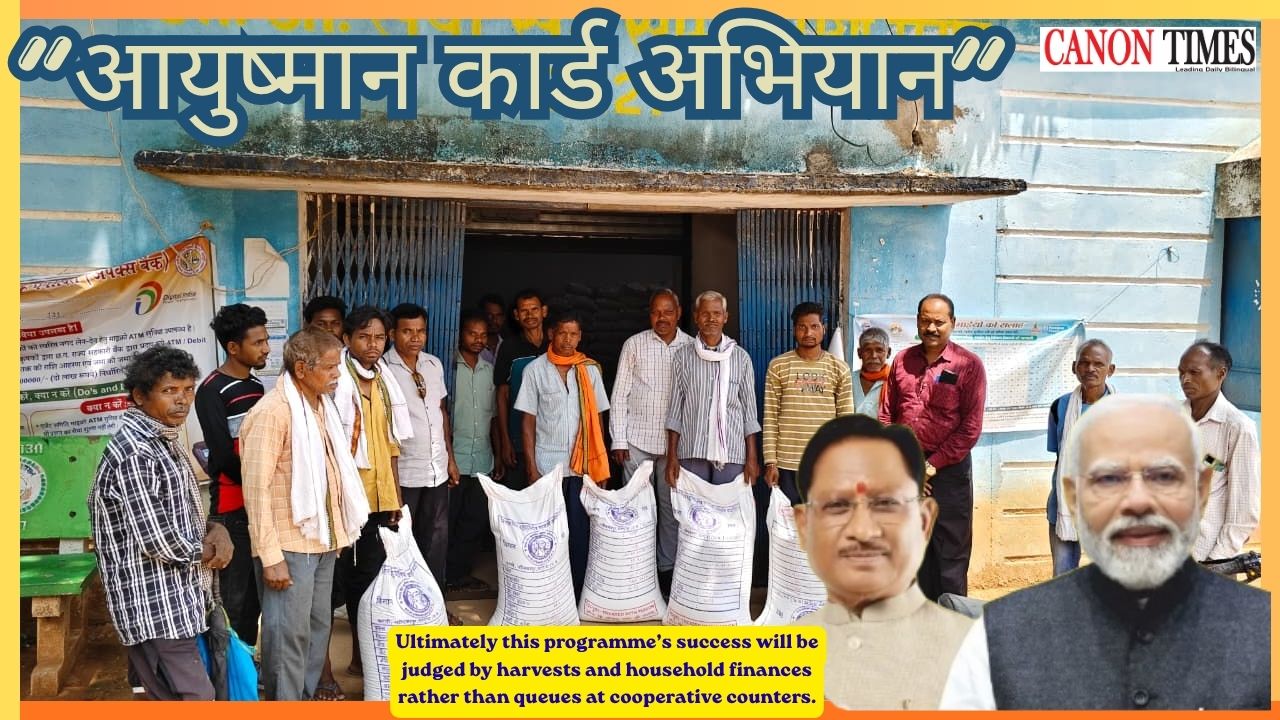
Jashpur’s effort to ensure timely distribution of quality fertiliser and seed at subsidised rates offers a simple lesson: access to inputs is foundational to rural resilience. Making urea, DAP, NPK blends, potash, nano fertilisers and certified seed available through cooperative societies at fixed prices may not be headline‑grabbing policy, but it directly lowers production costs, reduces dependence on informal credit and restores predictability to farm planning. For marginal and smallholders who operate on tight margins, that predictability is everything.
Farmers’ reactions from Maharaja Chowk and surrounding committees are telling. The complaints that once drove them from shop to shop and into debt unreliable supply, variable quality and volatile prices have been replaced by relief at finding essential materials locally and affordably. When a sack of fertiliser or a bottle of nano urea is available at the right time and price, sowing schedules stabilize, pest and nutrient management improves and the chances of a productive season rise. That translates into immediate household relief and, cumulatively, stronger local economies.

The governance model matters. Distribution through cooperatives and authorised outlets keeps the delivery channel close to the community and makes oversight feasible. Daily footfall at cooperative counters shows farmers trust this arrangement. Complementing supply with extension support and affordable credit as the district administration is doing adds value: inputs are not just handed over but accompanied by guidance on correct application and payment flexibility when required.
Yet sustaining gains will require attention to a few practical risks. First, quality assurance cannot be an afterthought. Subsidised does not mean substandard. Regular testing, transparent reporting and swift action against adulteration are essential to maintain farmer confidence. Second, distribution should be demand driven and mapped to cropping patterns. Stocks must move quickly to the places and moments they are needed most so that supplies do not sit in warehouses while fields await inputs. Third, subsidy design should avoid crowding out private sector supply channels where they provide added value such as last mile logistics or varietal choice; public provision should fill gaps rather than suppress a competitive input market.
There is also a fiscal and environmental balance to keep in view. Large scale subsidised fertiliser distribution is costly and can incentivise excessive use. Pairing subsidies with farmer education about balanced nutrient management, promotion of soil testing and support for organic or integrated nutrient approaches will protect both soils and the state’s fiscal position in the medium term. Promoting micronutrient use and efficient application methods such as those enabled by nano fertilisers is sensible, but only if guided by soil tests and agronomic advice.
Ultimately this programme’s success will be judged by harvests and household finances rather than queues at cooperative counters. If timely inputs, quality assurance and targeted extension combine to raise yields and lower production costs, Jashpur’s model can be a practical template for other districts. The measurement is simple: fewer farmers forced into high cost loans, more timely sowing, and steadier incomes at the end of the season. Deliver those outcomes and the state will have done more than supply fertiliser and seed; it will have strengthened the very backbone of rural livelihoods.

Author: This news is edited by: Abhishek Verma, (Editor, CANON TIMES)
Authentic news.