Water is one of the most valuable resources for sustainable development, particularly in rural regions where agriculture and livelihoods depend heavily on its availability. Recognizing the critical link between water security and economic growth, Chhattisgarh has launched several initiatives aimed at strengthening water conservation while creating opportunities for rural employment. Among these, the “Mor Gaon Mor Pani” campaign and its innovative component, “Nava Tariya Aay Ke Jariya,” are emerging as powerful examples of integrated rural development.
Under the leadership of Chief Minister Vishnu Deo Sai, the state has intensified efforts to promote water self reliance and strengthen rural infrastructure. The initiative being implemented in Balrampur district demonstrates how carefully planned water conservation projects can generate multiple benefits for communities, ranging from improved irrigation facilities to enhanced employment opportunities.
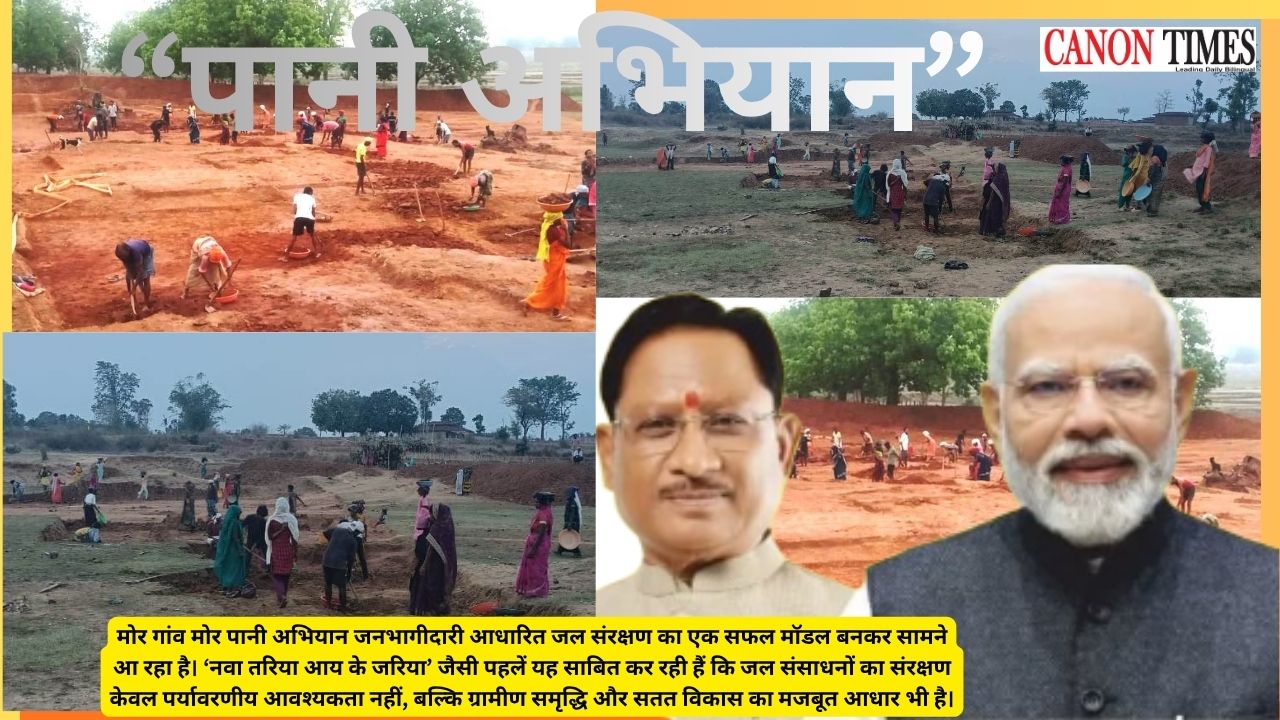
At the heart of the program is the construction of new ponds designed to capture and store rainwater effectively. These water bodies are being developed with the objective of conserving every possible drop of rainfall, improving groundwater recharge, and creating sustainable water sources for villages. Such interventions are increasingly important in the face of changing rainfall patterns and growing pressure on existing water resources.
The district has approved the construction of twelve new ponds across multiple development blocks. Construction activities are progressing rapidly, and each site is generating employment for approximately forty to fifty workers every day. This dual benefit of resource creation and job generation highlights how rural development programs can address both environmental and economic challenges simultaneously.
A notable feature of the initiative is its scientific approach to water management. The ponds are being constructed with supporting infrastructure such as inlets, outlets, and silt traps to ensure long term water storage capacity and prevent soil erosion. These measures improve the effectiveness and durability of the structures, ensuring that they continue to benefit communities for years to come.
The long term impact of these water bodies is expected to be substantial. Increased water availability can expand irrigated agricultural areas, improve groundwater levels, and provide reliable drinking water sources for livestock throughout the year. For farmers, better access to water creates opportunities to diversify into multiple cropping systems, vegetable cultivation, and other income generating agricultural activities.
Beyond agriculture, the initiative contributes to strengthening the rural economy by creating a foundation for sustainable livelihoods. Reliable water resources reduce vulnerability to droughts and crop failures while enhancing overall community resilience. The combination of employment generation during construction and long term economic benefits afterward makes the program particularly effective.
Perhaps the most significant aspect of the Mor Gaon Mor Pani campaign is its emphasis on community participation. Successful water conservation requires collective responsibility, and the initiative demonstrates how local engagement can drive meaningful environmental and developmental outcomes. By involving communities directly, the program fosters a sense of ownership and encourages sustainable management of water resources.
The success of “Nava Tariya Aay Ke Jariya” illustrates that water conservation is far more than an environmental necessity. It is a catalyst for economic growth, agricultural productivity, and social development. As Chhattisgarh continues to invest in such initiatives, it is building a model of rural development where natural resource management and livelihood enhancement go hand in hand, creating a stronger foundation for long term prosperity and sustainable growth.

Author: This news is edited by: Abhishek Verma, (Editor, CANON TIMES)
Authentic news.