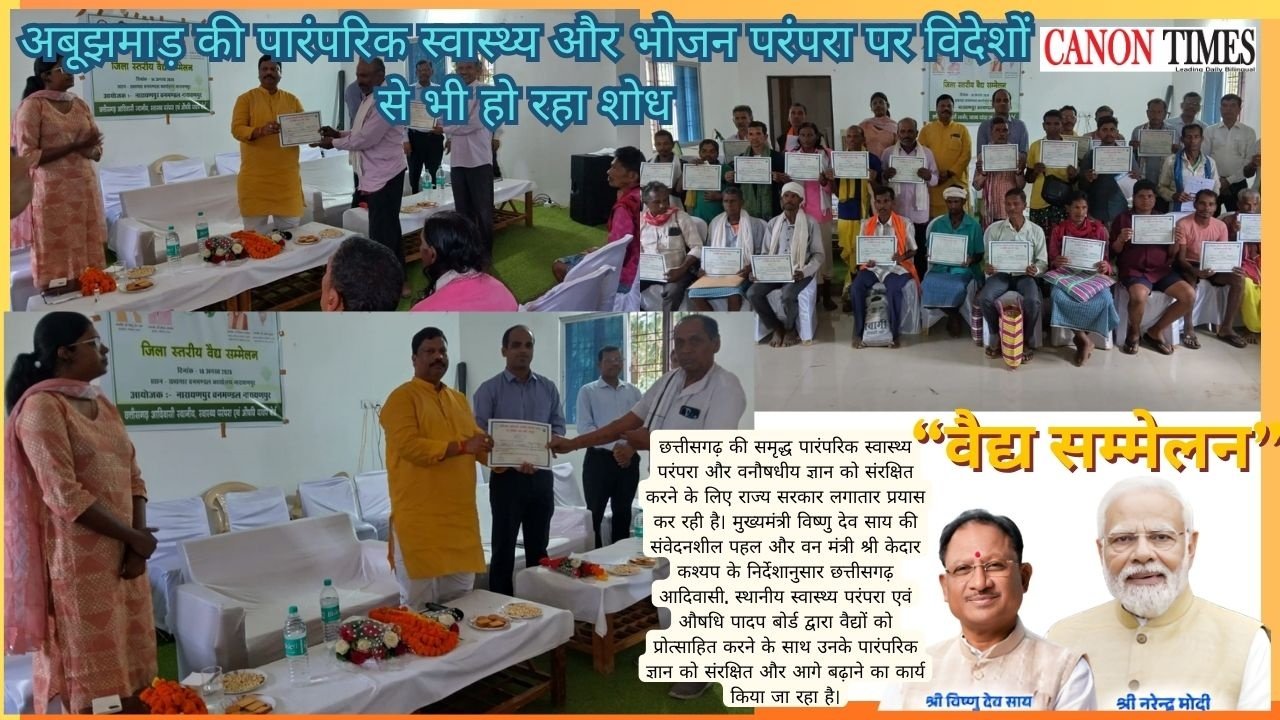
The traditional health and food practices of Abujhmarh are more than cultural memories. They are a valuable knowledge system shaped by generations of close interaction with forests, plants and local ecosystems. The growing interest of researchers from outside India in these traditions shows that the region’s indigenous wisdom has significance far beyond its geographical boundaries.
The Vaidya conference in Narayanpur is therefore an important step towards preserving this heritage. Traditional healers possess detailed knowledge of herbs, their uses and local treatment practices. Recording this knowledge, certifying traditional healers and encouraging scientific documentation can help protect it from disappearing.
The proposed herbal garden in Narayanpur and the planned cultivation of medicinal plants across about 3,000 hectares are encouraging initiatives. They can support conservation while also creating a sustainable source of livelihood for local communities. Special attention is necessary for rare plants such as Rasna and Dahiman, which are facing the threat of extinction.
Conservation must not mean uncontrolled commercialisation. Medicinal plants should be harvested responsibly, and local communities and traditional healers must remain central to decisions regarding their use. Scientific research should respect community knowledge, provide proper recognition and ensure that the benefits of commercial or medical applications reach the people who have preserved this heritage.
The support being provided through pulveriser machines, healer herbal gardens and school herbal gardens can create a useful connection between tradition and education. Young people can learn about local plants while communities develop a stronger interest in protecting their natural environment.
Traditional knowledge should neither be rejected as outdated nor accepted without proper evaluation. Its future lies in respectful documentation, scientific validation, sustainable cultivation and intergenerational learning.
Abujhmarh’s heritage belongs first to its people, even as it offers lessons to the wider world. Protecting this knowledge is not only an administrative responsibility. It is a shared duty of the government, traditional healers, researchers and local communities.

Author: This news is edited by: Abhishek Verma, (Editor, CANON TIMES)
Authentic news.