How Goat Farming Changed a Woman’s Life
Rural transformation is often measured not by grand announcements, but by the quiet success stories emerging from villages. In Chhattisgarh, one such inspiring example is that of Udakunwar Bhanu from Kodgar village in Gaurela-Pendra-Marwahi district, whose journey from daily wage labourer to successful entrepreneur reflects the growing impact of women-led rural development initiatives.
Through the state’s “Bihan” programme under the National Rural Livelihood Mission, thousands of women are gaining financial independence and social confidence. Udakunwar Bhanu’s story stands out because it demonstrates how small opportunities, when combined with determination and institutional support, can create lasting economic change.
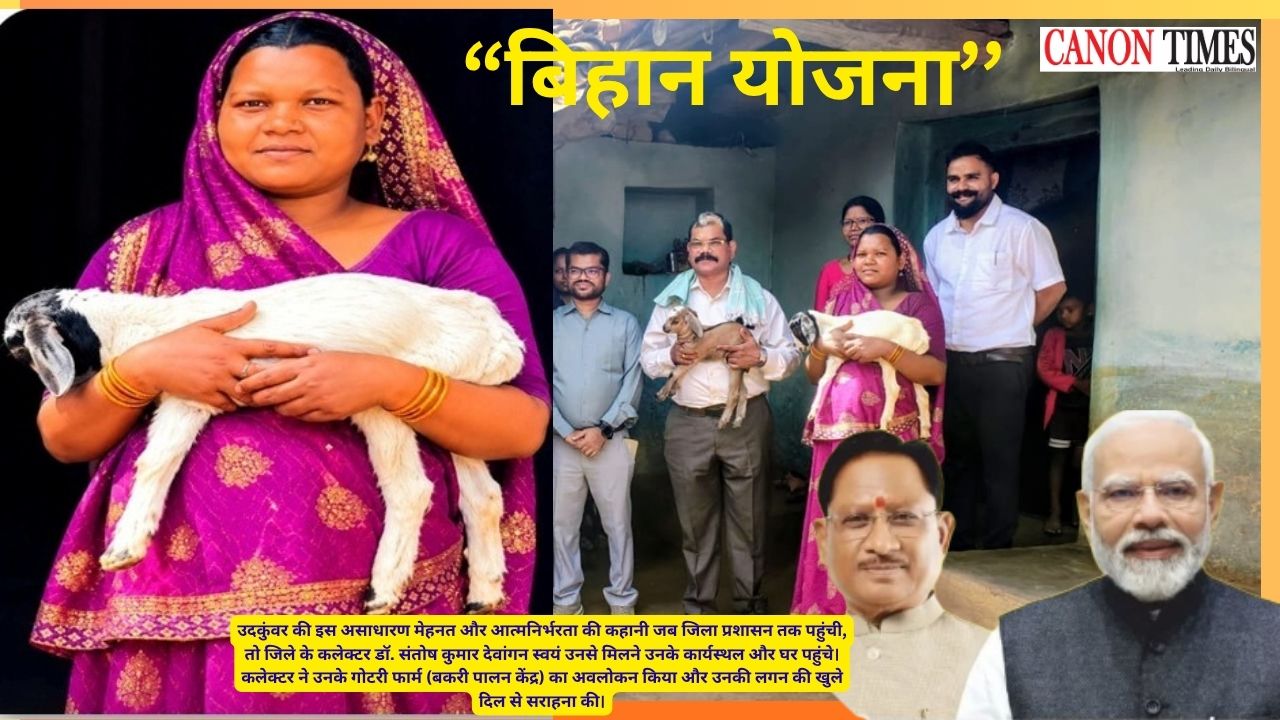
A few years ago, her family depended entirely on irregular labour work for survival. With limited education and scarce financial resources, stable income seemed out of reach. However, her decision to join a women’s self-help group in 2017 became the turning point in her life. After receiving financial literacy training through the Bihan scheme, she secured an initial assistance amount of Rupees 30,000 and started goat farming with just five goats.
Instead of stopping at the first stage, she reinvested and expanded her work with additional financial support and skill-based training. Guidance from livestock support workers helped her learn scientific methods of goat management, nutrition, and healthcare. Today, she owns 29 goats and earns an annual income of more than Rupees 1 lakh through local market sales.
Her success has not gone unnoticed. The district administration itself acknowledged her achievement, with the district collector personally visiting her farm and appreciating her efforts. Such recognition is important because it validates the role of rural women as contributors to economic growth, not merely beneficiaries of welfare schemes.
Udakunwar Bhanu’s journey highlights several important lessons for rural development policy in India.
First, self-help groups continue to be among the most effective tools for empowering women economically and socially. They create not only financial access but also collective confidence and community leadership.
Second, livelihood schemes become truly successful when financial assistance is combined with practical training and continuous support. Credit alone cannot transform lives unless beneficiaries are equipped with the skills to sustain and expand their enterprises.
Third, small-scale livestock farming has enormous potential in rural economies. Goat farming, poultry, and allied agricultural activities require relatively low investment while generating stable income opportunities for rural households.
Most importantly, stories like these redefine the idea of empowerment. Empowerment is not merely about subsidies or financial aid. It is about creating conditions where individuals can build sustainable livelihoods with dignity and independence.
As India continues to focus on inclusive rural development, initiatives like the Bihan scheme show how targeted support can help women emerge as entrepreneurs, decision-makers, and role models within their communities. Udakunwar Bhanu’s success is not just a personal achievement. It is a reflection of how rural India is steadily changing through resilience, opportunity, and women-led progress.

Author: This news is edited by: Abhishek Verma, (Editor, CANON TIMES)
Authentic news.