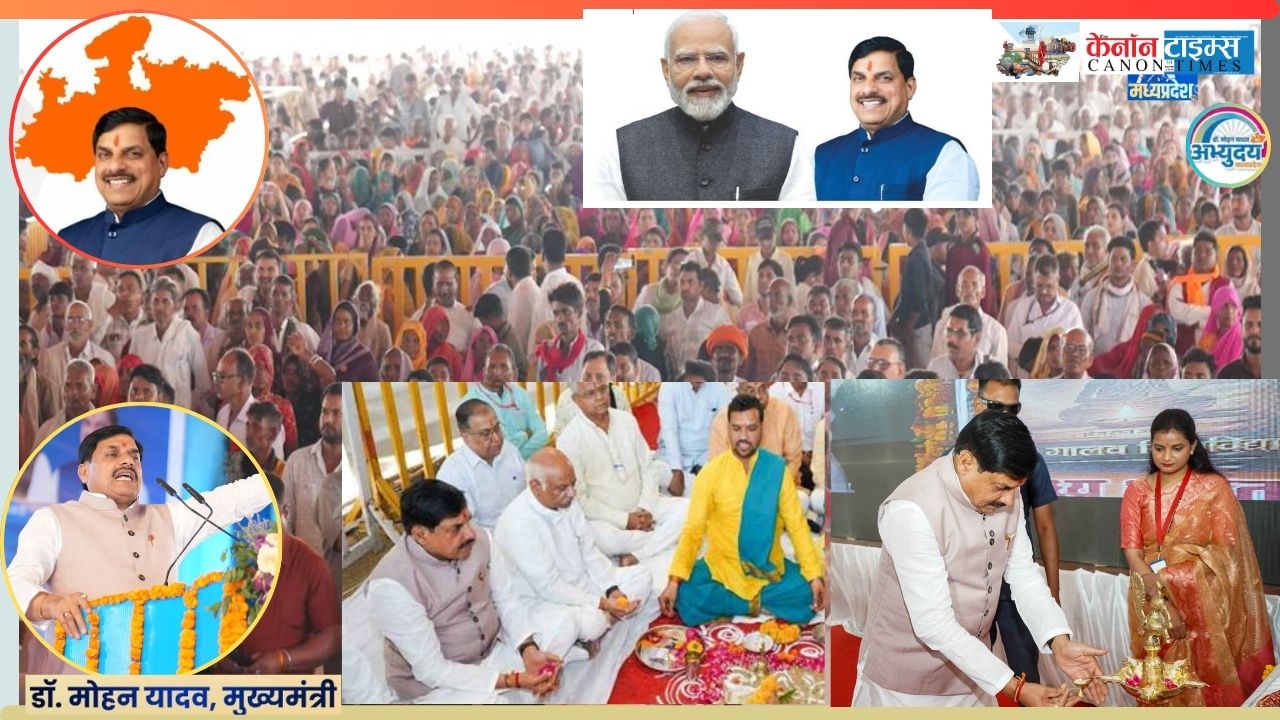
The foundation of a strong nation is not laid merely through infrastructure or economic expansion, but through institutions that shape minds, values and vision. In this context, the recent push to expand higher education infrastructure in Gwalior, with the proposed establishment of Rishi Galav University, reflects a broader recognition of education as a cornerstone of nation-building.
At its core, a university is more than a center for academic instruction. It is a space where critical thinking is nurtured, cultural values are preserved, and future leaders are shaped. The emphasis on blending Indian knowledge systems with modern science and technology is particularly significant. In an era of rapid globalization and technological disruption, such an integrated approach can help produce graduates who are not only skilled but also rooted in ethical and cultural frameworks.

The vision aligns with the broader goals of the National Education Policy 2020, which prioritizes holistic development, multidisciplinary learning and character building. By focusing on both competence and character, the policy seeks to move beyond rote learning toward a more meaningful educational experience. Initiatives like this university can serve as practical embodiments of that vision if implemented with sincerity and academic rigor.
Equally noteworthy is the attempt to reposition Gwalior as an emerging education hub. Historically known for its cultural and intellectual heritage, the city has the potential to evolve into a modern center of learning. However, achieving this transformation will require more than infrastructure. Faculty quality, research output, industry collaboration and institutional autonomy will determine whether such initiatives succeed or remain symbolic.
There is also a broader lesson here. India’s demographic advantage can only translate into economic and social strength if its youth are equipped with relevant skills and values. Universities must therefore go beyond degree distribution and actively contribute to innovation, entrepreneurship and social responsibility. The idea of producing “job creators” rather than “job seekers” must be backed by tangible support systems, including incubation centers, research funding and industry linkages.
At the same time, caution is necessary. Rapid expansion of higher education institutions across states has often led to concerns about quality dilution. Without strong regulatory oversight and accountability, even well-intentioned projects risk falling short of their objectives. Ensuring accessibility without compromising standards should remain the guiding principle.
The proposed university, if developed thoughtfully, can become a model for how education can bridge tradition and modernity. It can also reinforce the idea that nation-building is not confined to policy घोषणाएँ, but is carried forward in classrooms, laboratories and campuses where young minds are shaped.
In the end, the true success of such initiatives will not be measured by the number of buildings constructed, but by the kind of citizens they produce.

Author: This news is edited by: Abhishek Verma, (Editor, CANON TIMES)
Authentic news.