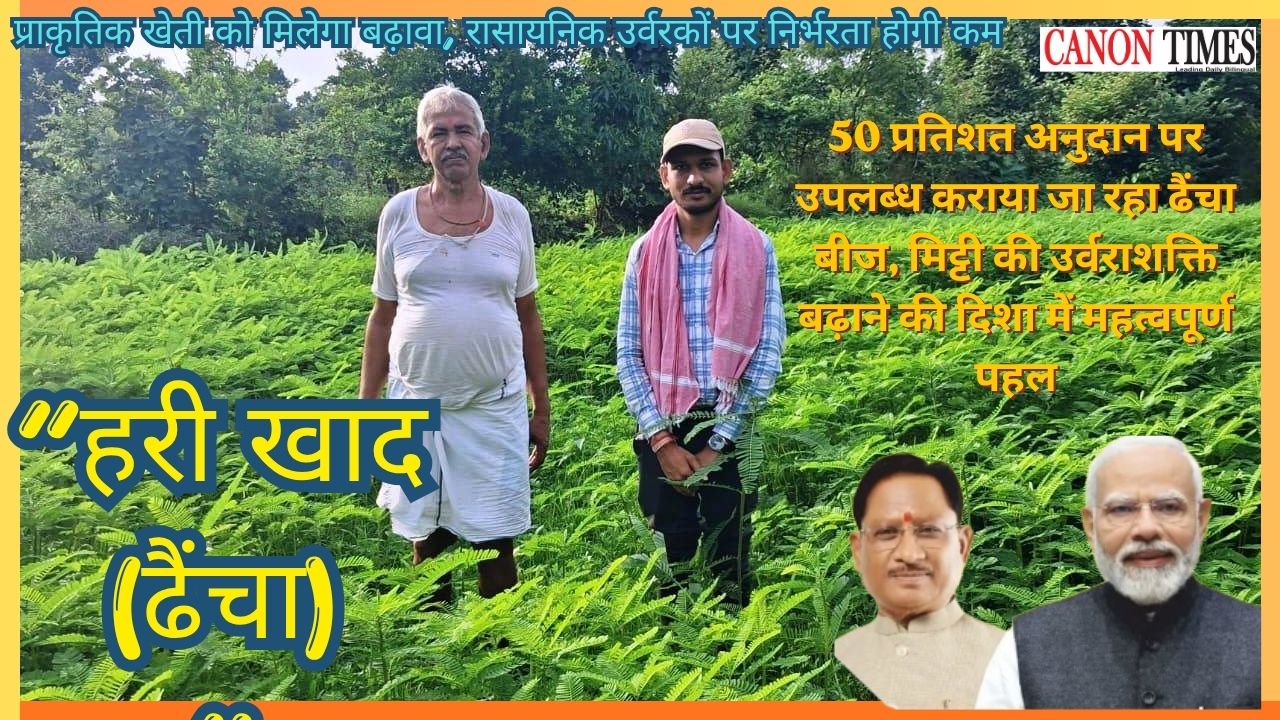
In an age when farming is under pressure from rising input costs, declining soil health and growing climate uncertainty, dhaincha offers a refreshingly simple answer. It is not a flashy innovation, but it is a powerful one: a low cost green manure that can restore soil fertility, reduce dependence on chemical fertilizers and support more resilient paddy cultivation.
What makes dhaincha valuable is its ability to work with nature instead of against it. When farmers grow it before transplanting paddy and then plough it back into the soil, the crop decomposes and becomes a natural source of organic matter and nitrogen. That means the land receives nourishment before rice is even planted, creating a better foundation for healthy growth and stronger yields.

The Raipur initiative is important because it shows how practical agriculture policy can be. A 50 percent subsidy on dhaincha seed is not just a financial support measure; it is an invitation for farmers to try a method that is both affordable and environmentally sound. For many growers, especially those managing tight budgets, such support can make the difference between adopting a new practice and sticking with expensive habits.
There is also a larger lesson here about soil. For too long, productivity has been measured mainly by how much fertilizer is added and how much grain is harvested. But true sustainability begins below the surface. Soil that is rich in organic carbon, structurally sound and biologically active can support crops year after year without exhausting itself. Dhaincha helps move farming in that direction.
The example of the progressive farmer from Bharatpur is especially encouraging because it turns policy into practice. When one farmer adopts a new technique and others see the result, innovation spreads more naturally than through lectures or campaigns. Agriculture changes fastest when farmers can see success with their own eyes.
This is why dhaincha deserves attention beyond a single season or district. It represents a smarter way of farming: one that lowers costs, strengthens soil, supports natural cultivation and prepares fields for the future. In the long run, the health of paddy farming will depend not only on seeds and water, but on whether farmers choose to invest in the living health of their land.

Author: This news is edited by: Abhishek Verma, (Editor, CANON TIMES)
Authentic news.