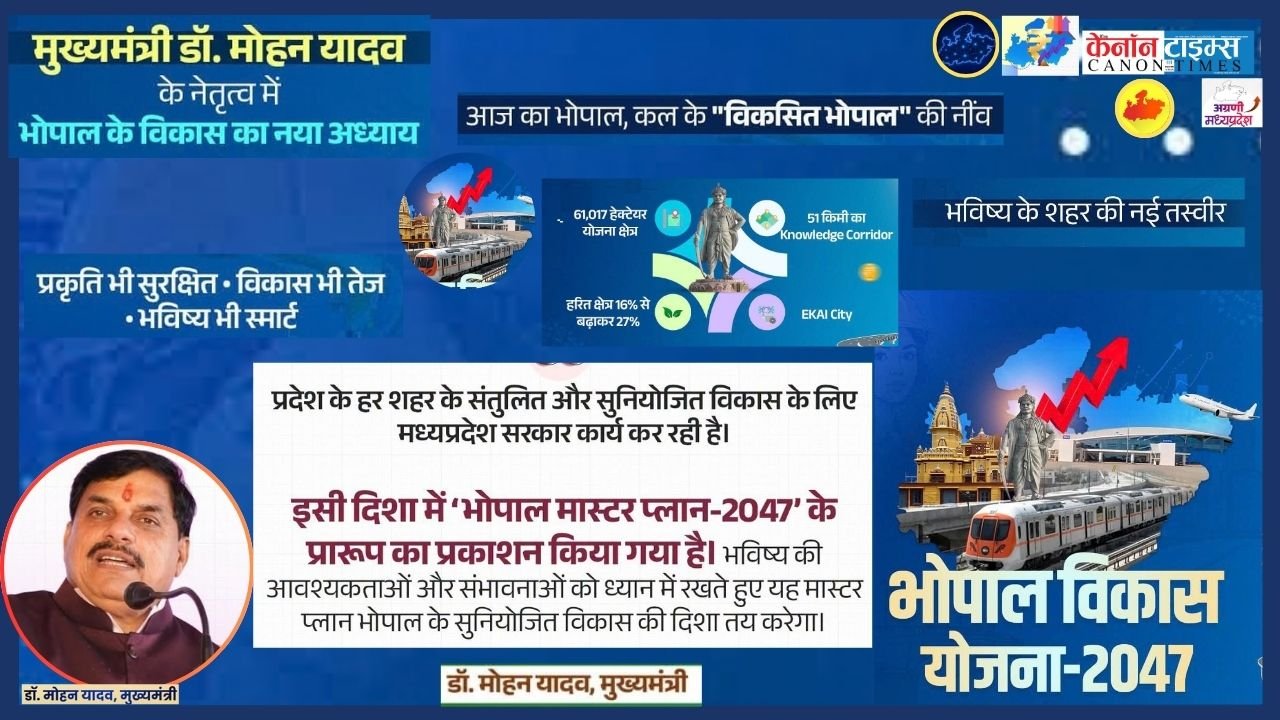
Chief Minister Dr Mohan Yadav said the draft of Bhopal’s master plan has been released after 21 years. He called it a milestone that will help make the city developed and green by 2047. He urged citizens to file claims, objections and suggestions on the draft so that the final plan reflects ground realities and public needs. He also noted that the state’s Sugam bus service has restarted after the same 21 year gap, with government buses now running inside cities, between districts and to other states. He added that a dedicated religious tourism bus service has begun in Ujjain. The message was clear. Transport and planning must move together if a capital is to grow without choking.
This is more than a document release. It is a bet on structured growth. A master plan sets land use, density, transport corridors, green belts and infrastructure zones. It tells developers where to build and how high. It tells the city where to protect lakes, hills and forests. It tells transport planners where to put bus routes, depots and stations. For Bhopal, which sits on a fragile lake system and a hilly landscape, the stakes are high. Unplanned construction can flood roads, drain wetlands and raise heat. A good plan can do the opposite. It can channel growth into corridors, keep lakes as lakes and make walking and transit the easy choice.
Why does this matter now. The city has grown in patches. Some areas are overbuilt. Some are starved of services. Traffic peaks during office hours and festival seasons. Waterlogging hits low lying wards after heavy rain. The Sugam bus launch helps, but buses need dedicated lanes, shelters and terminals to run on time. The master plan can lock these in before land prices and politics make it impossible. It can also align with the state’s push on heritage. With Bagh cave paintings, Ginnorgarh fort, Chambal valley temple groups and Udayagiri caves on UNESCO’s tentative list, Madhya Pradesh now holds 19 of India’s 78 tentative entries. A plan that protects heritage zones and links them with clean, safe transit can turn culture into a growth engine.
The real test will be consultation and enforcement. Will citizens, ward bodies and experts get real time to read the draft and submit changes. Will objections be heard in public sessions so that trade offs are visible. Will the final plan be backed by byelaws that stop violations before they become facts on the ground. Will transport, water, power and housing departments align their projects to the same map so that roads are not dug up every year. Will green zones be marked as no go areas for high density so that lakes and hills are not encroached. And will the plan be reviewed every five years with data on traffic, water table and air quality so that it stays a living document. If these pieces fall into place, Bhopal can avoid the fate of cities that grew first and planned later.
For residents, the gain is direct. Shorter commutes. Less flooding. More parks. Cleaner air. That is the true measure of this push: not just the draft released, but the decisions locked in and the city sustained.

Author: This news is edited by: Abhishek Verma, (Editor, CANON TIMES)
Authentic news.