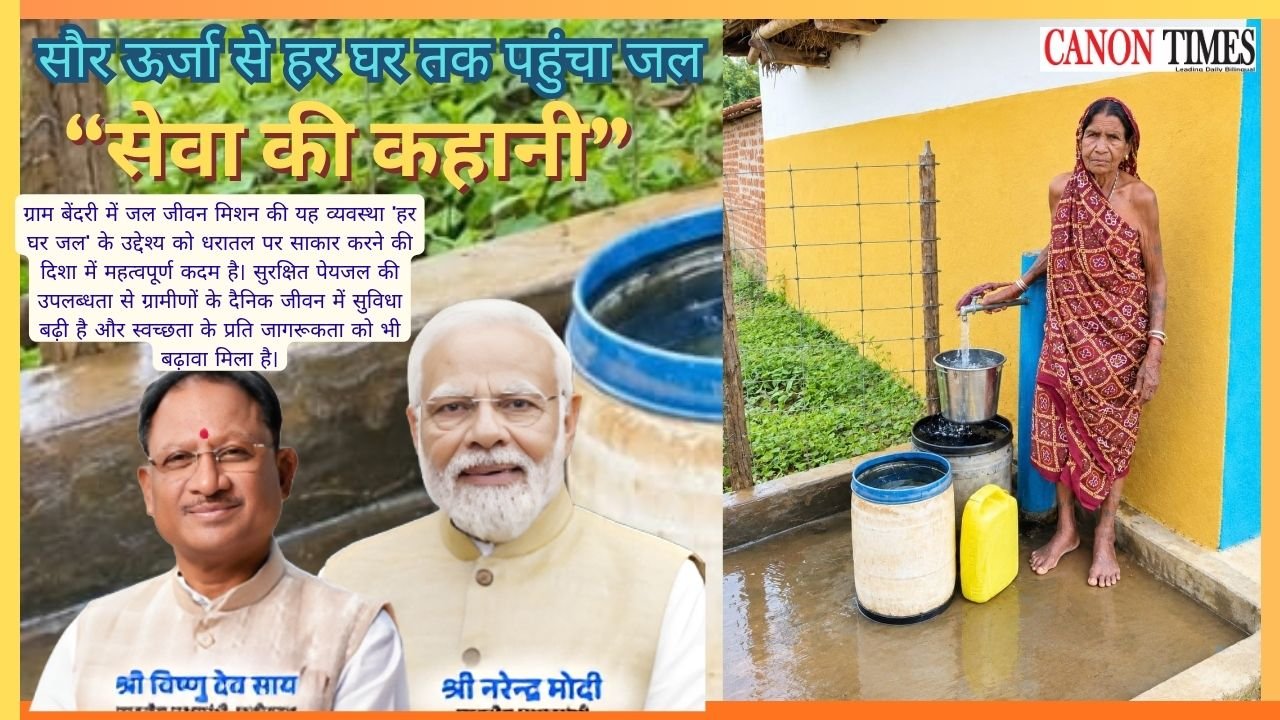
In Bendri village of Bhurbhusi gram panchayat, a solar powered water supply system has brought taps to 41 households and 185 residents under the Jal Jeevan Mission. A solar pump lifts groundwater to an elevated tank. From there, pipelines carry water to taps near homes. Villagers no longer trek to distant sources. Women and children save time and effort once spent on fetching water. That time now goes to housework, childcare, study and livelihood activities. The system runs on clean energy, cutting dependence on grid power and diesel. It also promotes water conservation and hygiene awareness in the village. For Bendri, this is not just a pipeline. It is a shift in daily capability and a step toward Har Ghar Jal.
This is more than a rural works story. It is a model of low operating cost infrastructure. Solar pumps have high upfront cost but near zero fuel cost. Once installed, they run with minimal expense for decades if maintained well. That makes them ideal for scattered villages where grid power is unreliable or expensive to extend. When water reaches the tap, health gains follow. Safe drinking water reduces waterborne diseases. Regular supply makes handwashing and kitchen hygiene easier. When women and girls do not carry heavy loads over long distances, back injuries and school drop outs fall. Under the Seva Sankalp Abhiyan, the aim is to make such welfare gains visible and lasting. Bendri shows how a single intervention can link energy, water and time.
Why does this matter at scale. Chhattisgarh has thousands of small habitations that face the same constraint. A network of solar water schemes can change the math. Each scheme can serve a cluster of homes. Each can cut drudgery and disease. Each can recharge local aquifers if source sustainability is planned. When many such schemes work together, the landscape becomes more resilient. Households spend less on health and fuel. Children stay in school longer. Women gain hours for paid work or rest. For a state pushing service and welfare, this is a direct way to deliver on self reliance and climate action at once.
The real test will be maintenance and source security. Will the solar array be cleaned and inspected regularly so that output does not drop. Will the pump, tank and pipelines be repaired fast when leaks or faults occur. Will a village level committee collect small user fees so that repairs do not stall for want of cash. Will groundwater levels be monitored so that extraction does not exceed recharge. And will water quality be tested periodically so that contamination does not creep in unnoticed. If these pieces fall into place, the Bendri model can become a standard item in the rural water menu.
For residents, the gain is direct. Less walking. Less illness. More time. That is the true measure of this push: not just the taps installed, but the hours saved and the health secured.

Author: This news is edited by: Abhishek Verma, (Editor, CANON TIMES)
Authentic news.