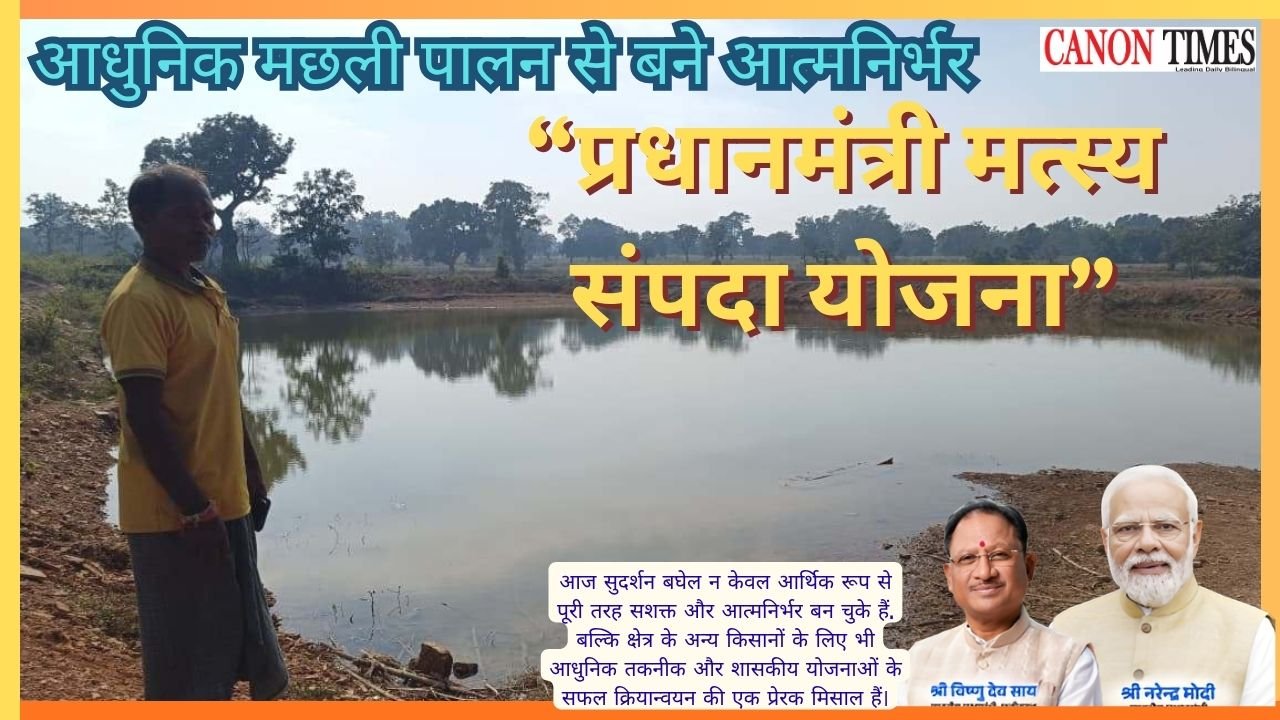
Sudarshan Baghel of Rampal Chhindawada village in Darrbha block once depended on traditional farming, a small rice mill and a tiny pond for his family’s income. Resources were limited. Methods were old. Growth was hard. Then he turned to the Pradhan Mantri Matsya Sampada Yojana. Under the scheme, he built a pond on about 1.25 acres and received input support. As a member of the Scheduled Tribe category, he got 60 percent subsidy on a total approved cost of 5.50 lakh rupees. With finance and technical guidance in place, he shifted to scientific mixed species fish farming. The result was better quality, larger size and higher weight. He sold directly to consumers in his village and nearby markets instead of through middlemen. His direct sales brought in about 1.50 lakh rupees. Today, he is financially secure and a model for other farmers in Bastar.
This is more than a success story. It is a template for rural enterprise. A pond, when managed well, becomes a productive asset that yields cash through the year. Mixed species reduce risk. If one variety underperforms, others can compensate. Direct marketing raises the farmer’s share of the consumer price. It also builds trust. A buyer who knows the source is more likely to return. For a region like Bastar, where water bodies are available and labour is willing, fish farming can sit alongside crops and livestock as a steady income stream. It can also reduce the pressure to migrate for work.

Why does this matter at scale. The Matsya Sampada scheme aims to raise production, improve quality and strengthen value chains. When a farmer like Sudarshan adopts scientific practices, the gains are visible in yield and price. When many farmers do the same, the gains compound. Local markets get more supply. Nutrition improves. Incomes stabilise. The scheme’s subsidy lowers the entry barrier for smallholders. Technical guidance ensures that ponds are designed, stocked and managed correctly. The combination of capital and knowledge is what turns a traditional activity into a modern business.
The real test will be replication and sustainability. Will more farmers get timely access to subsidies and training. Will seed, feed and health management be available locally so that costs do not spiral. Will cold chains and transport links improve so that fish reach markets fresh and fetch fair prices. Will women and youth be brought into the value chain as producers, processors and sellers. And will environmental safeguards be followed so that water quality and soil health are not compromised over time. If these pieces fall into place, fish farming can become a mainstay of rural livelihoods in Bastar and beyond.
For Sudarshan, the change is personal and profound. He moved from uncertainty to assurance. He turned a small pond into a reliable source of income. That is the true measure of this push: not just the rupees earned, but the confidence gained and the path shown for others to follow.

Author: This news is edited by: Abhishek Verma, (Editor, CANON TIMES)
Authentic news.