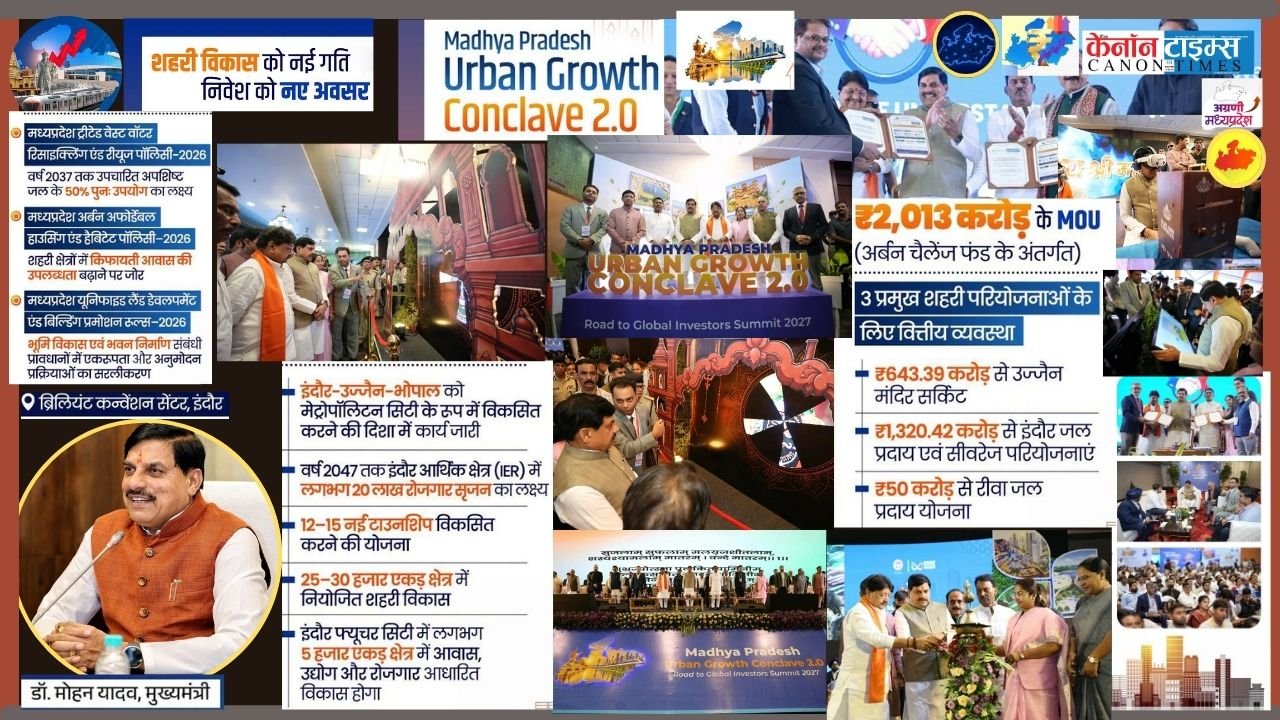
Cities are no longer only places to live. They are centres of work, investment, education and opportunity. Madhya Pradesh’s Urban Growth Conclave 2.0 in Indore reflected this shift, with plans to develop Indore, Ujjain and Bhopal as metropolitan cities and create nearly 20 lakh jobs in the region by 2047.
The state has set ambitious targets: 12 to 15 new townships, planned urban development across 25,000 to 30,000 acres, and an Indore Future City spread over about 5,000 acres for housing, industry and employment. The Indore Economic Region 2047 plan envisages integrated development across eight districts of Malwa-Nimar, with proposals for manufacturing, pharmaceuticals, textiles, food processing, tourism and knowledge-based industries.
Such plans can bring real benefits, but their success will depend on implementation. Jobs and investment must reach local residents, and urban expansion must be supported by reliable water supply, sanitation, public transport, schools and healthcare. A city cannot become truly modern if basic services do not keep pace with new townships and commercial projects.
The conclave also focused on sustainability. Draft policies on affordable housing, recycling and reuse of treated wastewater, and unified land development and building promotion rules were placed for public consultation. The target of reusing 50 per cent of treated wastewater by 2037 is significant, especially in a state where water security is a growing concern. Public consultation should be genuine, and concerns of residents, small businesses and vulnerable groups must be considered.
Financial agreements worth more than 2,013 crore Rupees were signed for urban infrastructure projects in Ujjain, Indore and Rewa. These can improve water supply, sewerage and temple-circuit infrastructure. Their value will be seen in better everyday services, not merely in the size of the investment.
Indore’s experience with cleanliness shows the importance of citizen participation. Urban development cannot be left to government agencies alone. Residents, businesses and local bodies must work together to maintain public spaces, manage waste and protect green areas.
Madhya Pradesh’s urban ambition is welcome, but growth must be inclusive. New townships and business districts should be planned alongside affordable housing, public transport and environmental safeguards. If the state can deliver both investment and everyday civic services, its cities can become genuine engines of opportunity for all citizens.

Author: This news is edited by: Abhishek Verma, (Editor, CANON TIMES)
Authentic news.