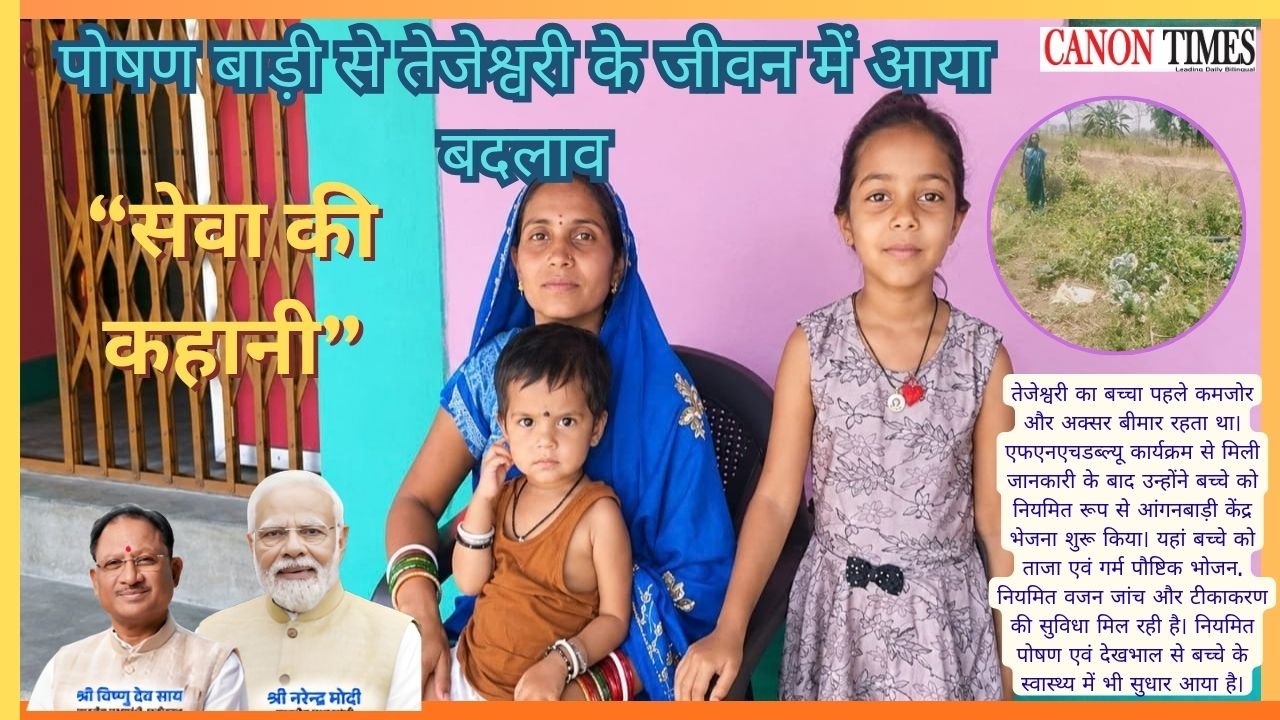
Tejeshwari Chandol of Kohlatola village once struggled with anaemia. Weakness and illness meant frequent clinic visits and out of pocket costs. She is a member of the Om Sai self help group and works with her husband on farm and vegetable production. Through the FNHW programme under National Rural Livelihoods Mission Bihan, a master trainer taught her about balanced diets, nutritious meals and ready to eat foods available at anganwadi centres. A Krishi Sakhi guided her to set up a poshan badi, a nutrition garden, at home. Today, fresh green and seasonal vegetables from that plot are a regular part of family meals. Her health has improved. Her child, who was often weak and sick, now attends the anganwadi for hot nutritious food, regular weight checks and immunisation. The child’s health has also gained. For Tejeshwari, the garden is not just a patch of soil. It is a source of nutrition, savings and confidence.
This is more than a home plot. It is a public health intervention that sits inside the household. Anaemia in women and undernutrition in young children are driven by gaps in daily diet. Iron rich greens, vitamins from vegetables and regular hot meals can close those gaps when they become routine. A nutrition garden lowers the cost of buying vegetables. It makes it easier to cook fresh instead of relying on staples alone. When linked to an anganwadi that provides supplementary food and tracks growth, the effect compounds. The FNHW model aims to do exactly this. It connects self help groups, Krishi Sakhis and anganwadi workers so that advice becomes action and action becomes habit.

Why does this matter at scale. Chhattisgarh has thousands of women like Tejeshwari who face the same constraints. When even a fraction of them grow leafy greens, gourds and pulses at home, the aggregate effect is significant. Haemoglobin levels rise. Illness episodes fall. Spending on medicines and travel to clinics drops. Time saved from not falling sick can go to work or childcare. For a state pushing service and welfare under the Seva Sankalp Abhiyan, this is a direct way to deliver on health without building more hospitals. It turns every courtyard into a small production centre for nutrition.
The real test will be reach and retention. Will every SHG member get a Krishi Sakhi visit and a simple plan for what to grow in each season. Will seeds and saplings be available locally at low cost so that gardens do not stall after the first harvest. Will anganwadi centres stay open on time with hot food and regular weighing so that mothers see the value and keep coming. Will counselling address common myths about food during pregnancy and lactation so that women actually eat the extra meals they are advised to take. And will the programme track outcomes, like haemoglobin and child weight, not just garden counts, so that success is measured by health gains. If these pieces fall into place, poshan badi can become a standard part of the rural health menu.
For Tejeshwari, the change is tangible. Her plate is greener. Her child is stronger. Her wallet is lighter on medical bills. That is the true measure of this push: not just the gardens planted, but the anaemia reduced and the health secured.

Author: This news is edited by: Abhishek Verma, (Editor, CANON TIMES)
Authentic news.