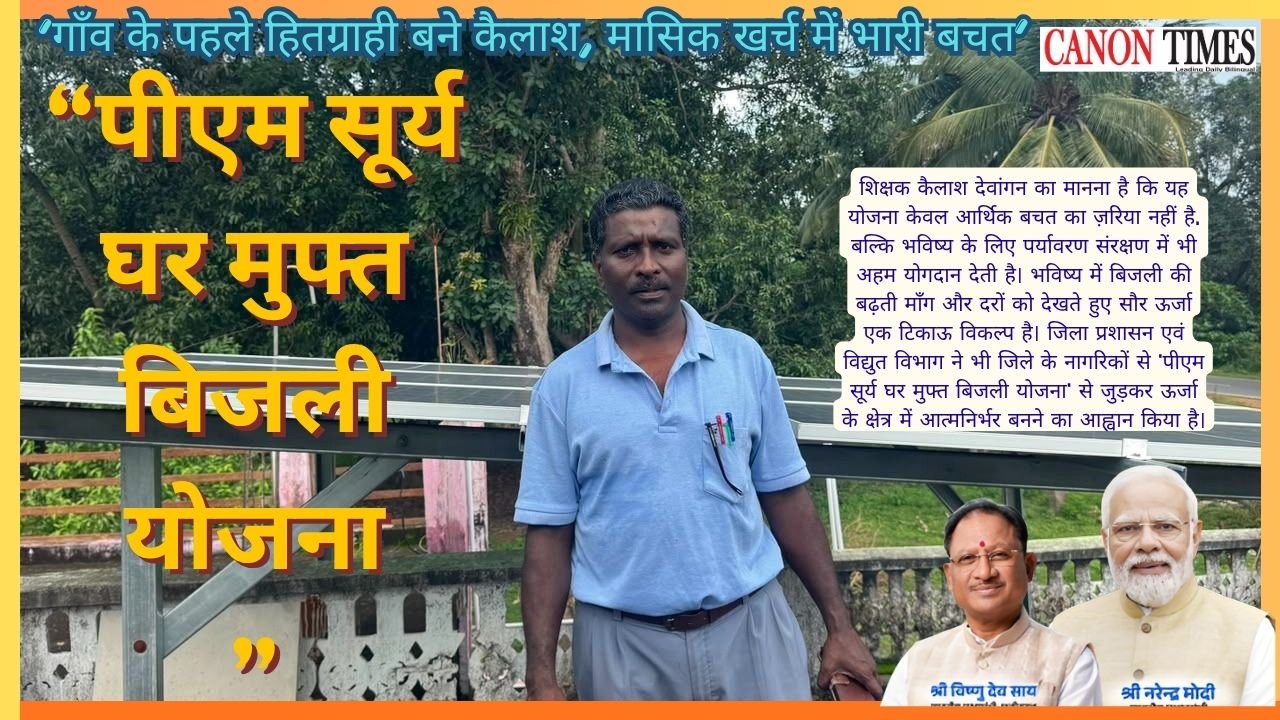
For Kailash Devangan, a teacher at Moflanar Middle School in Bade Tumnar village, Dantewada district, the PM Surya Ghar Muft Bijli Yojana has turned a monthly expense into a monthly saving. In March 2026, he installed a 3 kilowatt solar rooftop plant with government subsidy. His four member household used to consume about 200 units a month, paying roughly 1,000 to 1,200 rupees in bills. Today, his electricity bill is zero. He is the first beneficiary in his village. He says the subsidy made it affordable. He urges other citizens to join and cut their power costs while protecting the environment.
This is what energy policy should feel like on the ground. It is not just about megawatts and targets. It is about household budgets and cleaner air. A 3 kilowatt system can cover most middle class consumption. The subsidy reduces the upfront cost. The net metering arrangement ensures that excess generation offsets grid draw. Over time, the system pays for itself. For a teacher in a rural district, that is not just savings. It is security against rising tariffs and supply uncertainty.
Why does this model work. It is simple, scalable and visible. A rooftop plant is easy to understand. The benefit shows up every month on the bill. Neighbours see the panels and ask questions. Adoption spreads through peer effect. The government’s role is to provide subsidy, streamline approvals and ensure timely net metering. The household’s role is to maintain the system and use power wisely. Together, they create a distributed energy network that reduces peak load and transmission losses.
The human impact is the most powerful part of this story. Kailash says the scheme is not just about money. It is about contributing to a cleaner future. That sentiment is common among early adopters. A solar roof changes how a household sees itself. It reduces vulnerability to price shocks. It increases confidence. It allows small investments in education, health and livelihoods that were harder when power costs were rising.
The real test will be scale and sustainability. Can this model be replicated across more villages. Will subsidy disbursement be timely. Will net metering be hassle free. Will maintenance support be available so that systems last 25 years. And will low income households get extra support so that they are not left behind. If these pieces fall into place, PM Surya Ghar can become a lasting pillar of rural energy transition.
Chhattisgarh is betting that rooftop solar can change household economics and grid resilience. For families like Kailash’s, a solar roof is not just a set of panels. It is a pathway to energy independence. That is the true measure of this scheme: not just the number of installations, but the bills eliminated and the carbon avoided.

Author: This news is edited by: Abhishek Verma, (Editor, CANON TIMES)
Authentic news.