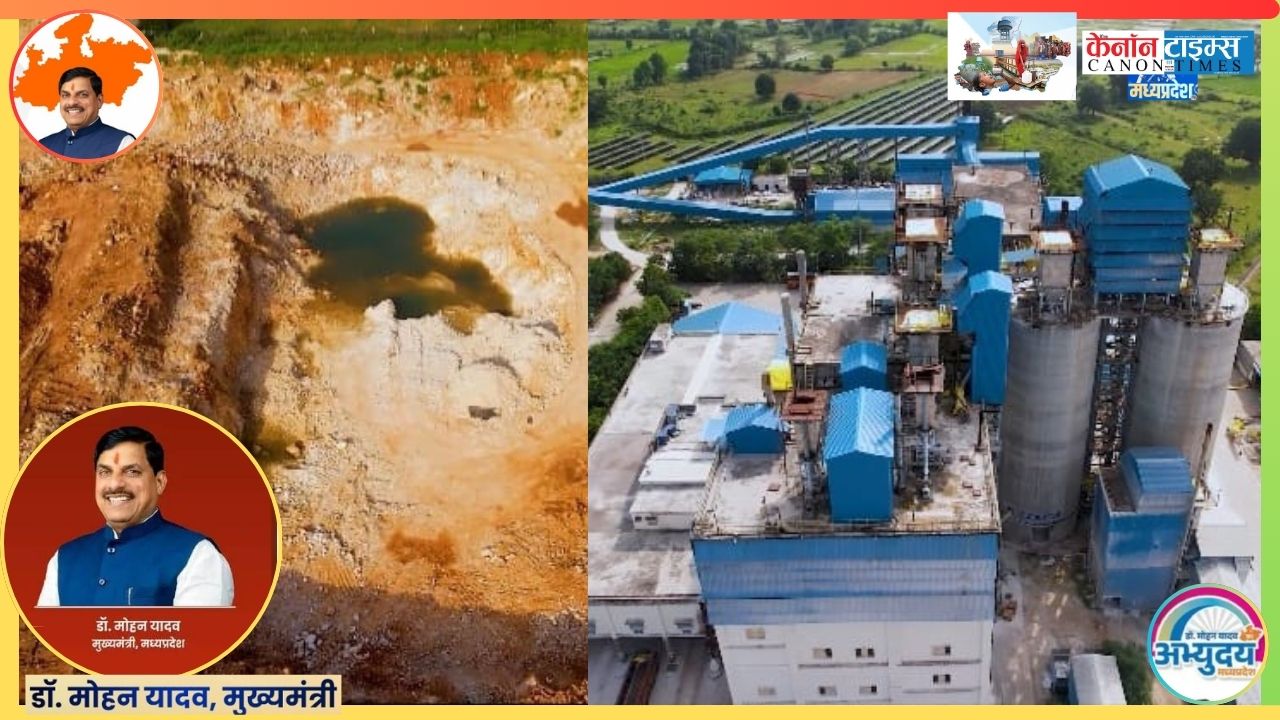
Madhya Pradesh’s ambitious vision to transform Katni into the country’s next “Mining Capital” reflects the growing importance of mineral resources in India’s economic development strategy. Rich in limestone, bauxite, iron ore, marble, and now significant reserves of gold and dolomite, Katni is rapidly emerging as a major industrial and mining hub. The state government’s focus on expanding mineral-based industries promises investment, employment, and regional growth. However, the true success of this vision will depend on whether economic progress is balanced with environmental responsibility and social justice.
Chief Minister Dr. Mohan Yadav’s announcement regarding the development of Katni as a national model for modern mining management highlights the state’s confidence in the district’s mineral potential. The discovery of gold ore reserves in Imliya village after decades of geological surveys has generated optimism about the region’s future. The presence of copper, zinc, lead, and silver deposits further strengthens Katni’s strategic importance in India’s mining landscape.

There is little doubt that mining can become a major driver of economic transformation. Investments worth thousands of crores proposed during the Mining Conclave 2.0 indicate rising industrial interest in the district. Expansion of mining activities can create employment opportunities for local youth, improve infrastructure, and increase state revenue. The government’s efforts to introduce technology-driven monitoring systems and e-check gates to control illegal mining also demonstrate an attempt to bring greater transparency and efficiency into the sector.
Yet, mining-led development comes with serious responsibilities. Across India, uncontrolled mining has often resulted in deforestation, environmental degradation, water scarcity, displacement of local communities, and unsafe working conditions. Katni’s transformation into a mining centre must therefore avoid repeating the mistakes seen in other mineral-rich regions of the country.
The government must ensure that industrial growth does not come at the cost of ecological destruction. Strict environmental clearances, sustainable extraction practices, scientific waste management, and regular monitoring are essential. Equally important is the protection of tribal communities and rural populations whose livelihoods and natural surroundings may be affected by large-scale industrial expansion.
Mining wealth should also translate into visible local development. Revenue generated from natural resources must be invested in healthcare, education, roads, drinking water, and skill development for surrounding communities. Employment opportunities should prioritise local residents rather than benefiting only outside corporations and contractors.
The idea of transforming Katni into “Swarn Nagari” or a mining capital is undoubtedly ambitious. But a modern mining economy cannot be judged only by production figures or investment proposals. Its real measure lies in whether development remains inclusive, transparent, environmentally sustainable, and beneficial to ordinary citizens.
If managed wisely, Katni can indeed emerge as a model of responsible industrial growth. But if short-term profits overshadow long-term sustainability, the cost may prove far greater than the value of the minerals extracted from its soil.

Author: This news is edited by: Abhishek Verma, (Editor, CANON TIMES)
Authentic news.