By his own account, Chief Minister Dr Mohan Yadav is steering Madhya Pradesh through a phase of rocket like growth, where the state is not only outpacing the national average but is also rewriting its image as a balanced, investment friendly and welfare conscious economy. At a national media summit in New Delhi, he projected Madhya Pradesh as the fastest growing state in the country, riding on a growth rate reportedly above the double digit mark and a fiscal model that, he claims, has turned limited resources into sustained results.
The core of his argument is simple: in an era when many states struggle with revenue expenditure mismatches, Madhya Pradesh has supposedly managed to assign adequate funds even to a bouquet of 106 welfare schemes while pushing aggressive industrial and infrastructure agendas. The Chief Minister cited high value investments, including an estimated corpus of hundreds of thousands of crores of Rupees in the last two years, as testimony that the state has become a preferred destination for capital. Whether through the Global Investors Summit and regional industry conclaves or through targeted policies for MSME’s and startups, the narrative is that business sentiment in Madhya Pradesh is no longer a by product of chance, but of design.
Yet, the government’s narrative is not just about the boardroom, it is also about the bedroom, the kitchen and the village clinic. Welfare initiatives such as cash transfer schemes for women and support for farmers, including direct benefit transfers under the central state partnership framework, are being held up as proof that growth is not leaving the poorest behind. The state is simultaneously expanding its social security architecture while trying to keep its finances within the norms set by the Union government, suggesting that the leadership is attempting a difficult middle path between development and populism.
At the same time, the Chief Minister used the platform to sharply criticise the opposition, accusing them of exploiting moments of national stress to weaken morale rather than offering constructive scrutiny. By recalling the conduct of leaders like Atal Bihari Vajpayee during the 1971 crisis, he sought to place contemporary politics on a moral register, arguing that national unity should not be compromised even in the heat of partisan contest. This is, in effect, a bid to link the image of a strong, confident Madhya Pradesh with a broader national pride narrative built around the Prime Minister’s foreign policy assertiveness and India’s growing global stature.
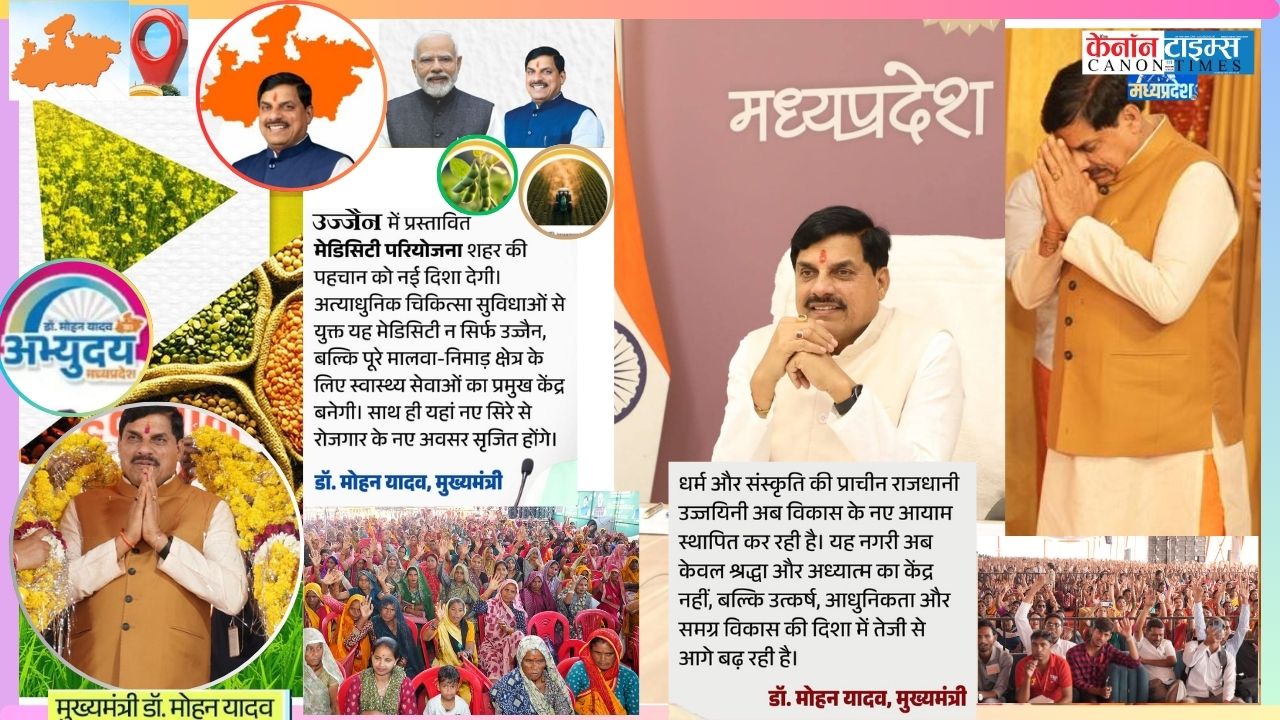
On the infrastructure and symbolism front, the state government has pinned one of its most visible projects on the upcoming Ujjain Simhastha in 2028. The plan to prepare the city, whose normal population is under a million, to handle tens of crores of pilgrims in a matter of days is an undertaking of Herculean scale. The state’s vow that no devotee will face even the slightest inconvenience during the mela is less a logistical promise than a political statement: Madhya Pradesh wants the world to see it as the custodian of India’s largest religious fair, capable of managing an event that is part festival, part logistical juggernaut.
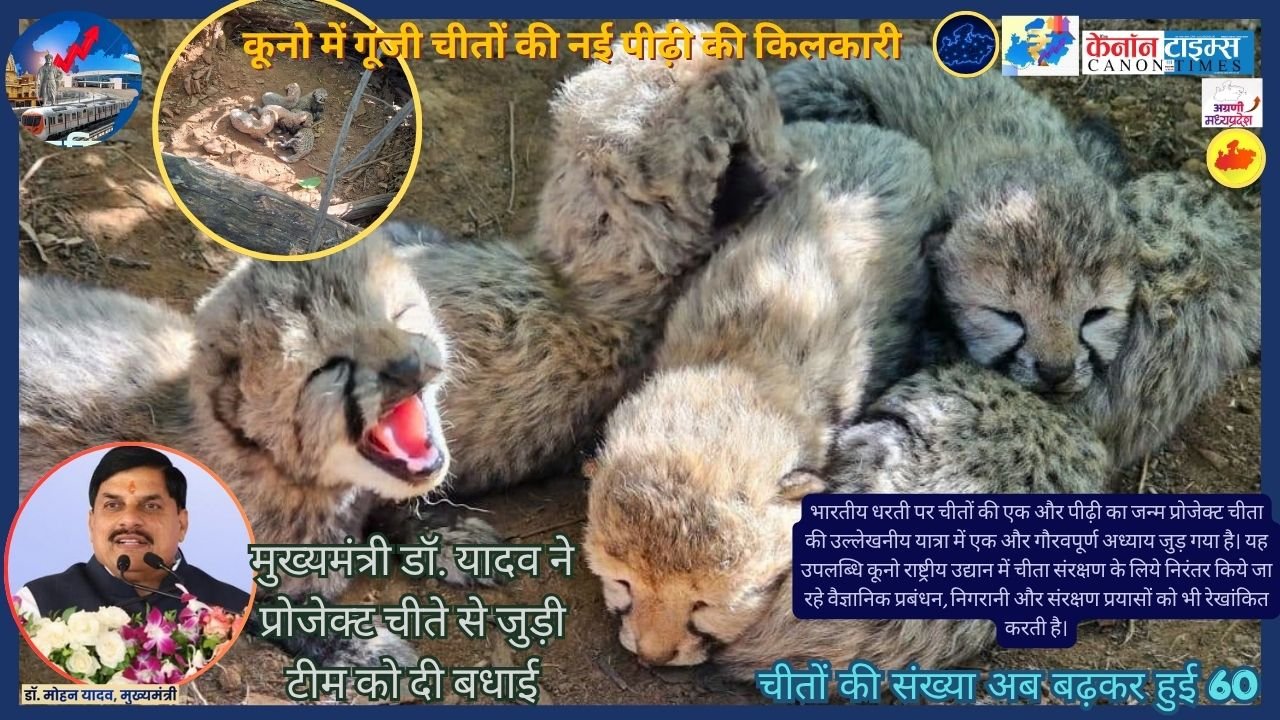
Alongside this, the government is investing in cultural capital through projects such as the staging of the Samrat Vikramaditya Mahanatak in Banaras style settings and the proposed establishment of a Vikramaditya Research Centre. The idea is clear, nurture historical memory and dramatise India’s ancient glory as part of the modern state’s soft power portfolio. In parallel, the state is positioning itself as a hub of wildlife conservation, highlighting its leading share of tigers, the revival of cheetah populations, and the expansion of sanctuaries for gharials, vultures and other endangered species. Here too, the subtext is that Madhya Pradesh wants to be seen not just as an industrial or infrastructural engine, but as a green, wildlife friendly state.
On the health front, the rapid expansion of medical colleges from a handful two decades ago to dozens today, including a clutch of new institutions opened in the last two years, is being sold as a belated but decisive correction of a long standing deficit. That jump in capacity is intended to address the acute shortage of doctors and specialists, especially in small towns and district headquarters, and to give the state an edge in the emerging race for medical education hubs.
Ultimately, what emerges from the Chief Minister’s address is a carefully curated image of Madhya Pradesh, a state that is growing faster than its peers, investing in its people through welfare and in its future through infrastructure and culture, and attempting to balance ideological messaging with practical governance. The challenge going forward will be whether this narrative survives the scrutiny of unemployment, environmental trade off’s and regional inequalities. For now, though, the state wants the country to see Madhya Pradesh not as a sleepy central province, but as a dynamic engine of growth that is moving ahead, not just in the charts, but in the minds of its citizens.

Author: This news is edited by: Abhishek Verma, (Editor, CANON TIMES)
Authentic news.