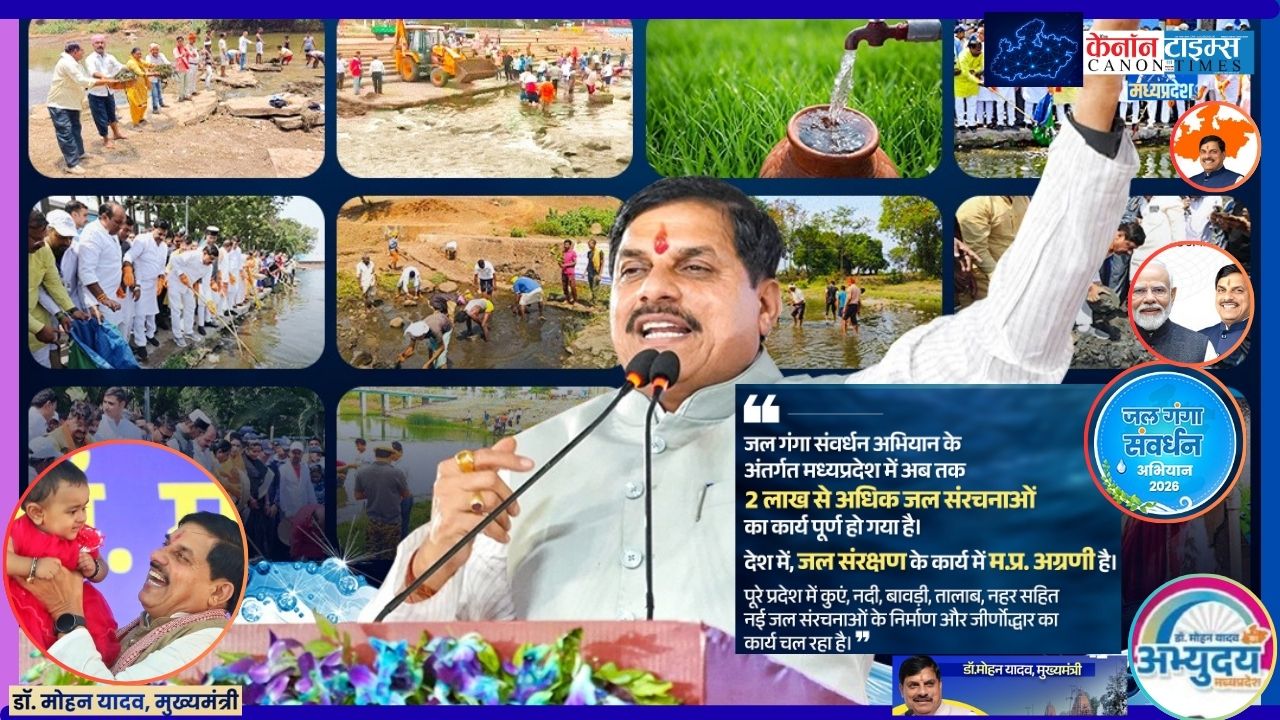
Water has always held a sacred place in Indian culture and civilization. It is not merely a natural resource but the foundation of life, prosperity, and sustainable development. At a time when climate change, declining groundwater levels, and irregular rainfall patterns are creating serious environmental challenges, the need for water conservation has become more urgent than ever. In this context, the call by Chief Minister Dr. Mohan Yadav to transform water conservation into a mass movement carries deep significance.
During his visit to inspect the restoration work of the historic Ahilya Kund under the Jal Ganga Sanvardhan Abhiyan in Indore district, the Chief Minister emphasized that protecting water today is essential for securing the future of coming generations. His message reflects an important reality that water conservation cannot succeed through government efforts alone. Public participation and community awareness are equally necessary to achieve lasting results.

India has a rich tradition of respecting and preserving water resources. Ancient ponds, wells, stepwells, and kunds were once the backbone of local water management systems. Over time, many of these traditional structures were neglected due to rapid urbanization and changing lifestyles. The restoration of historical water bodies like Ahilya Kund is therefore not only an environmental initiative but also an effort to reconnect society with its cultural and ecological heritage.
The Jal Ganga Sanvardhan Abhiyan launched by the state government is emerging as an important step toward reviving traditional water sources and promoting sustainable water management practices. Through the rejuvenation of ponds, rivers, and reservoirs, the campaign aims to strengthen groundwater recharge, improve water availability, and encourage responsible use of natural resources. Such initiatives become far more effective when local communities actively participate in them.
The Chief Minister’s reference to the teachings of Saint Kabir and Saint Rahim during the program was particularly meaningful. Indian saints and thinkers have long highlighted the importance of water in human life through simple yet powerful messages. Their teachings continue to remind society that water should never be taken for granted.
Water conservation is not only an environmental responsibility but also an economic necessity. Agriculture, industries, and urban development all depend on sustainable water availability. Rural communities, in particular, face severe hardships during water shortages. Conserving rainwater, protecting ponds and lakes, and using water wisely can significantly reduce future crises and improve overall quality of life.
Most importantly, water conservation must become a behavioral change movement. Every citizen has a role to play through simple actions such as rainwater harvesting, avoiding water wastage, and supporting local conservation efforts. When people collectively participate, even small efforts can create a large and lasting impact.
The vision of making Madhya Pradesh a water rich state can only become a reality through continuous public involvement and responsible environmental practices. The restoration of traditional water sources and the growing emphasis on water awareness reflect a positive direction for the future.
Water is life, and protecting it is a shared responsibility. Turning water conservation into a true people’s movement is not just an environmental goal but a commitment toward a safer and more sustainable future for generations to come.

Author: This news is edited by: Abhishek Verma, (Editor, CANON TIMES)
Authentic news.