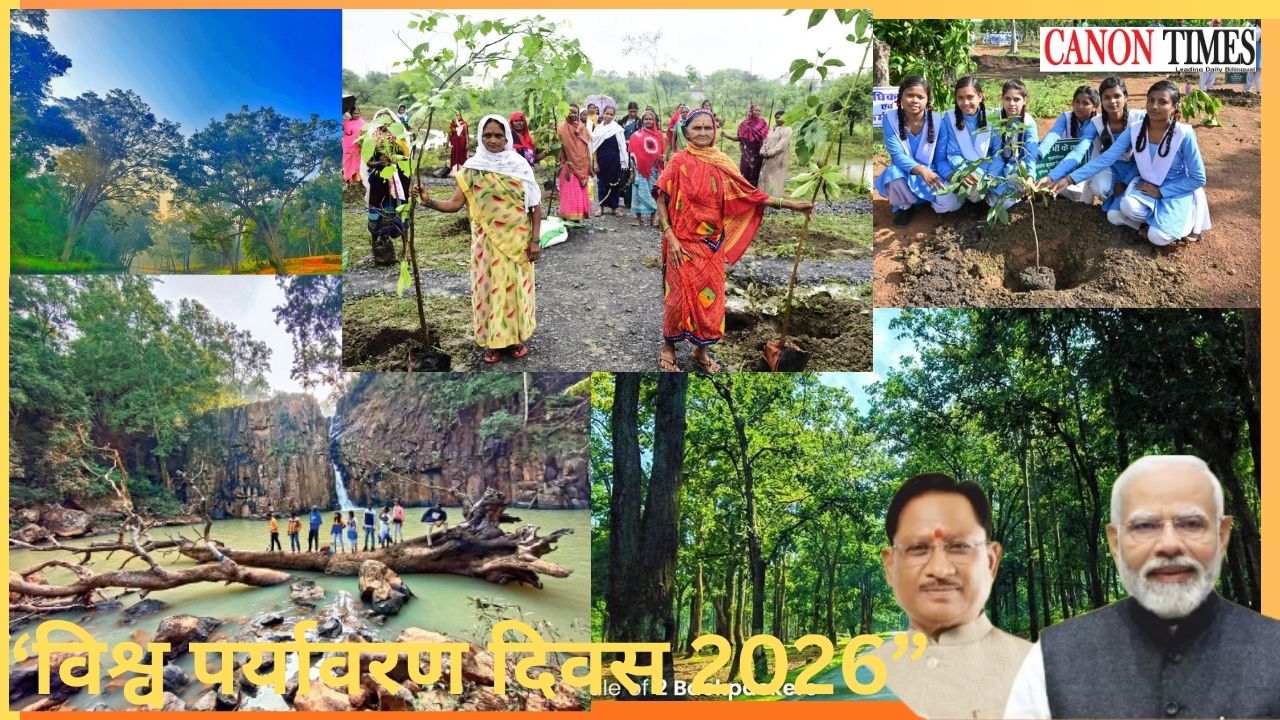
Nature is not merely the backdrop of human life; it is the foundation of our culture, tradition and future. Clean air, pure water, healthy forests and rich biodiversity are the true capital of any civilised society. In an era of rapid urbanisation, climate change and mounting pressure on natural resources, environmental protection is no longer optional. It is a prerequisite for human survival. World Environment Day on June 5 is a timely reminder of this duty.
Chhattisgarh’s environmental profile vast forests, diverse ecosystems and abundant water resources places it among the states that must balance development with conservation. Under the leadership of Chief Minister Vishnudev Say, the state has pursued a model that centres on green growth, water stewardship and citizen participation. The early returns suggest this integrated approach is both necessary and promising.

Afforestation in Chhattisgarh has been designed as an economic as well as an ecological measure. Schemes such as Hariali Prasar and Kisan Vriksh Mitra link tree plantation with farmers’ incomes by promoting agroforestry and supplying saplings for on farm planting. These measures expand green cover and deliver long‑term financial benefits to rural households. Campaigns like “Ek Ped Maa Ke Naam” have successfully translated environmental responsibility into an emotional, community driven movement.
Urban green infrastructure is getting attention too. The Oxygen Plan and urban forestry initiatives are creating parks, roadside green belts and public green spaces that not only reduce pollution but also improve urban livability. Such interventions are vital as cities expand and demand healthier microclimates for residents.
Water conservation has moved from policy to people’s movement. Initiatives including Mor Gaon Mor Pani and Mor Gaon Mor Taria are reviving traditional ponds, promoting rainwater harvesting, building check dams and enhancing groundwater recharge. A dedicated groundwater and water conservation programme gives strategic focus to source protection, critical for long‑term water security.
Riverbank afforestation and wetland restoration in the Mahanadi catchment strengthen natural hydrological systems and curb erosion while supporting biodiversity. Wetland conservation is an important climate adaptation measure that enhances resilience at landscape scale.
Crucially, the state is investing in the next generation. The National Green Corps and eco club programs bring schools and colleges into conservation work, cultivating environmental sensitivity through hands‑on activities like tree planting, cleanliness drives and biodiversity projects. This is how awareness becomes habit and habit becomes policy.
But governments cannot do this alone. Environmental stewardship is a shared responsibility. Simple acts planting a tree, conserving water, reducing single‑use plastics and using resources judiciously collectively create large-scale change. World Environment Day reminds us that development and environment need not be in conflict; they can and must be complementary.
Chhattisgarh’s model shows that with political will, community engagement and well‑designed programmes, a balance between ecology and economy is achievable. Yet success will depend on deepening outreach to marginal communities, ensuring equitable access to benefits, and institutionalising local stewardship so gains are durable.
We did not inherit the Earth from our ancestors; we borrow it from our children. Let World Environment Day 2026 be more than a ritual. Let it be a renewed pact between government and citizen, present and future to protect the living systems that sustain us all.

Author: This news is edited by: Abhishek Verma, (Editor, CANON TIMES)
Authentic news.